




Therapeutic Exercise for Seniors: A Gentle Guide
What if building strength began not with pushing harder, but with movements that feel steady and manageable? If balance, discomfort, or fear of falling makes it difficult to start, your caution is understandable. Therapeutic exercise for seniors can be adapted to personal abilities and health needs, making movement a considered step toward well-being rather than a test.
This guide covers five movement categories: mobility, flexibility, strength, balance, and gentle endurance. You’ll see how to compare seated and standing options, use support, and adjust movement range to find a manageable starting point. Therapeutic exercise is selected around a specific goal or need, while general exercise supports overall wellness. Your circumstances help determine where to begin. Pause if you experience new or worsening pain and seek appropriate clinical guidance. Through Physical and Manual Therapies and Wellness & Fitness Classes, Minsu’s Healing Oasis takes an integrative approach to well-being for body, mind, and soul.
Table of Contents
Why Therapeutic Exercise for Seniors Can Support Everyday Movement
Want to stay active, but find that your comfort, energy, or confidence changes from day to day? Movement doesn’t have to be all or nothing. A useful starting point respects what feels possible now and leaves room to adapt. One person might practice standing with support; another might work on reaching for a shelf or taking a comfortable walk.
Therapeutic exercise for seniors is purposeful movement chosen to reflect a person’s abilities and goals, with the aim of supporting meaningful everyday activity. Instead of aiming for a universal target, consider what you want to do and how movement feels as you do it. Mobility, balance, strength, flexibility, and confidence may all be relevant, but no single exercise guarantees a particular result.
These choices are part of a broader approach to later-life movement. Geriatric rehabilitation and therapeutic exercise considers functional ability alongside physical changes that may accompany aging. In practice, the person’s abilities and goals guide the movement, not the other way around.
What makes an exercise therapeutic?
An exercise is therapeutic because it has a purpose and suits the person, not because it involves a particular number of repetitions or feels strenuous. If standing from a chair feels difficult, for example, a suitable movement might involve practicing that action at a manageable level. If reaching overhead feels restricted, you might explore comfortable, controlled reaching. The right pace and range depend on how you feel that day.
This differs from exercising only to meet a general target. A personal goal makes movement practical: getting dressed, carrying a light item, or walking around the home with greater ease. It also gives you a way to notice whether an activity feels manageable, needs adjusting, or is best paused. If movement causes new or worsening pain, stop and seek appropriate clinical guidance.
Why personal goals matter as we age
Everyone brings different experiences and preferences to movement. One person may enjoy regular walks but feel less steady on stairs; another may prefer to begin seated after being less active. Energy, confidence, daily responsibilities, and comfort all help shape a realistic starting point. These are useful details for choosing an activity, not labels or diagnoses.
A meaningful goal can make exercise feel more relevant. Instead of aiming to “get fit,” you might focus on reaching a cupboard, rising from a chair, or walking to the garden. Break the activity into a small, comfortable movement and notice how it feels during and afterward. Adjust as your routine or capacity changes. The best goal is one that matters in your daily life, and the next step can be gentle.
Five Therapeutic Exercise Categories Seniors Can Adapt to Their Needs
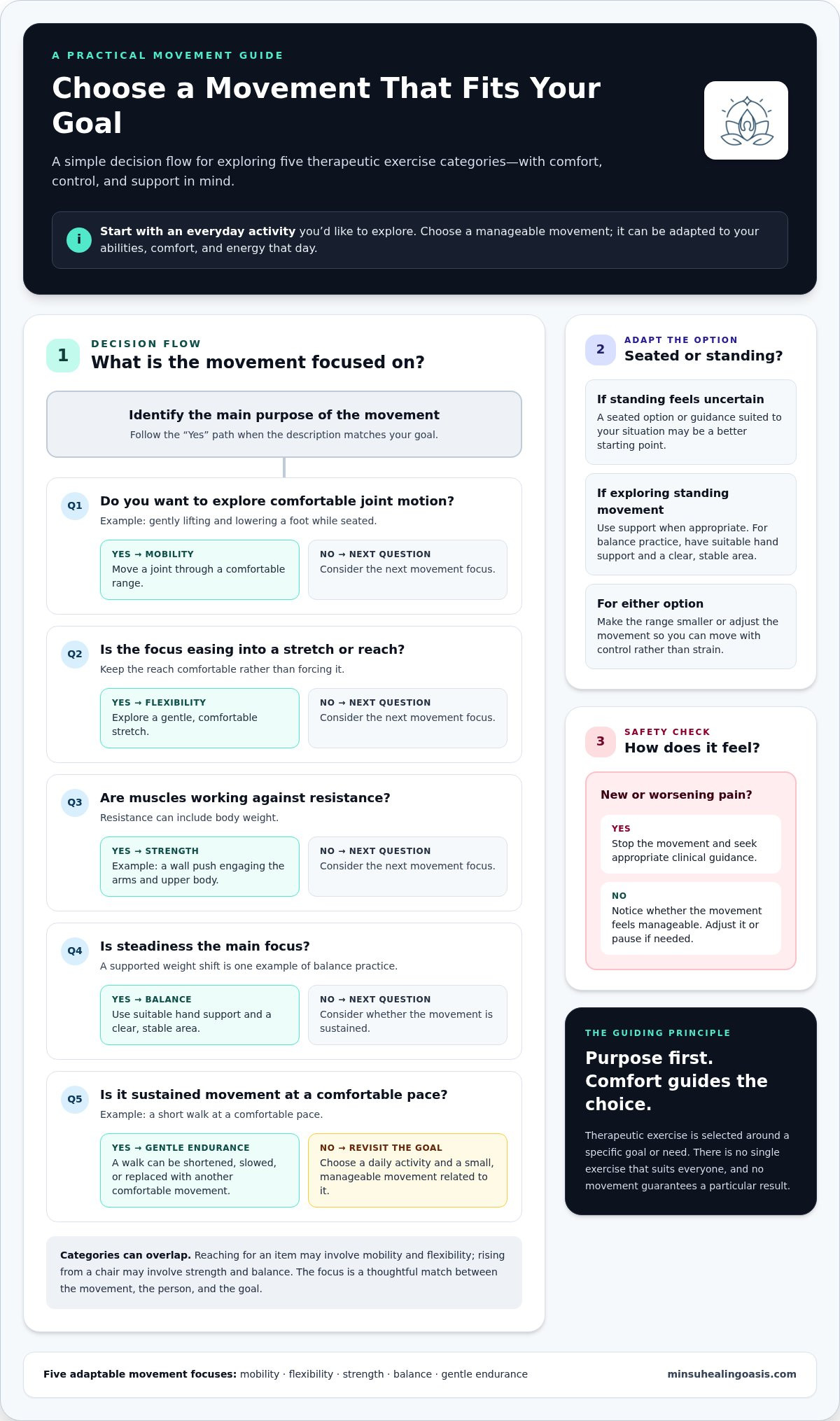
Movement doesn’t need to look the same for everyone. These five categories describe different ways to explore everyday movement, and one activity may involve more than one. The examples below are starting points, not instructions for every person. Choose a movement that feels manageable, use support when appropriate, and adjust the range so you can move with control rather than strain.
The National Institute on Aging guidelines on exercise for seniors discuss different forms of physical activity and considerations for older adults. The categories below help you identify what an activity focuses on. Your comfort and abilities should guide how you approach it.
Mobility, flexibility, and strength movements
Mobility means moving a joint through a comfortable range, such as gently lifting and lowering a foot while seated. Flexibility involves easing into a stretch, perhaps through a comfortable reach rather than a forced one. Strength involves muscles working against resistance, including body weight. These categories can overlap, but each has a different focus.
For example, seated leg movement can be a way to explore hip or knee motion, while a wall push can engage the arms and upper body. Either movement may need to be adapted to the person. You could make the movement smaller, remain seated, or use a steady support nearby. If you’re unsure which variation fits your needs, individualized guidance can help you consider your options.
Balance and gentle endurance activities
Balance activities focus on steadiness, while gentle endurance involves sustained movement, such as a short walk at a comfortable pace. Supported weight shifts are one example of balance practice, although they still involve managing a change in position. A clear, stable area and suitable hand support can help you feel more secure.
Don’t attempt a challenging balance activity without appropriate support. If standing feels uncertain, a seated option or guidance suited to your situation may be a better starting point. A walk can also be shortened, slowed, or replaced with another comfortable movement. The aim is to find a suitable level, not to prove how much you can do.
Choosing a category that fits
Start with an everyday movement you’d like to explore, then consider which category relates to it. Reaching for an item may involve mobility and flexibility; rising from a chair may involve strength and balance. Therapeutic exercise for seniors is a thoughtful match between a movement, the person, and the goal, with room to adapt when comfort or energy changes.
If a supportive setting would help you explore movement, Wellness & Fitness Classes offer an opportunity to take part in ongoing wellness activities.
How to Compare Exercise Options and Address Common Safety Concerns
Choosing an exercise involves more than its name. Consider the support it requires, whether it challenges your balance, how much you can move comfortably, and how confident you feel. A seated option may reduce the need to balance while standing, but that doesn’t automatically make it suitable for everyone. Standing activity may relate more directly to some daily tasks, but it calls for attention to stability and nearby support.
Choose movement to reflect your ability, comfort, and support needs. You don’t need to feel exhausted or push through discomfort for movement to be worthwhile. A manageable activity done with care can be a more thoughtful starting point than a strenuous one that leaves you uneasy.
Seated or standing exercise: what should guide the choice?
Notice how you feel getting into position, staying there, and moving through the activity. Seated movement may feel more approachable if standing balance or energy is a concern. Use a stable chair and choose a comfortable range. Standing options let you practice in an upright position, but keep appropriate, stable support within reach. Confidence matters, too. Hesitation is useful information, not a reason to judge yourself.
The table offers a starting framework, not a personal prescription. Support needs and everyday goals vary from person to person.
When to pause and seek individualized guidance
Pause if an exercise causes new, worsening, unusual, or concerning symptoms. Don’t push through just to finish the movement. If symptoms feel serious or persist, seek appropriate clinical guidance. This is about listening to your body and responding with care.
Individualized guidance may also help if a health condition, a recent change in mobility, or balance difficulties affect which movements feel suitable. A clinician can consider your circumstances and help you understand how an activity might be adjusted. Therapeutic exercise for seniors isn’t a fixed sequence for everyone. Revisit your choices as your comfort, confidence, and support needs change.
How to Build a Gentle Therapeutic Exercise Routine That Lasts
A routine is easier to return to when it fits your life. Rather than beginning with a demanding schedule, start with a daily activity that matters to you and a movement that feels manageable. With therapeutic exercise for seniors, a routine can take shape through attentive choices: begin gently, notice your response, and adapt the plan as your needs change.
Choose a meaningful goal and a manageable starting point
Think of an everyday moment you’d like to make more comfortable, such as reaching for an item, standing from a chair, or moving around your home. Choose one familiar movement category that relates to that goal instead of trying several new activities at once. Keep the starting point approachable. There’s no universal session length, weekly frequency, or performance target that fits everyone.
Use this four-step framework to shape a routine around your circumstances:
Choose a daily goal. Name an activity that matters to you, rather than a target you think you should meet.
Select a manageable movement. Choose one familiar movement that relates to your goal and feels comfortable to try.
Prepare suitable support. Arrange a stable chair or nearby support if it helps you feel settled. Clear enough space for the movement you’ve chosen.
Reflect afterward. Notice how the movement felt and whether it fit your day. Use that information to decide whether to repeat it, adapt it, or seek guidance.
Notice how your routine feels and adjust gently
After practicing, take a moment to check in. Did the movement feel comfortable? Did you feel steady and confident? Was it practical enough that you’d like to try it again? You might jot down a few words about your experience, including the support you used and how the movement related to your daily goal. These observations can help you shape a routine around your own needs, rather than treating it as a checklist.
If an activity feels awkward or demanding, a smaller range of motion or additional support may make it more manageable. You can also choose a different movement or pause. Preferences, energy, mobility, and daily circumstances can shift, so your routine doesn’t need to stay fixed. If you’re uncertain how to adjust safely, or a health concern affects your choices, seek individualized clinical guidance. Stop and seek appropriate advice if a movement causes new, worsening, or concerning symptoms.
A supportive setting can make it easier to explore movement alongside your own goals. Minsu’s Healing Oasis offers Wellness & Fitness Classes as part of its approach to well-being. Read more about an integrative approach to movement in holistic fitness classes.
Next Steps in Therapeutic Exercise for Seniors
You can use what you’ve learned in your own practice, and you don’t have to work through every question alone. If you’re unsure how a movement goal relates to your comfort, mobility, or overall well-being, supportive attention can help you reflect on what matters and consider a thoughtful next step. You don’t need to arrive with a perfect plan. Your questions and concerns are a good place to begin.
How supportive care can complement movement
A conversation about your everyday goals, such as moving more comfortably during a familiar task, can also make room for the bigger picture of how you’re feeling. Minsu’s Healing Oasis brings together Physical and Manual Therapies, Mind-Body Therapies, and Wellness & Fitness Classes as part of an approach that considers body, mind, and soul. Each offers a different way to engage with well-being without assuming one path or movement is right for everyone.
Physical and Manual Therapies are part of this integrative approach. Sharing what you’d like to explore, what feels comfortable, and what concerns you can help keep the conversation grounded in your experience. The focus is supportive care, not a promise of a particular outcome or a plan that is the same for everyone.
Take a comfortable next step
You may be wondering how to adapt an activity, or simply want to talk through your movement goals. Begin by sharing what you’d like everyday movement to feel like and what currently makes it challenging. Minsu’s Healing Oasis offers a free consultation as a way to start a conversation about your well-being. You don’t need to have all the answers before you begin.
Therapeutic exercise for seniors is most meaningful when it respects personal needs and supports a considered relationship with movement. A gentle next step might be learning about the approach, discussing what you hope to explore, or considering whether Wellness & Fitness Classes feel relevant to your well-being. Take the time you need to decide what feels right.
Are you ready to be the best version of you?
Let Your Next Step Begin at Your Own Pace
What might change if movement felt less like another task and more like a way to stay connected to the life you want to live? Let that question guide your next step. Therapeutic exercise for seniors doesn’t need a perfect plan. It can grow from curiosity, self-awareness, and support that respects where you are today.
At Minsu’s Healing Oasis, an integrative approach brings Physical and Manual Therapies, Mind-Body Therapies, and whole-person attention together. Wellness & Fitness Classes offer a way to explore movement as part of that broader approach, with room to honor your own needs and intentions.
If you’d like to explore supportive wellness, Book a Free Consultation and share what matters most. Take the next step at your own pace, with patience, confidence, and hope.
Frequently Asked Questions
What are therapeutic exercises for seniors?
Therapeutic exercise for seniors uses purposeful movements selected around personal goals and abilities. Mobility explores comfortable joint motion; strength engages muscles; flexibility focuses on stretching; balance practices steadiness; and gentle endurance involves sustained activity. These are different movement options, not a standard checklist. An approach can vary with a person’s preferences and circumstances. If health or mobility concerns affect your choices, individualized guidance can help you consider what fits.
Is therapeutic exercise safe for seniors?
Whether exercise is suitable depends on the person, the movement, and available support. Choose an activity that feels within your current ability, and set up the space to suit it, such as keeping a stable surface nearby for standing practice. Don’t attempt a challenging movement without suitable support. Pause for unusual or concerning symptoms and seek appropriate clinical guidance. General information can’t replace care tailored to your circumstances.
What exercises can help seniors improve balance?
Balance-focused movement calls for a stable, uncluttered setting and appropriate support within reach. Supported weight shifts or heel-to-toe walking are examples, not instructions for everyone. Either may need adjustment or may not suit your current ability. If you feel unsteady in routine situations or aren’t sure how to set up support, seek individualized guidance before trying a challenging balance activity. Move at a pace that lets you stay attentive.
Can seniors do therapeutic exercises while seated?
Yes, seated movements can be an approachable option for some seniors, including gentle ankle circles or comfortable arm movements. Sitting may reduce the balance demands of a particular activity, but it doesn’t necessarily make that movement right for you. Consider whether the position feels stable and the motion comfortable. If a health concern or limitation affects your choices, individualized guidance can help you decide what fits.
How often should seniors do therapeutic exercises?
There isn’t one schedule that suits every senior. How often to practice depends on personal ability, goals, comfort, and any relevant clinical guidance. Instead of following a demanding routine because a general article suggests it, choose an approach that feels manageable in your day. Notice how you feel during and after movement, then adjust as needed. If you’re uncertain about a suitable schedule, seek advice tailored to your circumstances.
What should a senior do if exercise causes pain or discomfort?
Pause a movement that causes unusual or concerning symptoms instead of pushing through to finish it. Discomfort can have different causes, so an article can’t determine what’s behind it or whether a particular adjustment is suitable. If the symptom is new, worsening, or worrying, seek appropriate clinical guidance for an individualized assessment. Share what movement you were doing and what you noticed so your concern can be understood in context.
How can seniors make an exercise routine easier to maintain?
Start with an everyday goal, choose a comfortable activity, and prepare any support that helps you feel settled. Afterward, reflect on whether the movement felt manageable and relevant to your day. A routine can change as your preferences, abilities, or circumstances shift; it doesn’t need a fixed schedule to be worthwhile. A steady, modest approach may feel more inviting than an overly ambitious plan. If adjustments feel uncertain, guidance can help you consider your options.


Comments