



Cranial Sacral Therapy After Concussion: What to Know
Could gentle, hands-on support have a place in concussion recovery without taking the place of medical care? If lingering symptoms leave you unsure what might help, it’s understandable to explore cranial sacral therapy after concussion while also wondering about safety and what the evidence shows.
Cranial sacral therapy may be considered as complementary support for comfort, but it isn’t an established concussion treatment and shouldn’t replace medical evaluation or recommended care. Clear information can help you weigh your options without pressure or promises.
This article explains what cranial sacral therapy involves, what research can and can’t tell us about its role after concussion, and how to consider safety alongside medically guided care. It also outlines symptoms that need prompt medical attention, so you can make informed decisions while caring for your whole self.
Table of Contents
Cranial Sacral Therapy After Concussion: What It Is & Isn't
When symptoms linger after a concussion, recovery can feel confusing and tiring. Headaches, disrupted rest, or discomfort may make it difficult to know what is part of your experience and what needs further attention. If you’re considering cranial sacral therapy after concussion, it helps to understand both the kind of support it may offer and what it cannot claim to do.
Cranial sacral therapy is a gentle, hands-on complementary approach that some people explore for comfort. It does not diagnose or cure concussion and cannot replace medical assessment or established concussion care. A person may value a calm, attentive experience without assuming that it treats the underlying brain injury or every symptom.
CST sits outside clinical concussion assessment. A qualified medical professional evaluates the injury and guides decisions about monitoring and recovery. Cranial sacral therapy is optional complementary care, not a substitute. Its gentle nature alone doesn’t establish that it is appropriate for every person or stage of recovery.
What does cranial sacral therapy involve?
CST is generally described as a hands-on method using gentle touch. Practitioners may use the term craniosacral system for their framework, referring to structures and fluid surrounding the brain and spinal cord. These concepts describe how some practitioners understand the approach; proposed effects should not be presented as established clinical findings. Craniosacral Therapy on Wikipedia offers a general overview of its history, conceptual basis, and standing as an alternative therapy.
Why do people consider CST after a concussion?
Some people explore complementary care because they want comfort while symptoms persist or value a gentle, attentive form of support. Headaches and neck or back discomfort are among the symptoms discussed in relation to concussion. Their presence doesn’t mean CST can resolve them, and a change in discomfort would not show that a brain injury has healed.
It helps to separate the goals. Medical care addresses assessment and concussion recovery. Complementary support, if considered, may be sought for a sense of ease or relaxation. These goals aren’t interchangeable. Keep your medical care team informed about ongoing or changing symptoms, and don’t delay evaluation in favor of hands-on therapy. This allows you to consider personal comfort while keeping safety and evidence in view.
How Cranial Sacral Therapy Fits Into Medically Guided Concussion Recovery
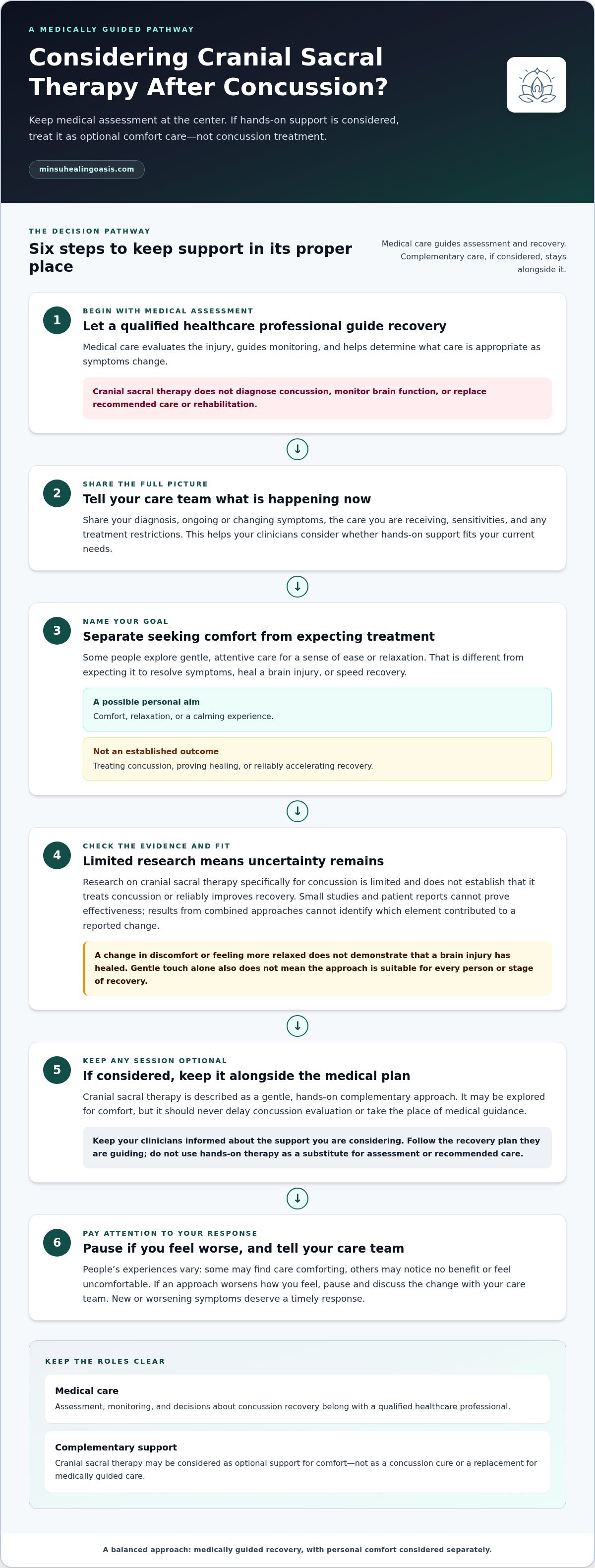
When recovery feels slow or symptoms disrupt daily life, it can be tempting to look for another kind of support. Start with medical assessment and a recovery plan guided by a qualified healthcare professional. That guidance helps determine what care is appropriate, track changes over time, and respond if symptoms shift.
Complementary therapy should never delay concussion evaluation or take the place of the medical guidance directing recovery. Cranial sacral therapy after concussion, if considered, belongs alongside that plan as an optional source of comfort. It is not a way to diagnose an injury, monitor brain function, or replace recommended rehabilitation.
What does the evidence say about CST after concussion?
Research on cranial sacral therapy specifically for concussion remains limited and isn’t enough to establish that it treats concussion or reliably improves recovery. Small studies and patient-reported experiences may raise questions for future research, but they can’t by themselves prove that a therapy is effective. Findings from combined approaches also can’t show which element, if any, contributed to a reported change.
Keep the distinction clear: someone may feel more relaxed or notice a change in discomfort, but that experience doesn’t demonstrate that a brain injury has healed or that recovery has accelerated. A proposed explanation of how CST might work is a therapeutic framework, not proof of a clinical effect. For decisions about concussion care, rely on the clinician overseeing your recovery rather than testimonials or broad promises.
How can complementary care coexist with concussion care?
If you’re considering a complementary session, keep it within the boundaries of your medical recovery plan. Share relevant symptoms, recent changes, and the care you’re already receiving with the clinicians overseeing your recovery. This gives them a clearer picture of your situation and lets them advise whether hands-on support fits your current needs.
Be specific about what you hope to gain. Are you seeking a calming experience, or expecting the therapy to resolve a symptom or speed healing? Naming the difference can help you make a grounded choice. If an approach worsens how you feel, pause and discuss the change with your care team. Your comfort matters, and new or worsening symptoms deserve a timely response.
A balanced plan can include medical guidance and personal preferences without confusing their roles. At Minsu’s Healing Oasis, cranial sacral therapy is offered alongside integrative physiotherapy and manual therapy as part of a broader, whole-person approach. Explore cranial sacral therapy and manual care as complementary support while keeping concussion decisions with your medical care team.
Potential Comfort, Evidence Limits, and Safety Considerations
After a concussion, even small changes in how you feel can matter. Some people may find gentle, attentive care relaxing or comforting; others may notice no benefit or feel uncomfortable. These personal experiences can’t be predicted, and they don’t establish that cranial sacral therapy is suitable for everyone or every stage of recovery.
Possible supportive experiences, and what they do not prove
A calmer moment or a change in discomfort may feel meaningful, but it can’t confirm what caused the change. Symptoms can vary over time, and one person’s experience after a session doesn’t show that the concussion itself was treated or that the brain has healed.
Reported comfort is a personal experience, not proof of concussion-specific effectiveness. Research has not established CST as a concussion treatment. Don’t interpret testimonials, proposed explanations, or a single positive experience as evidence that it resolves an injury, restores brain function, or shortens recovery. Any decision about cranial sacral therapy after concussion should remain grounded in your medical guidance and your own response.
When should a session wait?
Concussion warning signs take priority over any complementary session. The CDC advises seeking emergency care for danger signs after a head injury. Call your local emergency number or go to an emergency department if you notice any of the following:
A headache that gets worse and does not go away
Repeated vomiting or nausea
Seizures or convulsions
Weakness, numbness, decreased coordination, or slurred speech
Increasing confusion, unusual behavior, or agitation
One pupil larger than the other, or double vision
Loss of consciousness, extreme drowsiness, or difficulty waking
Don’t wait for a therapy appointment or assume these signs are part of ordinary recovery. Seek urgent medical help.
Even without an emergency warning sign, pause or postpone a session if symptoms are intensifying, you feel unwell, or touch feels uncomfortable. Tell the practitioner what you’re experiencing, and contact the clinician overseeing your recovery for guidance if you’re unsure what to do. You can stop a session at any time. You don’t need to push through discomfort to make the experience worthwhile.
A gentle approach is not automatically risk-free or appropriate for everyone. Share relevant changes in symptoms and any medical restrictions before considering hands-on support, and let your care team help you judge whether the timing fits your recovery. The aim is to make choices with care and clarity, not to replace evaluation or ignore what your body is telling you.
Preparing for Cranial Sacral Therapy During Concussion Recovery
Considering cranial sacral therapy after concussion can raise practical questions: What should you share, what should you expect, and how will you know whether the experience feels right? A little preparation can help you stay connected to your medical recovery plan and communicate your needs without feeling pressured to continue.
There’s no universal CST schedule or guaranteed number of sessions for someone recovering from a concussion. A plan that feels appropriate for one person may not suit another, and you don’t need to commit to a series in advance. Use preparation to make an informed, comfortable choice, not to create an expectation of a particular result.
What should you discuss before a session?
Before hands-on work begins, share information that could shape your comfort and safety. Describe your diagnosis, current symptoms, recent changes, and any medical advice or treatment restrictions. Mention sensitivities, such as touch or positioning that feels uncomfortable, and explain what you hope to get from the session.
A simple preparation sequence can help you organize the conversation:
Take stock of your symptoms. Note what you’re experiencing now and whether anything tends to make it better or worse. Keep this descriptive rather than trying to diagnose the cause.
Review your recovery guidance. Be clear about recommendations from the clinician overseeing your care, including restrictions and any other treatments you’re receiving.
Agree on communication. Talk about how you’ll signal discomfort, ask for a pause, or end the session. You can request that the practitioner check in as needed.
You don’t need perfect words or a complete record. A few clear details can help set expectations. If symptoms have changed since your last medical review, share that with your care team before adding complementary support.
How can you notice and respond to your body?
During and after a session, pay attention to how you feel without treating every sensation as a sign of healing or harm. If symptoms intensify or the experience feels uncomfortable, speak up and pause or stop. If symptoms worsen afterward, seek guidance from the clinician directing your concussion care rather than trying to interpret the change on your own.
There’s no need to push through. Your comfort and consent matter throughout, and choosing to stop is a valid response. Keep any observations simple: what felt comfortable, what did not, and whether anything changed. Those notes may help you explain your experience to your care team, but they aren’t a substitute for medical assessment or a fixed recovery protocol.
If this approach feels like a possible fit alongside your medical plan, explore cranial sacral therapy at Minsu’s Healing Oasis as one option for gentle, individualized manual support.
Exploring Cranial Sacral Therapy at Minsu’s Healing Oasis
When recovery feels uncertain, it’s natural to look for care that recognizes you as a whole person, not just a list of symptoms. At Minsu’s Healing Oasis, cranial sacral therapy is one of the manual therapy offerings, alongside integrative physiotherapy and manual therapy. It may be considered as complementary support for comfort, with medical concussion care remaining central.
A gentle, individualized approach to manual therapy
People come to care with different needs, sensitivities, and questions. An individualized approach makes room for you to share what feels comfortable, what concerns you, and what you hope to understand. Clear communication matters: you can express a preference, ask for a pause, or decide not to continue. No particular procedure or outcome should be assumed in advance.
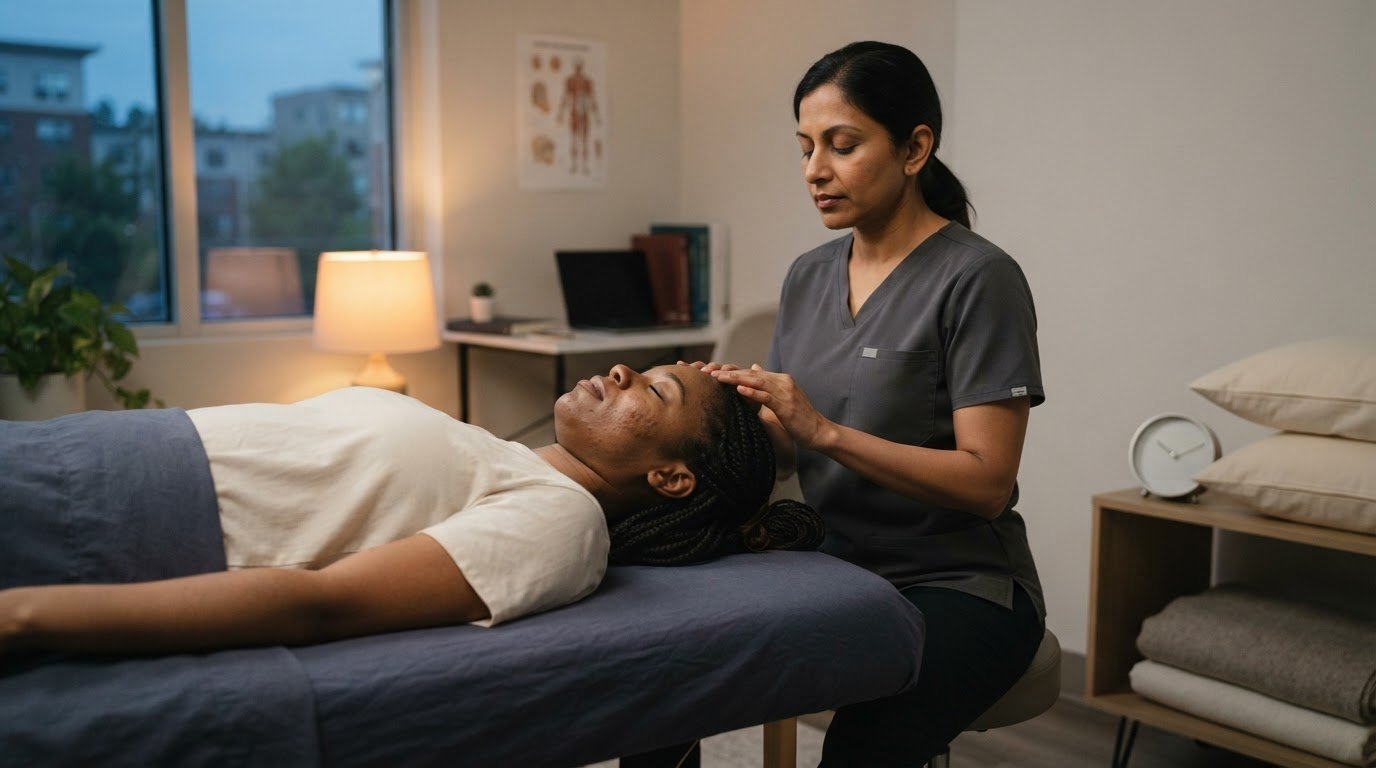
For cranial sacral therapy after concussion, keep the purpose realistic. CST isn’t a concussion assessment or a treatment proven to heal a brain injury. It doesn’t replace medical advice, monitoring, or rehabilitation recommended for your recovery. Consider it a possible complementary experience, not a promise of symptom relief or faster recovery.
A whole-person perspective can include attention to physical comfort and the way recovery affects daily life, while staying honest about what a therapy can and can’t do. Before considering a session, think about:
What kind of support you’re looking for, such as a gentle, attentive experience
Any sensitivities, symptom changes, or medical guidance that should shape your choices
How you’ll communicate discomfort or ask to pause during hands-on care
Choosing an informed next step
Keep the clinician overseeing your concussion recovery involved in decisions about complementary care. Share relevant advice, restrictions, and changes in symptoms, and use that guidance to decide whether the timing feels appropriate. If you’re unsure, it’s okay to wait. Move at your own pace, ask questions, and remember that informed consent includes the freedom to stop.
Exploring a service doesn’t require you to commit to a course of care or expect a particular result. A useful next step respects both your medical plan and your comfort. A conversation can help you describe your needs and understand how cranial sacral therapy fits within the practice’s broader manual care offerings, without treating it as a substitute for concussion care.
If you’d like to learn more about the practice’s approach or discuss a cranial sacral therapy session, get in touch with Minsu’s Healing Oasis.
Choose a Next Step That Feels Right for You
Recovery doesn’t have to follow a perfect timeline, and you don’t need to make every decision at once. If you’re weighing cranial sacral therapy after concussion, let your current needs and medical guidance shape the choice. You might write down what you hope complementary support could offer, what concerns you, and what would help you feel comfortable speaking up.
It’s okay to take time, ask questions, or decide that now isn’t the right moment. A thoughtful next step respects your recovery, your boundaries, and your readiness. Gentle support should feel like an invitation, never an obligation or a promise of a particular outcome.
To learn more about the practice’s approach and explore cranial sacral therapy, contact Minsu’s Healing Oasis. Move forward at your own pace, with curiosity, clarity, and care for yourself.
Frequently Asked Questions
Can cranial sacral therapy make concussion symptoms worse?
Responses vary, and a gentle approach isn’t automatically suitable for everyone. If you feel more discomfort or notice symptoms intensifying during a session, ask to pause or stop rather than pushing through. If changes are concerning, contact the clinician overseeing your recovery for guidance. Seek urgent medical care for emergency warning signs after a head injury rather than waiting to see whether symptoms settle after a session.
How many cranial sacral therapy sessions are needed after a concussion?
There’s no established universal session count for concussion recovery. Whether to consider a session, or another one, depends on your needs, response, and medical guidance, not a preset schedule. If you’re unsure whether to continue after an initial visit, discuss your experience with the clinician guiding your recovery. Don’t assume that more sessions will produce greater benefit, and keep medical follow-up in place.
Can children receive cranial sacral therapy after a concussion?
A child with a suspected concussion needs appropriate medical assessment first. Caregivers should follow the child’s clinician’s recommendations and discuss any complementary approach with them before making plans. There isn’t enough reliable information here to make broad age-specific claims about CST’s safety or effectiveness for children after concussion. If it’s considered, keep it secondary to the child’s care plan and share any new or changing symptoms with the clinician.
Does cranial sacral therapy require removing clothing?
Session arrangements can vary, so don’t assume what clothing or draping will be involved. Before hands-on care begins, ask what to expect and explain any boundaries or sensitivities that matter to you. You can decline any part of the experience, request a pause, or stop altogether. Clear communication helps you make a comfortable choice; you shouldn’t feel pressured to accept anything you haven’t agreed to.
Can cranial sacral therapy help post-concussion syndrome?
Ongoing symptoms after a concussion deserve appropriate clinical attention, especially if they affect daily activities or change over time. CST hasn’t been established as a treatment or cure for post-concussion syndrome. Some people may explore complementary care for comfort, but an individual’s experience can’t prove that the therapy is effective for the condition. Keep medical follow-up central and discuss persistent symptoms with the clinician overseeing your care.
Should I wait until my concussion symptoms are gone before considering CST?
There’s no universal waiting period that applies to everyone. Timing depends on your symptoms, recovery, and the guidance of the clinician overseeing your care. Before deciding, share any symptom changes and follow the recommendations in your care plan. Urgent or worsening symptoms take priority over a complementary session and need appropriate medical attention. You don’t have to rush; waiting until you have clearer guidance is a reasonable choice.


Comments