




Therapeutic Exercise Classes for Adults: Balance and Strength
Strength and balance grow through steady, purposeful movement, not one perfect workout. Therapeutic exercise classes bring balance practice, strengthening, flexibility, and conditioning into a supportive group setting, complementing individual care. Activities can be adapted to different goals and abilities.
It’s understandable to want exercise that feels both safe and worthwhile, especially when you’re working toward greater ease in everyday movement. This guide explains how classes can support physical goals, what a session may involve, and how group movement can fit alongside individual care. You’ll also learn what to consider when choosing an approach, so you can take your next step with greater clarity and confidence.
Table of Contents
Balance, strength, flexibility, and conditioning classes
Different class formats develop different parts of functional fitness. Daily Drive runs Monday through Friday and focuses on strength, cardio, and mobility. Back on Track is a full-body, low-impact strength class focused on muscular endurance, stability, and range of motion. These examples show how a class can combine conditioning with controlled movement, rather than focusing on one exercise alone. The right emphasis depends on whether your goal is steadier steps, easier reaching, or more stamina for daily routines.
Balance practice can rehearse movements used at home and outdoors. For example, shifting weight from one foot to the other challenges postural control, while stepping in different directions practices changing course. A stable chair or countertop can provide support during these movements. Such exercises are used for fall prevention, but they don’t guarantee that falls will be avoided. A class can build balance practice gradually, pairing supported motions with closer attention to posture and foot placement.
Chair yoga offers a seated way to explore mobility and balance. A participant might move from sitting upright to reaching one arm overhead, then return to a comfortable position. Gentle ankle circles or seated marching can also encourage motion through the hips and legs. These examples may suit adults who want to adapt movement or feel more secure with a chair nearby. The instructor can offer a seated variation when standing poses feel difficult.
Yoga and stretching can complement strength work by inviting controlled movement through comfortable ranges. For example, a standing side reach lengthens the torso, while a supported forward hinge practices movement at the hips. Stretching should feel manageable, not forced; smoother breathing and gradual motion can help participants stay attentive to their bodies. In a class, these practices can sit alongside strengthening and conditioning, creating a balanced session for flexibility, mobility, and recovery.
Exercise benefits and health goals
Medicare doesn’t cover preset therapy programs, such as classes giving every participant the same activities and exercises. According to the Centers for Medicare & Medicaid Services, covered services must be individualized, medically necessary, and require a therapist’s unique skills. Coverage through other health insurance depends on the plan and how the service is classified.
A useful program starts with a goal you can recognize in daily life. You might aim to rise from a chair more comfortably, carry groceries with greater ease, or follow a walking routine. An instructor can choose techniques that match that aim, then adjust the workout as your movement and tolerance change. A challenging activity should still allow controlled form and steady breathing. Dynamic movement, such as repeated sit-to-stands, can connect strength practice with a familiar task.
Wellness goals can also shape how a class feels and flows. If you’re seeking a calmer routine, you may value predictable instructions, paced breathing, and a quiet moment between activities. Group movement can provide structure and shared participation, while clear options help each person stay engaged. A class can support general wellness, but it isn’t a substitute for mental health care. Naming the experience you want can help you choose a suitable class and pace.
Bone health is another goal to discuss when planning exercise. A program may use weight-bearing movement, such as standing exercises, alongside resistance work suited to the participant. The techniques and level of challenge depend on movement ability, comfort, and rehabilitation goals. Rather than pursuing intensity for its own sake, focus on consistent, controlled practice. Individualized care can connect exercise choices to broader health needs, while a general fitness class typically follows a shared format.
Before joining a class, identify one daily task you want to make easier and one activity you enjoy. Those examples can help you decide whether to focus on strength, conditioning, or a restorative routine.
Adult therapeutic exercise
Exercise can pair physical practice with tasks that engage attention. A useful routine connects movement to everyday function and personal goals.
Choosing a class for your needs
Choose a class by identifying the daily activity you want to support, such as walking comfortably or reaching overhead. Then match that goal to the class focus: conditioning, strength, or movement practice. Consider whether the activities offer options that suit your current ability. A class should engage you while allowing controlled movement.
Finding a qualified class nearby
Look for a nearby class whose description explains its focus, instructor role, and options for adapting exercises. The U.S. Bureau of Labor Statistics says fitness trainers and instructors promote wellness through exercise but don’t necessarily treat chronic conditions. For chronic-condition care, distinguish general fitness instruction from individualized rehabilitation. In the U.S., cost depends on the case and is given after a quote request; factors include class format, individualization, and whether therapy is included.
Expectations for your first class
Your first session may begin with an explanation of the class format and movements. Share your goals and relevant movement limitations, then follow demonstrations at a comfortable pace. For example, a standing exercise may have a supported variation. Adult neuro rehabilitation commonly uses repetitive, task-specific exercises targeting motor skills, strength, and coordination. Dual-tasking can pair a simple memory or attention challenge with physical movement.
Risks and precautions
Choose controlled movement over speed, especially when learning a new exercise. A chair or stable support can help you practice a standing movement with added steadiness. Tell the instructor which movements feel difficult, and use available adaptations rather than forcing a range that feels uncomfortable. If a class includes cardio, strength work, and balance tasks, follow each demonstration and pause when you need clarification. Clear communication helps the instructor guide safer participation.
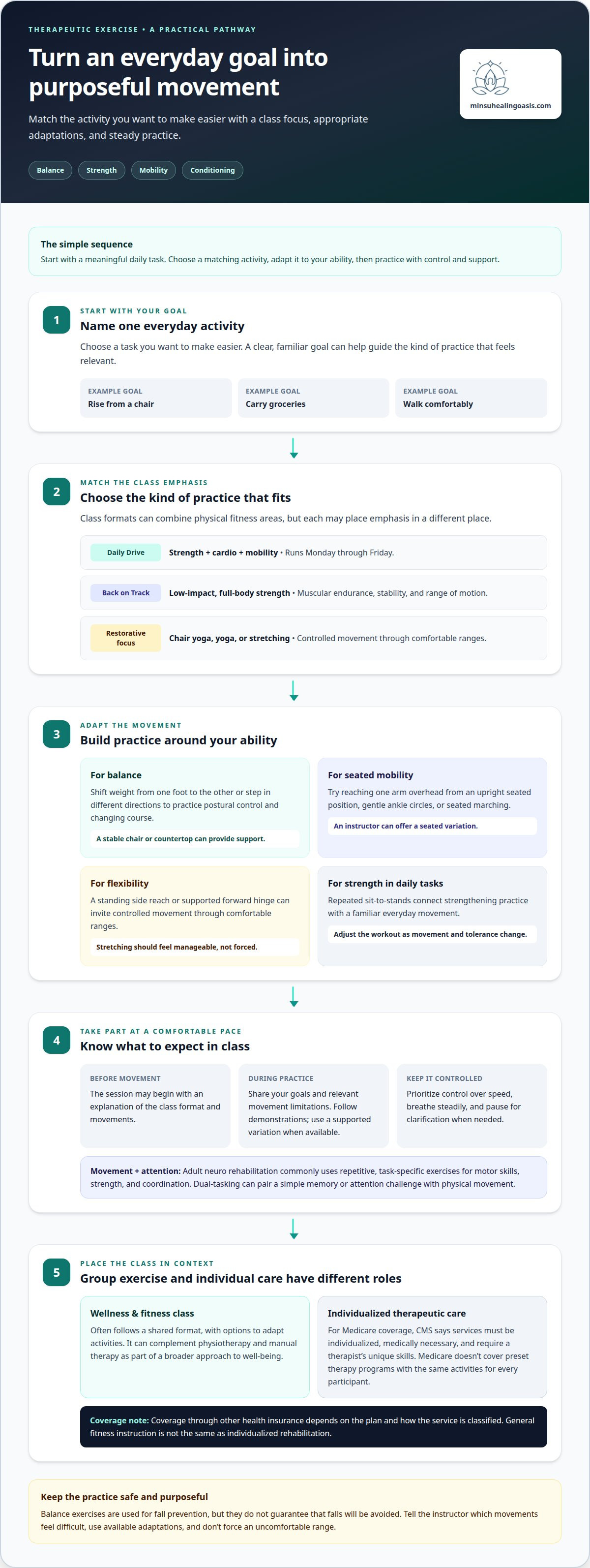
Class participation alongside therapy sessions
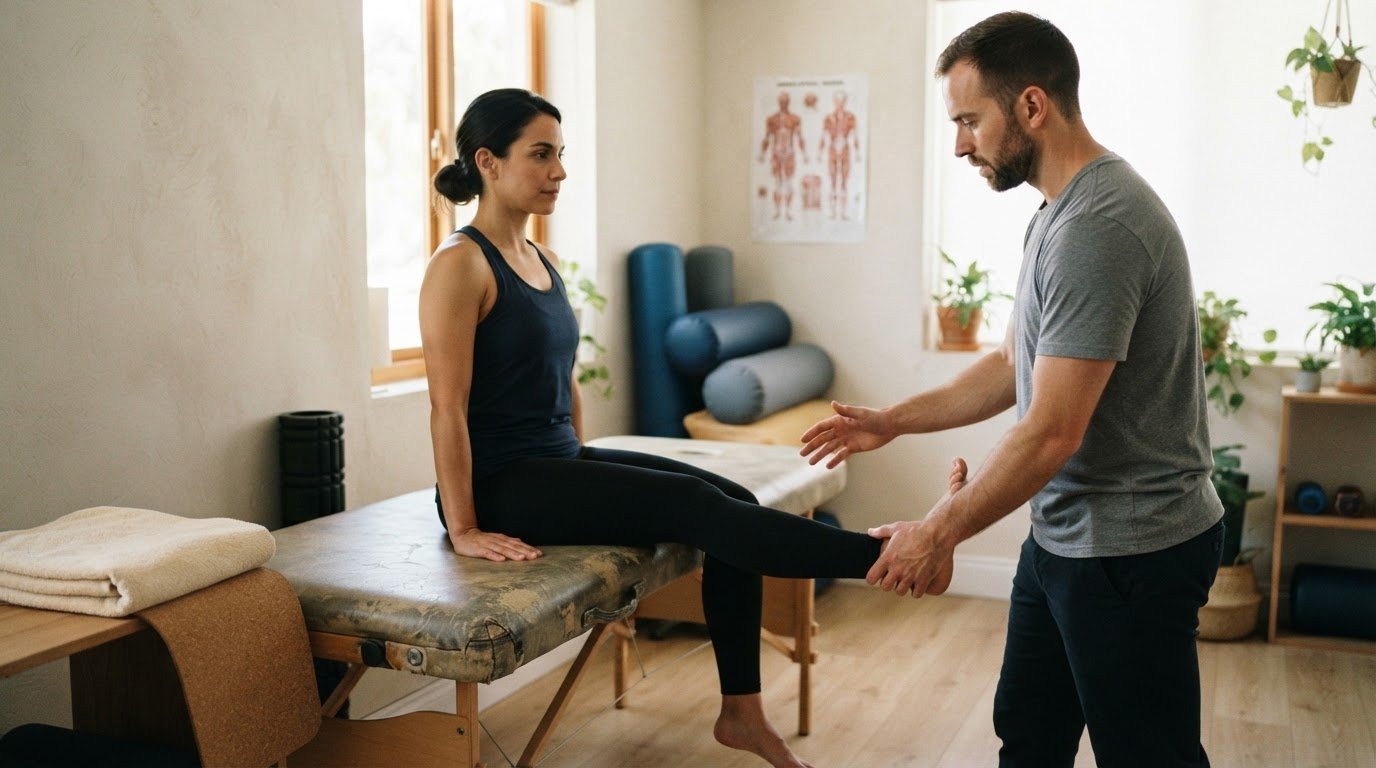
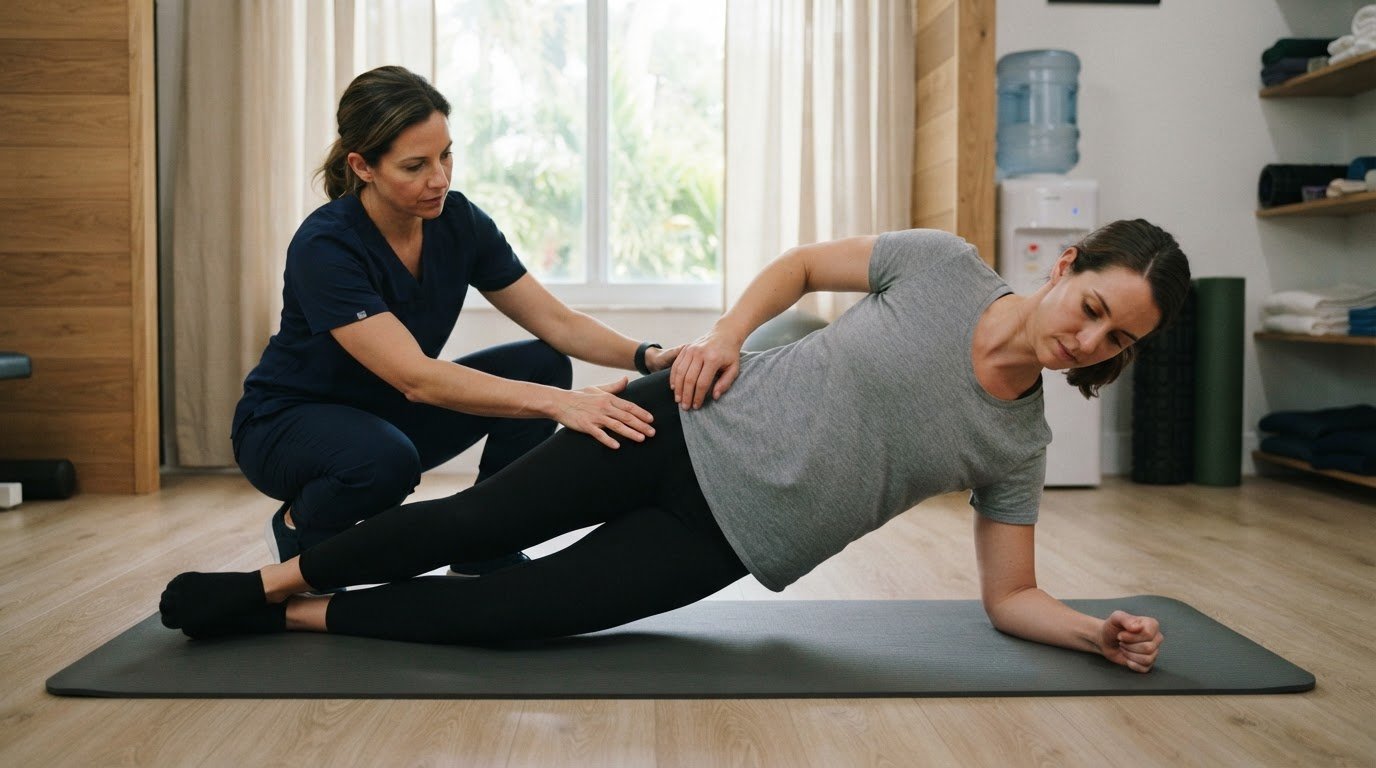
Therapeutic exercise classes offer structured group movement, while physical therapy focuses on an individual’s assessment and care. Fitness classes generally follow shared routines; therapy may address a specific injury or movement limitation. For example, a class might practice general strength and flexibility, while individualized care focuses on difficulty using one shoulder.
To combine the two, keep their purposes distinct. A therapist may guide individualized exercises for a particular limitation, while a wellness class offers broader practice, such as gentle conditioning or coordinated movement. Share relevant limits with the class instructor, and follow the adaptations provided. That helps each activity serve its intended role without treating a group workout as a replacement for individualized care.
It can be helpful to connect class movements with therapy goals. If individual care focuses on lifting an arm comfortably, a class can offer general movement practice while therapy addresses the specific limitation. If injury recovery is the priority, follow your therapy plan and keep class activities within the movements appropriate for your participation. Flexibility work can support a broader routine, but it doesn’t replace individualized guidance.
Coverage depends on the service provided. The Centers for Medicare & Medicaid Services says Medicare doesn’t cover preset therapy programs that use the same exercises for every participant. Covered services must be individualized, medically necessary, and require a therapist’s unique skills. This distinction can help explain why a group fitness class and one-to-one therapy may be treated differently.
For a practical next step, bring your therapy goals into the conversation before joining a class. Ask how the instructor adapts an activity, such as a standing exercise, for different movement needs. To explore wellness and fitness classes as part of a wider routine, consider how group practice could complement your individual therapy sessions.
Minsu’s Healing Oasis: Wellness & Fitness Classes
Minsu’s Healing Oasis offers Wellness & Fitness Classes for adults seeking a supportive place to pursue movement and fitness goals. If pain, limited movement, or recovery needs call for individualized care, Physiotherapy and Manual Therapy can complement a broader wellness routine. Myofascial release is also available as a separate offering.
Consider these options when you want to bring general exercise and personal care into the same approach. A class can support your wellness goals, while individualized care addresses specific movement concerns. The right next step depends on what you hope to work toward and the kind of support that feels appropriate.
For a conversation about your goals, contact Minsu’s Healing Oasis.
Take Your Next Step Toward Steadier Movement
Your next step can begin with one clear intention: choosing movement that feels purposeful and suits the support you need. As you consider therapeutic exercise classes, think about the daily activities you hope to approach with greater ease and the kind of guidance that helps you stay engaged. Progress can start with a thoughtful conversation about those priorities.
Minsu’s Healing Oasis offers Physiotherapy and Manual Therapy, Energy Healing and Alternative Therapies, and Myofascial release. These offerings create options for people seeking support that extends beyond a group fitness routine. You can explore which approach best reflects your goals and where you’d like to begin.
Contact Minsu’s Healing Oasis to discuss a next step that feels right for you. Let your goals guide the way forward, one steady, meaningful movement at a time.
Frequently Asked Questions
What Are The Benefits?
These classes provide a dedicated setting to practice movement that supports everyday independence. For example, repeating a controlled reach lets you rehearse an action used to place items on a shelf. A class also creates a regular opportunity to focus on physical activity, rather than fitting movement into an already busy day. The value lies in consistent, purposeful practice, not a guaranteed outcome.
When To Do Them?
Choose a class time that fits your routine and leaves space for focused participation. If you also receive individual care, keep the purpose of each session clear and plan class activity around your broader schedule. For example, you might choose a class on a day when you can arrive without rushing and give the movements your attention. The best timing is one you can sustain comfortably.
Who Can Do Them?
Adults with different activity levels may take part, including people beginning a fitness routine or seeking structured movement practice. Class activities may offer modifications, such as performing an exercise seated rather than standing. Your goals, movement ability, and comfort can help you decide which format suits you. Athletic experience isn’t required; clear instructions and accessible options can make a class easier to approach.
What are therapeutic exercise classes?
Therapeutic exercise classes are organized group sessions built around purposeful physical activity and wellness goals. They may include guided movements that develop strength, mobility, or coordination. Unlike an individualized therapy appointment, a group class generally offers shared instruction, with possible variations for participants. The instructor demonstrates activities, and participants choose options suited to their movement needs and the class format.
What types of classes are available?
Formats can include strength and conditioning, chair-based movement, yoga, stretching, and balance-focused activities. Each offers a different experience: chair-based movement provides seated options, while a conditioning class may include more continuous activity. Some therapeutic exercise classes combine elements, such as stretching with balance practice. Reading the class description can help you understand its focus before taking part.
Who can benefit from these classes?
Adults seeking a guided way to stay active may find a group class useful, whether their goal is to move with greater confidence or build a steadier routine. Someone returning to regular activity might prefer gentle movement, while a more active participant may enjoy varied practice. Classes can support wellness goals, but they don’t replace individualized care when specific treatment is needed.
Comments