




Relaxation Techniques for Chronic Pain, From Breathing to Muscle Release
Updated: 4 days ago
What if easing the tension around chronic pain begins with a moment of attention, rather than a push to ignore it? Relaxation techniques for chronic pain include slow breathing, mindfulness, and progressive muscle relaxation, which may help settle stress and support physical well-being. Mindfulness means noticing thoughts, feelings, body sensations, and your surroundings from moment to moment.
If pain makes it hard to feel calm, that response is understandable: pain and stress can affect one another, and tense muscles may add to discomfort. These practices aren’t about forcing pain away; they offer ways to notice what’s happening and create space for a gentler response.
Table of Contents
Deep breathing and meditation
Which relaxation techniques are effective for chronic pain? Slow diaphragmatic breathing and mindfulness may ease stress and support a calmer response to discomfort. During intense pain, slow breathing may help you feel more in control and reduce the added strain of tension or anxiety. These relaxation techniques for chronic pain offer a gentle way to respond, not a promise that pain will disappear.
Focused and Slow Breathing
Focused, slow breathing means paying attention to each breath as it moves in and out. This steady focus may help settle muscle tension and other physical signs of stress, especially when pain feels consuming. Notice your breathing without judging it, and let the movement of your belly become a calm point of attention.
For example, pause wherever you are and follow one comfortable breath from beginning to end. If your mind wanders, return your attention to the next breath rather than trying to force thoughts away. This practice can fit at home or into an everyday moment, such as sitting on a bus. Keep the pace easy and natural.
Deep Breathing Exercises
Diaphragmatic breathing is a deep-breathing exercise in which your belly expands as you inhale and releases as you exhale, with little movement in your shoulders or chest. Breathe in slowly through your nose, briefly hold the breath, then exhale slowly through your mouth. Keep each breath comfortable rather than straining.
Square breathing uses a measured rhythm of inhaling, holding, and exhaling. Practice square breathing for no more than one minute at a time. The measured rhythm can help interrupt stress and ease the urge to brace, giving your attention a steady anchor during a difficult moment.
Meditation Practices
Mindfulness meditation means noticing thoughts, feelings, physical sensations, and your surroundings from moment to moment. A body scan is one way to practice: move your attention gently from one area to another, observing sensations without judgment. This can help you notice tension before reacting to it.
Focused breathing is another meditation practice: rest your attention on your belly’s movement during a relaxed breath. For some people, relaxation techniques for chronic pain include this kind of brief, attentive pause at home or during daily activities. If an exercise brings emotional discomfort, stop and speak with a healthcare or mental health professional.
Progressive muscle relaxation
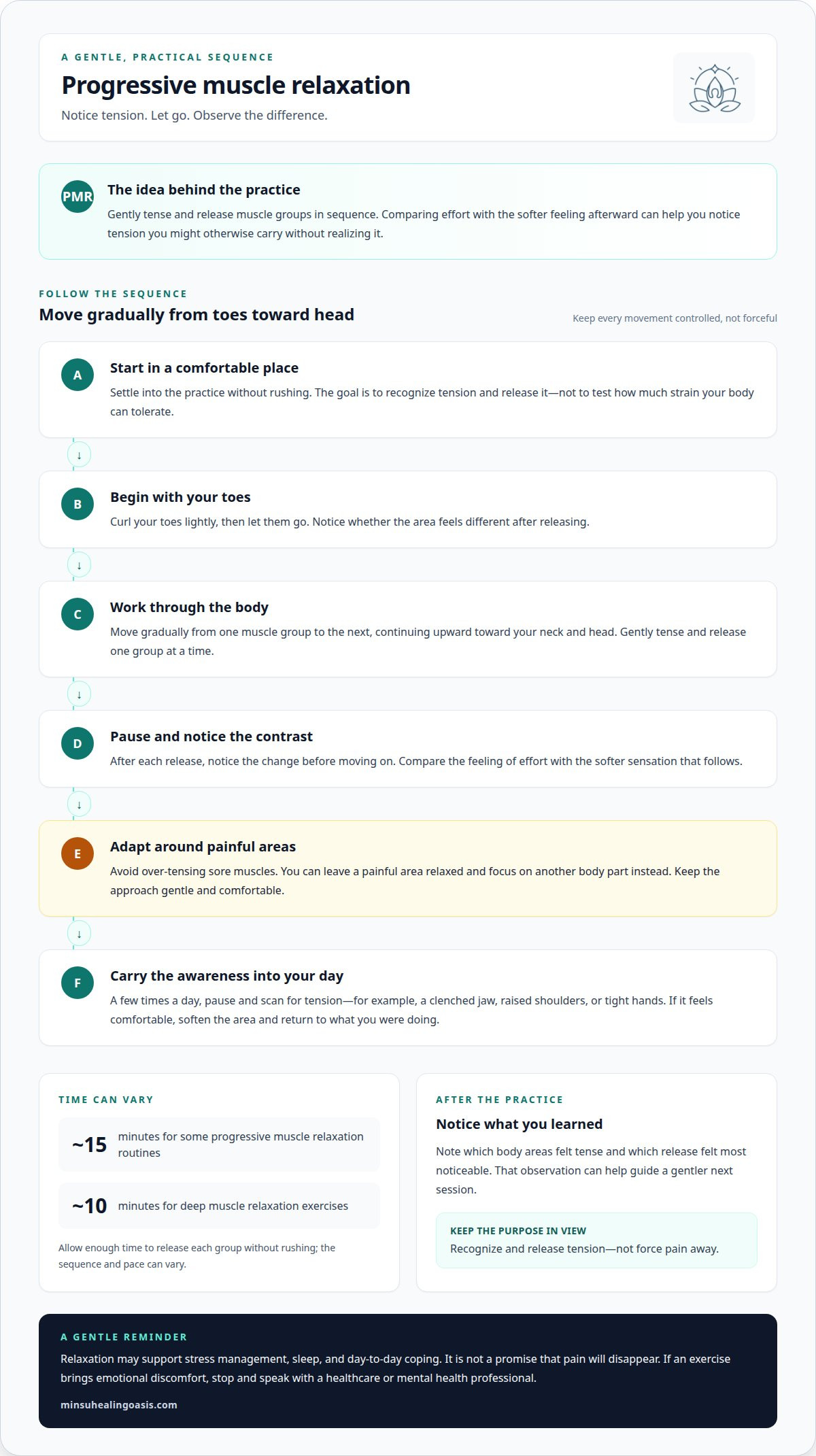
Progressive muscle relaxation trains you to notice tension by deliberately tightening and releasing muscle groups. Work through the body in sequence, comparing the feeling of effort with the softer sensation that follows. This contrast can reveal tension you might otherwise carry unnoticed, including around areas affected by chronic pain.
Begin with your toes and move gradually toward your neck and head. Gently tense and release one muscle group at a time, noticing the difference. Notice the change before moving to the next area. For example, curl your toes lightly, let them go, and observe whether they feel different afterward. Keep the movement controlled, not forceful.
Painful areas need special care during this practice. Avoid over-tensing them; you can leave a sore muscle relaxed and focus on another body part instead. The purpose is to recognize and release tension, not to test how much strain your body can tolerate. Keep your approach gentle and notice the contrast between tightening and letting go.
Recognizing tension matters beyond a formal session. A few times a day, pause and scan for signs such as a clenched jaw, raised shoulders, or tight hands. These examples can make tension easier to spot before it spreads through surrounding muscles. Once you notice it, soften the area if that feels comfortable, then return to your activity.
Some progressive muscle relaxation routines take about fifteen minutes, while deep muscle relaxation exercises take about 10 minutes. The sequence and pace can vary, so allow enough time to release each group without rushing. Relaxation can also support pain-related sleep disturbance and fatigue. After practicing, note which body areas felt tense and which release felt most noticeable; that simple observation can guide a gentler next session.
Benefits of relaxation for stress and physical well-being
Stress can add to the strain of living with persistent pain. Relaxing your mind and muscles can support stress and anxiety management, clearer thinking, and coping with daily challenges. For example, pausing during a tense moment to notice your body may help you recognize when worry and physical tightness are building together. That awareness gives you a chance to respond more deliberately.
Rest can benefit, too. Learning to relax can support sleep, while a calmer state may make it easier to settle at bedtime and face the next day with more energy. Pair a quiet relaxation practice with a regular bedtime and wake-up time. If pain or worry interrupts your evening, return your attention to a calming sensation rather than struggling to force sleep.
Consistency helps you see how a practice fits your life. Try one relaxation exercise every day for a week, including when pain isn’t too high. You might also practice around three times a day and during a flare-up. Starting with one technique makes it easier to notice whether it supports your mood, stress, or everyday comfort before adding another.
To observe an immediate change, rate your stress on a 1-to-10 scale before and after a session. A lower rating can show a shift in stress, even if pain remains. After a week, reflect on the overall pattern in mood, pain, and stress. If relaxation brings emotional discomfort, stop the exercise and talk with a healthcare or mental health professional.
Gentle everyday movement can complement quiet practices. Walking, swimming, gardening, and dancing are examples of activities that can ease pain by stretching stiff muscles, ligaments, and joints, and by blocking pain signals to the brain. Choose an activity that feels manageable, then increase it gradually. Pairing movement with dedicated personal downtime—whether resting quietly at home or unwinding with self-care services at places like Diva Nails n' Spa—can support physical well-being without making one practice carry the whole burden.
How relaxation techniques can help with chronic pain
Relaxation may help ease persistent pain by reducing stress and supporting a calmer response to discomfort. It works alongside other approaches, rather than replacing care suited to your health needs.
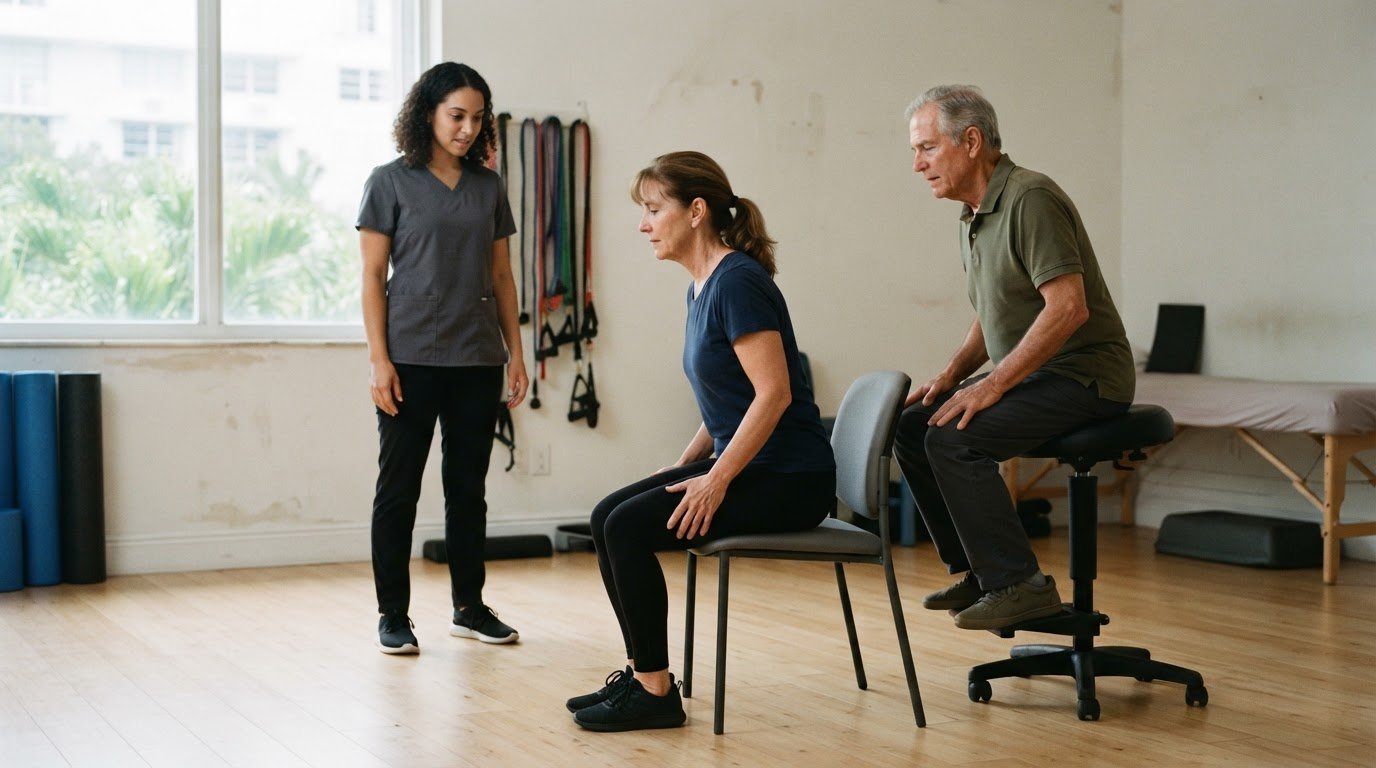
How do relaxation techniques compare with CBT, physical therapy, and medication for chronic pain? CBT helps change thought patterns and behaviors related to pain, while physical therapy uses targeted exercises and stretches to improve function and reduce pain. Relaxation focuses on stress and tension; each approach addresses a different part of the pain experience.
How often and for how long should you practice? Try a relaxation exercise daily for a week, including when pain is manageable, and notice changes in mood, pain, and stress. Some guidance suggests practicing around three times a day, with additional practice during a flare-up.
What does research say about effectiveness for specific chronic pain conditions? Regular practice may help reduce persistent pain and long-term stress related to pain, but the information here doesn’t establish different results for particular conditions. The useful takeaway is to observe your own response over time, rather than expect one technique to work the same way for everyone.
Can relaxation worsen pain or cause other risks? If an exercise brings emotional discomfort, stop and speak with a healthcare or mental health professional. During muscle release, avoid forcefully tensing a painful area; choose a gentler focus instead.
Are relaxation apps, online programs, or in-person classes effective? The format alone doesn’t show whether a practice suits you; focused breathing and body scanning can also fit into everyday settings. Classes may be available locally or through a hospital pain clinic, and a GP can offer advice about relaxation for pain.
How can you find low-cost programs nearby? Ask your GP about local options, including classes at a hospital pain clinic. Compare the format with what you can practice consistently, such as a short breathing exercise at home or a guided class.
Minsu’s Healing Oasis: Quantum Healing Technique
Minsu’s Healing Oasis offers Quantum Healing Technique as an alternative therapy for people seeking a broader, whole-person approach alongside relaxation practices. It may be a next step if you want support that considers your physical and emotional well-being together, rather than relying on breathing or meditation alone.
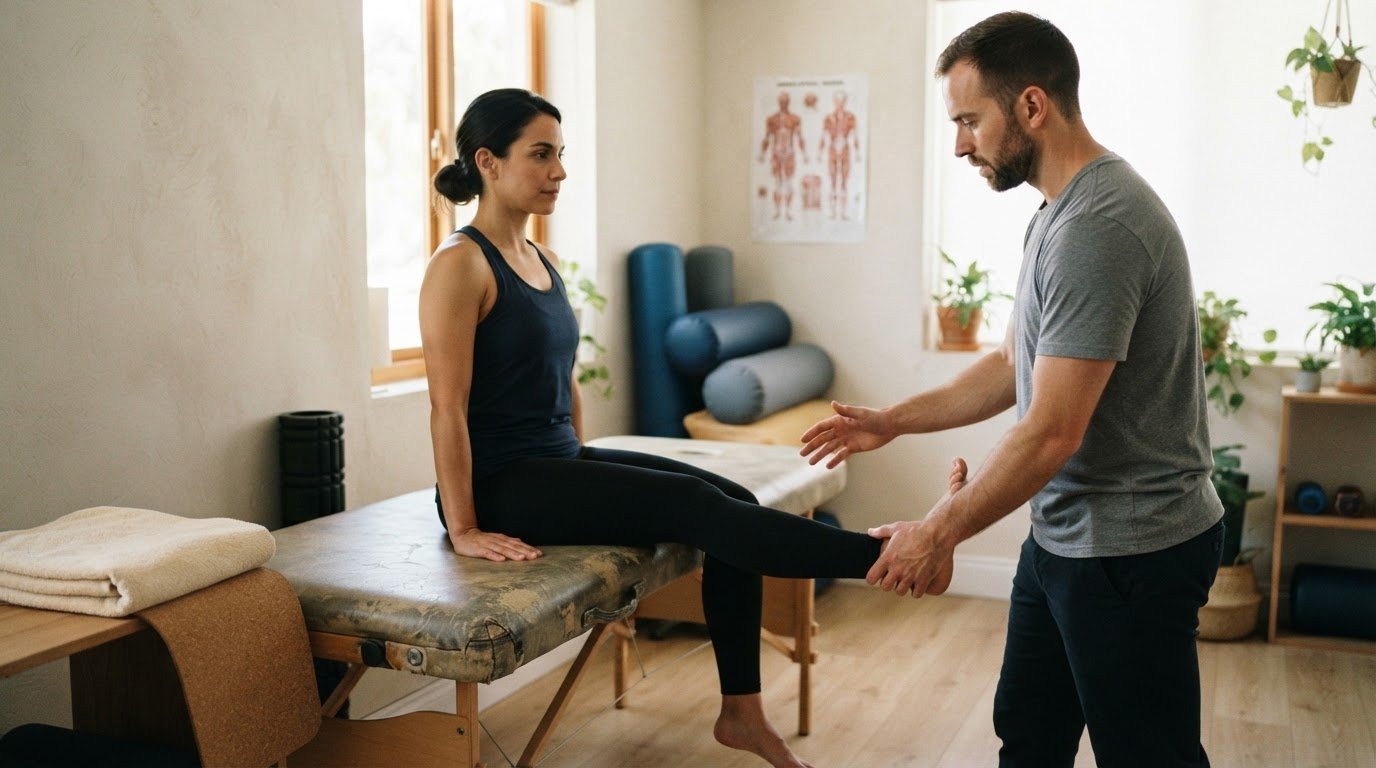
For movement-related concerns, Minsu’s Healing Oasis offers Physical and Manual Therapies. Myofascial release may also be relevant when muscle tightness is part of your experience. These services complement the self-guided techniques discussed here while addressing different needs. Consider what kind of support feels most aligned with your current goals and daily experience.
If you’d like to explore these options, contact Minsu’s Healing Oasis.
Make Space for a More Supported Path
Living with ongoing pain can ask you to adapt from one day to the next. Let relaxation practices be options you can return to, not another task you must perform perfectly. Notice which approach feels manageable in the moment, and make room to adjust as your needs shift.
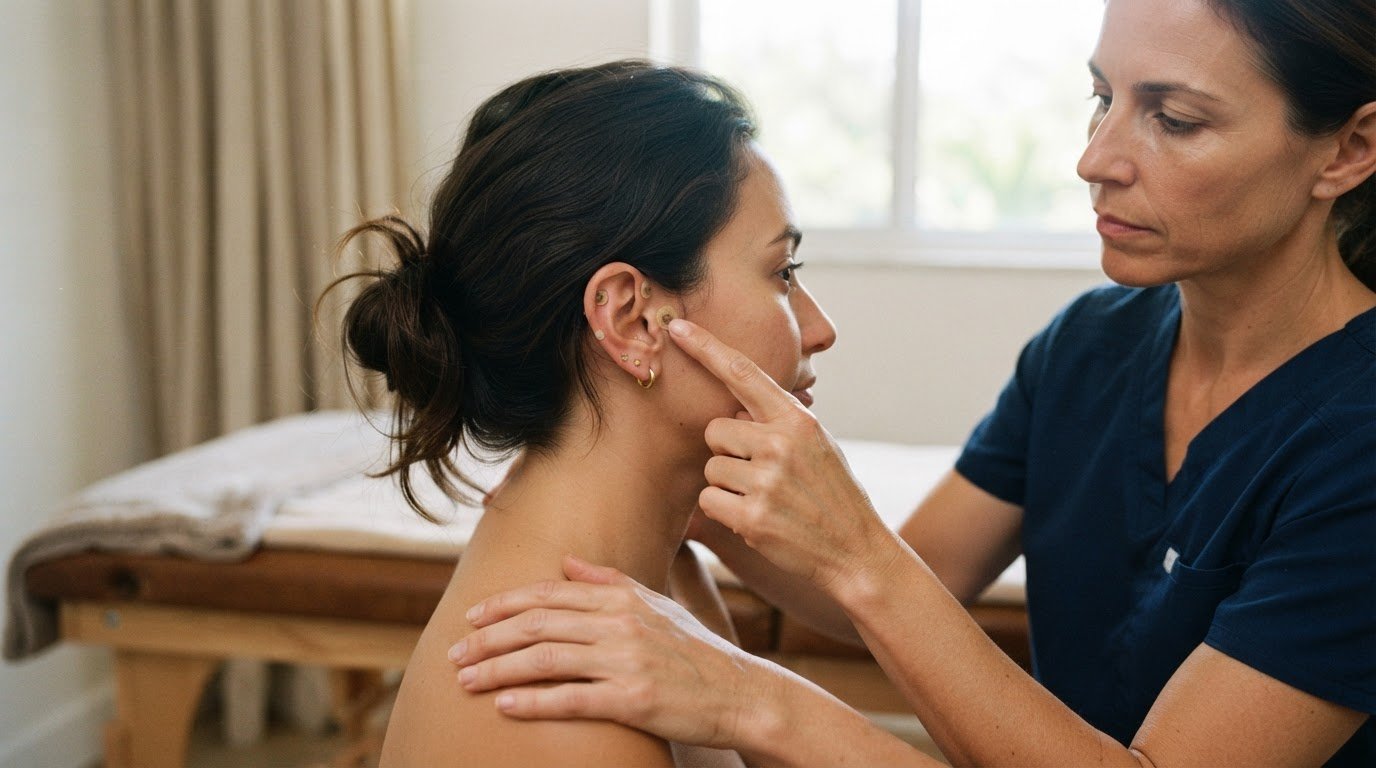
If you’d like support beyond self-guided practice, Minsu’s Healing Oasis offers Physical and Manual Therapies, Energy Healing and Alternative Therapies, and Myofascial release. These approaches can complement relaxation techniques for chronic pain as part of a broader focus on physical and emotional well-being.
Your next step can be simple: explore the support that feels relevant to you and decide what you’d like to discuss. Contact Minsu’s Healing Oasis to begin a conversation about your care.
Each small moment of attention can help you meet your body with greater patience. Keep moving toward the support and steadiness that feel right for you.
Frequently Asked Questions
Transcript: What is Mindfulness?
Mindfulness is noticing thoughts, feelings, physical sensations, and your surroundings as they arise, without immediately judging them. For example, while waiting in line, you might notice your feet on the floor, nearby sounds, and thoughts about the day. The practice isn’t about emptying your mind; it’s about recognizing what’s present and gently returning your attention to the moment.
How does mindfulness meditation help manage chronic pain?
Mindfulness meditation can help you observe pain and stress without getting as caught up in your reactions. For instance, during a difficult moment, you might notice discomfort, identify worry as a separate experience, then bring your attention to a neutral sensation, such as your hands resting. This shift in attention may support coping, even when the pain itself is still present.
What is progressive muscle relaxation, and how do you practice it for pain?
Progressive muscle relaxation involves gently tightening and releasing muscle groups to notice tension and ease. Move through a comfortable sequence, such as your feet, hands, and shoulders, and pay attention to each release. Keep the effort mild, and skip any area that hurts rather than tightening it. The contrast helps you recognize tension you may not have noticed.
Can diaphragmatic breathing or guided imagery reduce chronic pain?
Diaphragmatic breathing and guided imagery may support relaxation and help shift your attention during pain. With diaphragmatic breathing, let your belly expand as you breathe in, then release as you breathe out, keeping your shoulders relatively still. For imagery, picture a pleasant place and imagine its sights, sounds, smells, textures, or temperature. These practices can offer a calming focus during stressful moments.
Comments