




Holistic Therapy for Anxiety: A Guide to Complementary Care
What if anxiety care made room for both the thoughts you’re carrying and the tension you feel in your body? If you’re searching for holistic therapy for anxiety, competing claims can make it hard to know what complementary approaches can and cannot do. They don’t have to be an either-or choice: complementary support may sit alongside appropriate mental health care, rather than replace it.
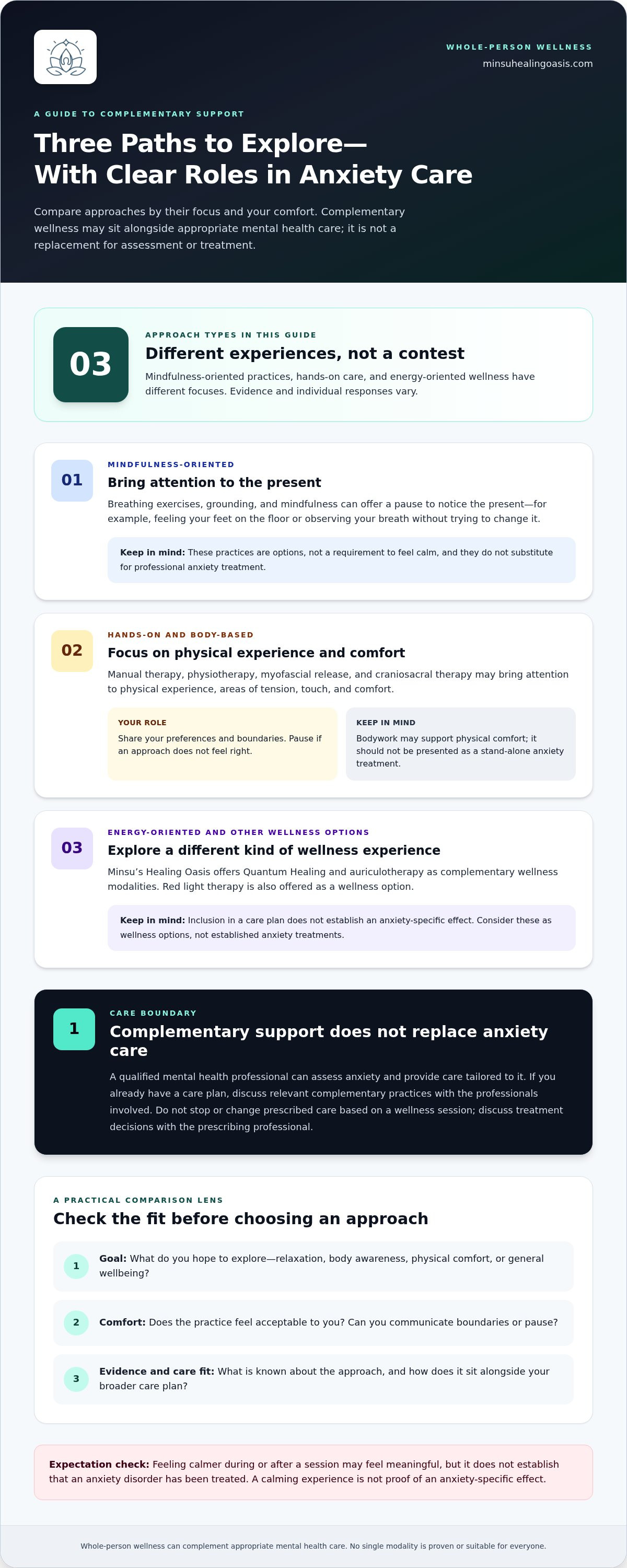
A whole-person approach considers emotional wellbeing, physical comfort, and individual needs. At Minsu’s Healing Oasis, physiotherapy and manual therapy are offered alongside craniosacral therapy and myofascial release. These services can be explored as part of personal wellness, without assuming they treat anxiety or work the same way for everyone.
This guide explains how to compare complementary options, consider how they fit with established anxiety care, and prepare questions for your mental health professional. It also offers practical ways to explore next steps at a pace that respects your needs.
Table of Contents
What holistic therapy for anxiety means, and what it does not promise
Anxiety can affect more than your thoughts. It may show up as a tight jaw, restless sleep, a fluttering feeling in your chest, or difficulty keeping up with everyday routines. These experiences can be exhausting, and they deserve attention without assuming that every sensation has one simple cause.
Holistic therapy for anxiety describes a whole-person perspective that may consider emotional wellbeing, physical comfort, daily habits, and personal values. The term covers varied approaches, from mindfulness practices to hands-on or energy-oriented wellness sessions. Complementary and alternative medicine is a broad category for practices used alongside, or sometimes in place of, conventional care. Here, “complementary” means an approach considered alongside appropriate mental health care, not as a replacement for it.
No single modality is proven or suitable for everyone. People have different needs, preferences, health histories, and responses to care. A practice that feels grounding to one person may not feel comfortable or useful to another. Be cautious of claims that a single technique can uncover the sole cause of anxiety or reliably resolve it. Anxiety isn’t necessarily just a physical issue, a spiritual concern, or evidence of one underlying imbalance.
How whole-person support differs from anxiety treatment
Whole-person wellness support and mental health treatment can have different roles. A qualified mental health professional can assess anxiety and provide care tailored to it. A complementary practice may offer time to focus on relaxation, body awareness, or general wellbeing. If you already have a care plan, discuss relevant complementary practices and concerns with the professionals involved. Don’t stop or change prescribed care based on a wellness session; discuss treatment decisions with the prescribing professional.
Holistic support considers the person as a whole and may complement anxiety care, but it doesn’t promise a cure or replace professional assessment and treatment. That distinction leaves room for personal choice while keeping expectations clear.
Why anxiety can feel physical as well as emotional
When the brain perceives stress or threat, the body can shift into a state of alertness. You might notice faster breathing, muscle tension, a pounding heartbeat, stomach unease, or trouble settling at night. These sensations can occur alongside worry or fear, but they can also have other causes. On their own, they don’t diagnose anxiety.
A calming activity may feel supportive in the moment, but feeling more at ease during or after a session doesn’t establish that an anxiety disorder has been treated. Bodywork may address physical comfort, while mental health care can help assess and treat anxiety itself. Keeping these roles distinct makes room for compassionate care that respects your individual needs.
How complementary approaches may support a broader anxiety-care plan
Complementary care includes different methods, not a contest with one winner. You may prefer a quiet practice to try at home, hands-on support, or an energy-oriented wellness session. Start with what you hope to explore, what feels comfortable, and how the approach fits alongside your existing care.
Compare modalities by their purpose and what a session involves rather than assuming they work alike. Some focus on present-moment attention, some on physical experience, and others are offered as energy-oriented wellness practices. The NCCIH overview of anxiety and complementary health approaches is one resource for understanding that research and evidence vary across approaches. A moment of relaxation or comfort may feel meaningful, but it isn’t proof that a practice treats an anxiety disorder.
Body-based and mindfulness-oriented support
Breathing exercises, grounding, and mindfulness can help some people pause and notice the present. For example, you might pay attention to the feeling of your feet on the floor or observe your breath without trying to change it. These practices are options to explore, not a requirement to feel calm, and they aren’t a substitute for professional anxiety treatment.
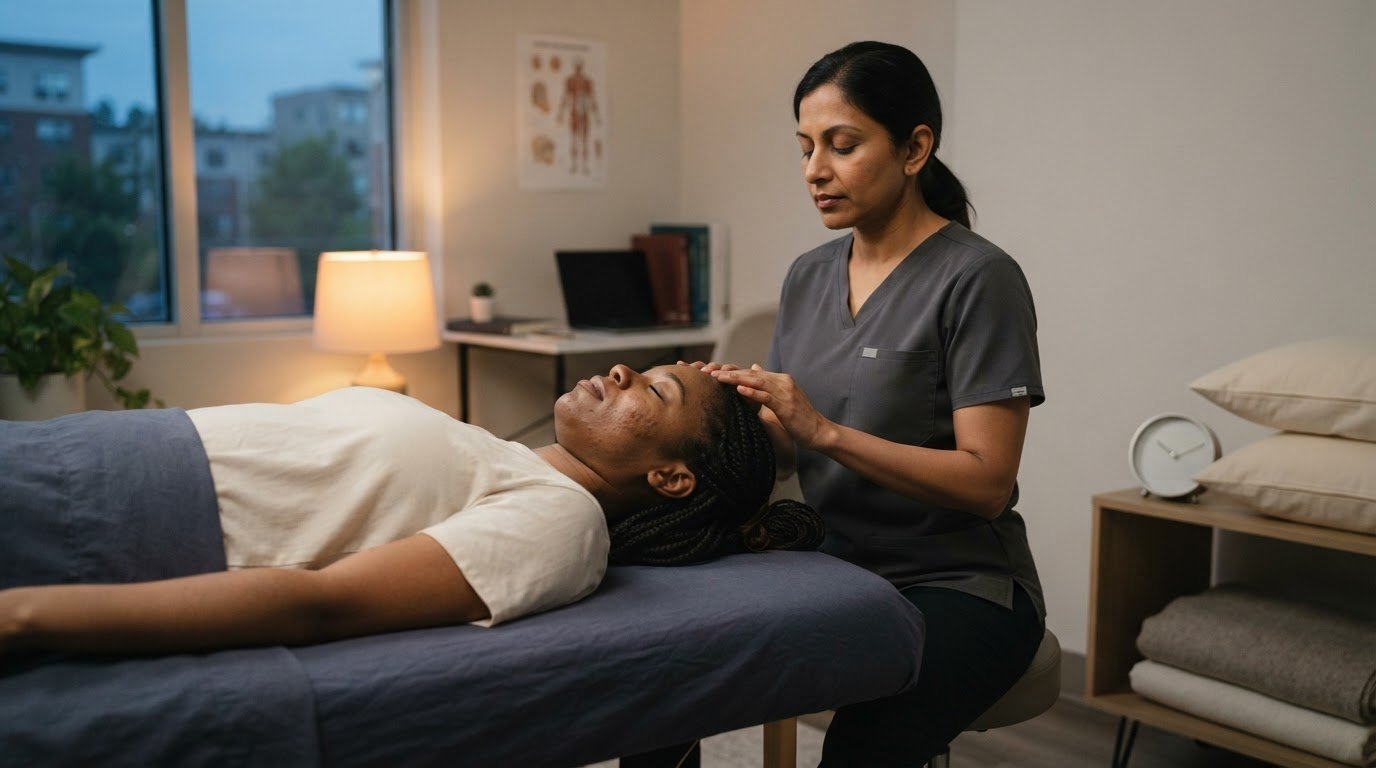
Myofascial release and craniosacral therapy are hands-on approaches that focus on physical experience. A session may bring attention to areas of tension, touch, and comfort. These modalities may be part of a broader wellness plan, but bodywork should not be presented as a stand-alone treatment for anxiety. Your comfort and preferences matter: communicate your boundaries and pause if an approach doesn’t feel right.
Energy-oriented and other complementary modalities
Energy-oriented approaches have a different focus from mindfulness practice or hands-on manual therapy. Minsu’s Healing Oasis offers Quantum Healing and auriculotherapy as complementary wellness modalities. They may appeal if you’re seeking a different kind of wellness experience, but their inclusion in a care plan isn’t evidence of an anxiety-specific effect. Red light therapy is another modality offered at the center. Consider it as a wellness option, not as an established anxiety treatment.
Thoughtful complementary care is matched to your goals, comfort, and broader care plan, rather than chosen as a universal fix. You might want to build a self-guided grounding practice, explore hands-on support for physical comfort, or learn about an energy-oriented modality. Naming your intention can clarify what you want from an experience without setting an expectation for a particular result.
If you’re curious about combining physical and complementary wellness support, you can explore physiotherapy and complementary wellness services at Minsu’s Healing Oasis as potential additions to appropriate mental health care.
Choosing holistic therapy for anxiety: compare fit, comfort, and evidence
Choosing an approach is less about finding a universal “best” and more about matching the experience to your goals while staying grounded in evidence. Do you prefer a guided conversation, a practice you can try on your own, or hands-on support? Comfort matters, but personal preference alone can’t establish whether an approach is effective or appropriate for a health concern.
Use this comparison as a starting point, not a ranking. Experiences vary, and the goals below are personal wellness intentions, not promised clinical outcomes.
What to weigh when comparing different approaches
Consider the format you’re comfortable with, the goal you want to explore, and what is known about the approach. A personal goal, such as feeling more at ease during a wellness session, differs from a clinical outcome, such as reducing symptoms of a diagnosed condition. Review current evidence and safety information from sources such as the National Center for Complementary and Integrative Health, and bring questions about care choices to an appropriate health professional.
Consider practical fit too: whether you prefer a self-guided practice or a scheduled session, whether touch feels comfortable, and whether the approach aligns with your health needs. You’re allowed to change your mind. A respectful experience leaves room for questions and clear boundaries.
When complementary support should not be the only step
If anxiety persists, worsens, or disrupts sleep, relationships, work, or everyday routines, consider speaking with a qualified mental health professional or another appropriate healthcare professional. Complementary sessions may be explored alongside care, but they shouldn’t delay an assessment or replace treatment. Don’t stop medication or change a treatment plan without first discussing it with the prescribing clinician.
If you or someone else is in immediate danger, contact emergency services. In the U.S., call or text the 988 Suicide & Crisis Lifeline for crisis support. Holistic therapy for anxiety can be part of a thoughtful wellness plan, while clinical guidance helps keep decisions responsive to your needs and safety.
Prepare for a holistic therapy session with clear goals and boundaries
A little preparation can help you feel more present and shape the session around your needs. You don’t need a perfect plan. A few notes about what you hope to explore, what feels uncertain, and what helps you feel comfortable can make it easier to communicate.
Identify a personal goal: You might want to explore relaxation, body awareness, physical comfort, or movement.
Note concerns: Write down questions, sensitivities, or anything that could affect your comfort during a session.
Share relevant context: Tell the practitioner about relevant health information and current care, including medication or treatment plans.
Reflect afterward: Notice how the experience felt and whether it seemed personally supportive, without treating one session as proof of clinical effectiveness.
Set realistic goals before a session
Choose a goal that describes what you’d like to explore, not an outcome you expect a session to deliver. You might want to notice areas of physical tension, practice settling into the moment, or learn whether a hands-on approach feels comfortable. These intentions can help make the experience personal, but they don’t predict symptom change or establish a timeline. A mixed response is useful information too. You don’t need to judge yourself for feeling calm, uncertain, or unchanged.
During hands-on care, consent and comfort should remain part of the conversation. Share preferences about touch, ask what a technique involves, and speak up if pressure or positioning doesn’t feel right. You can ask to pause, adjust, or decline a technique at any point. Clear boundaries help you stay involved in decisions about your experience.
Keep complementary care connected to your wider support
If you’re receiving mental health or medical care, share relevant information about complementary sessions with the professionals involved. This keeps decisions connected and gives you a chance to discuss questions about your overall plan. Don’t stop medication or change prescribed treatment based on a wellness session; speak with the prescribing clinician first.
Your needs may shift over time. Revisit your goals and preferences if symptoms worsen, everyday routines become harder, or a session no longer feels comfortable. A short note afterward can help: What did I notice? What felt supportive or uncomfortable? What would I like to do differently next time? This tracks your personal experience, not a diagnosis or proof that anxiety has been treated.
The whole-person perspective behind Holistic Physical Therapy: Aligning Body and Soul makes room for physical experience and emotional wellbeing, while keeping complementary support distinct from mental health treatment. For a personalized conversation about physiotherapy, manual therapy, or complementary wellness, explore support at Minsu’s Healing Oasis.
Explore whole-person support at Minsu’s Healing Oasis
Would it help to consider physical comfort and emotional wellbeing together as you explore support? Minsu’s Healing Oasis offers professional physiotherapy and manual therapy alongside complementary wellness services. These options can be considered in light of your preferences and personal goals, without assuming that any one modality treats anxiety. If you’re receiving mental health care, complementary sessions are potential additions, not replacements.
A range of approaches for individual preferences
Different services offer different ways to engage with whole-person wellness. Craniosacral therapy and myofascial release are hands-on approaches focused on physical experience. Physiotherapy and manual therapy offer another way to explore physical comfort and movement. Your goals, health context, and comfort with touch can guide a conversation about which type of support feels appropriate to explore.
Minsu’s Healing Oasis also offers Quantum Healing Technique, auriculotherapy, and red light therapy. These are distinct complementary modalities, not a single combined program. Their inclusion as wellness options isn’t a promise of an anxiety-specific effect. Evidence varies between approaches, so consider what is known about a modality and keep expectations realistic. A session may feel personally meaningful or supportive, but that experience alone doesn’t establish that anxiety has been treated.
For hands-on support: Consider whether you’re comfortable exploring physical experience through manual therapy, craniosacral therapy, or myofascial release.
For other wellness modalities: You may wish to learn about Quantum Healing Technique, auriculotherapy, or red light therapy as distinct options.
For clinical anxiety care: Continue working with an appropriate mental health professional when assessment or treatment is needed.
There’s no need to choose a modality because it seems popular or because someone else found it helpful. Instead, name what matters to you, such as movement, physical comfort, or feeling at ease with the style of a session. Share relevant health information and current care as you discuss your preferences. If a practice doesn’t feel right, that’s useful feedback, not a failure.
Take a gentle next step toward support
Exploring holistic therapy for anxiety can start with learning what an approach involves and considering how it fits your goals. Take time, ask questions, and keep appropriate mental health care in place. If a personalized whole-person perspective resonates with you, explore Minsu’s Healing Oasis services and consider which option, if any, feels like a comfortable next step. Your choices can remain thoughtful, flexible, and guided by your needs.
Choose a next step that feels right for you
Your next step doesn’t have to be a sweeping decision. Begin by identifying what you hope to feel more supported with, then consider whether complementary care belongs alongside your current mental health plan. Let your comfort, questions, and clinical guidance shape that choice. You can move slowly and adjust as your needs become clearer.
If you’re exploring holistic therapy for anxiety, Minsu’s Healing Oasis brings professional physiotherapy and manual therapy together with complementary options, including craniosacral therapy, myofascial release, and Quantum Healing. These services are offered as whole-person wellness support, not as a promised anxiety treatment or substitute for mental health care.
Explore whole-person support at Minsu’s Healing Oasis and consider whether this approach aligns with what you’re seeking. A thoughtful first step can be simple: stay curious, honor your boundaries, and choose care at a pace that feels manageable.
Frequently Asked Questions
Can holistic therapy cure anxiety?
No holistic approach can be promised to cure anxiety. Holistic therapy for anxiety may refer to mindfulness and breathing practices, hands-on sessions, or energy-oriented wellness, and experiences differ. If a practice feels calming, that may be welcome, but it doesn’t show that an anxiety disorder has been cured. Consider complementary approaches as possible parts of wellbeing, not guaranteed results or reasons to delay care.
Can holistic therapy replace medication or psychotherapy for anxiety?
No. Complementary wellness practices shouldn’t replace prescribed medication or psychotherapy when these are part of your care. If you’re thinking about changing or stopping medication, discuss it first with the clinician who prescribed it. You can also tell your mental health professional about a practice you’re considering, especially if you’re unsure how it fits with treatment. Open conversations help you make choices without disrupting care that’s already supporting you.
Which holistic therapy is best for anxiety?
There isn’t one best option for everyone. The right choice depends on what you hope to explore, your health needs, and how comfortable you feel with the format. Someone who prefers independent practice may lean toward breathing or mindfulness exercises, while another person may prefer a guided or hands-on wellness session. Compare reliable information about each approach, and treat personal preference as one factor, not proof of effectiveness.
Can craniosacral therapy or myofascial release help with anxiety?
Craniosacral therapy and myofascial release are hands-on approaches focused on physical experience. Some people may find a session personally calming or comfortable, but that response doesn’t establish that either method treats an anxiety disorder. If you’re considering one, be clear about your comfort with touch and share relevant health information before the session. These services may be explored for wellness, while anxiety assessment and treatment remain distinct forms of care.
Is energy healing scientifically proven to treat anxiety?
Energy healing should not be described as scientifically proven to treat anxiety. A person may value a session as a wellness experience, but feeling comfort or connection during it isn’t the same as evidence that it treats a disorder. Be cautious of claims that promise specific results or suggest you should stop clinical care. When weighing an energy-oriented modality, consider what evidence supports its stated purpose and discuss health concerns with an appropriate professional.
What should I expect at a holistic therapy session for anxiety?
Expect to discuss what you hope to explore, your preferences, and relevant health information. The experience depends on the modality: a hands-on session may involve touch, while another approach may have a different format. Ask for an explanation before beginning, state your boundaries, and request a pause or decline a technique. Afterward, note what felt comfortable or uncomfortable. One session can help you understand your preferences, but it can’t establish clinical effectiveness.
When should I seek professional help for anxiety?
Seek guidance from a qualified mental health professional or healthcare professional if anxiety persists, worsens, or interferes with sleep, work, relationships, or daily responsibilities. You don’t need to wait until things feel unmanageable to ask for support. If you’re already receiving care, share meaningful changes in symptoms and discuss complementary practices you’re considering. If you or someone else is in immediate danger, contact emergency services; in the U.S., call or text 988 for crisis support.


Comments