




Gentle Physiotherapy for Seniors: Movement Guide
What if physiotherapy could support more comfortable movement without asking you to push through pain or follow a one-size-fits-all exercise plan? It’s understandable to feel unsure about what a session involves, especially if you’re concerned that movement or hands-on techniques may feel too strenuous. Gentle physiotherapy for seniors can be paced around your comfort, mobility, and personal goals, with room to pause, adjust, and share feedback.
At Minsu’s Healing Oasis, physiotherapy and manual therapy are part of a supportive, whole-person approach. A session can include a conversation about your movement goals, adapted exercises, and manual therapy such as myofascial release or cranial sacral therapy. This guide explains what gentle physiotherapy can involve, how individualized care differs from a generic exercise routine, and what to consider when comparing approaches. No single method or outcome is right for everyone.
Table of Contents
What Does Gentle Physiotherapy for Seniors Actually Mean?
Are you concerned that treatment might bring pain, leave you exhausted, or challenge your balance before you feel ready? You may also worry about being hurried through exercises that don’t reflect how your body feels that day. These concerns deserve to be heard. Gentle physiotherapy for seniors is not a fixed routine or a test of endurance. It adapts movement, pace, and hands-on input to a person’s responses and goals.
Gentle physiotherapy is movement-focused care that adapts to the person, rather than asking the person to fit a one-size-fits-all plan. Gentle doesn’t necessarily mean passive, and it doesn’t guarantee that every activity will be pain-free. Instead, comfort and communication help guide decisions. Geriatric rehabilitation addresses movement and function needs in later life. Geriatric rehabilitation offers a broader introduction to this area of care.
How can physiotherapy adapt to an older adult?
An activity can be adjusted in practical ways. You might begin seated instead of standing, use a smaller range of motion, try fewer repetitions, or take rest breaks between movements. The therapist can ask for feedback, then pause or modify an activity if it feels uncomfortable, tiring, or unsteady. Sharing what you notice is part of the process, not a disruption.
You can also start with a daily task that matters to you, such as rising from a chair or reaching for an item on a shelf. Practicing a relevant movement can make care feel more useful than completing a generic set of exercises.
Which goals can gentle physiotherapy support?
Depending on your needs and assessment, physiotherapy may focus on mobility, strength, balance, or confidence with movement. One person might practice standing up and sitting down with control. Another may want to reach more comfortably or feel steadier while walking across a room. These are possible areas of focus, not promised outcomes. Suitable activities and progress differ from person to person.
It’s also reasonable for goals to change. Fatigue, comfort, and day-to-day function can affect what feels manageable in a session. A supportive approach makes room to revisit the plan, adjust the level of challenge, and keep the work connected to your priorities.
How Gentle Physiotherapy Sessions Build Comfort and Confidence
Knowing what to expect can make a first visit feel more manageable. A session can begin with a conversation about your movement concerns, daily routine, health history, and priorities. The therapist can observe movements that feel comfortable, discuss what they notice, and work with you to set meaningful goals. Together, you can choose activities that suit your current function and comfort.
Treatment intensity should respond to your condition and feedback, rather than follow a fixed pace. Rest breaks, position changes, and simpler or more challenging versions of an activity can shape the session. You can speak up, ask questions, or request a pause. The National Council on Aging’s guide, The Role of a Physical Therapist in Healthy Aging, provides further context on how physical therapy can relate to health and independence as people age.
What may happen during an initial physiotherapy visit?
You can talk about activities that feel difficult, what you’d like to do more comfortably, and relevant health information. The therapist may observe a few everyday movements before discussing possible next steps. You don’t need a perfect description or a prepared list. Sharing what worries you and asking questions can help shape an understandable, collaborative plan.
How can hands-on therapy fit into gentle care?
Movement isn’t the only part of care. At Minsu’s Healing Oasis, manual therapy includes myofascial release and cranial sacral therapy. These techniques can be part of an integrative approach, but they’re options, not requirements or universal solutions. Your preferences, comfort, health history, and goals help determine whether hands-on input fits your session.
Gentle physiotherapy for seniors can bring conversation, assessment, and movement together without assuming every visit should look the same. Learn more about physiotherapy and manual therapy at Minsu’s Healing Oasis.
Gentle Physiotherapy Approaches: Comparing Movement and Hands-On Care
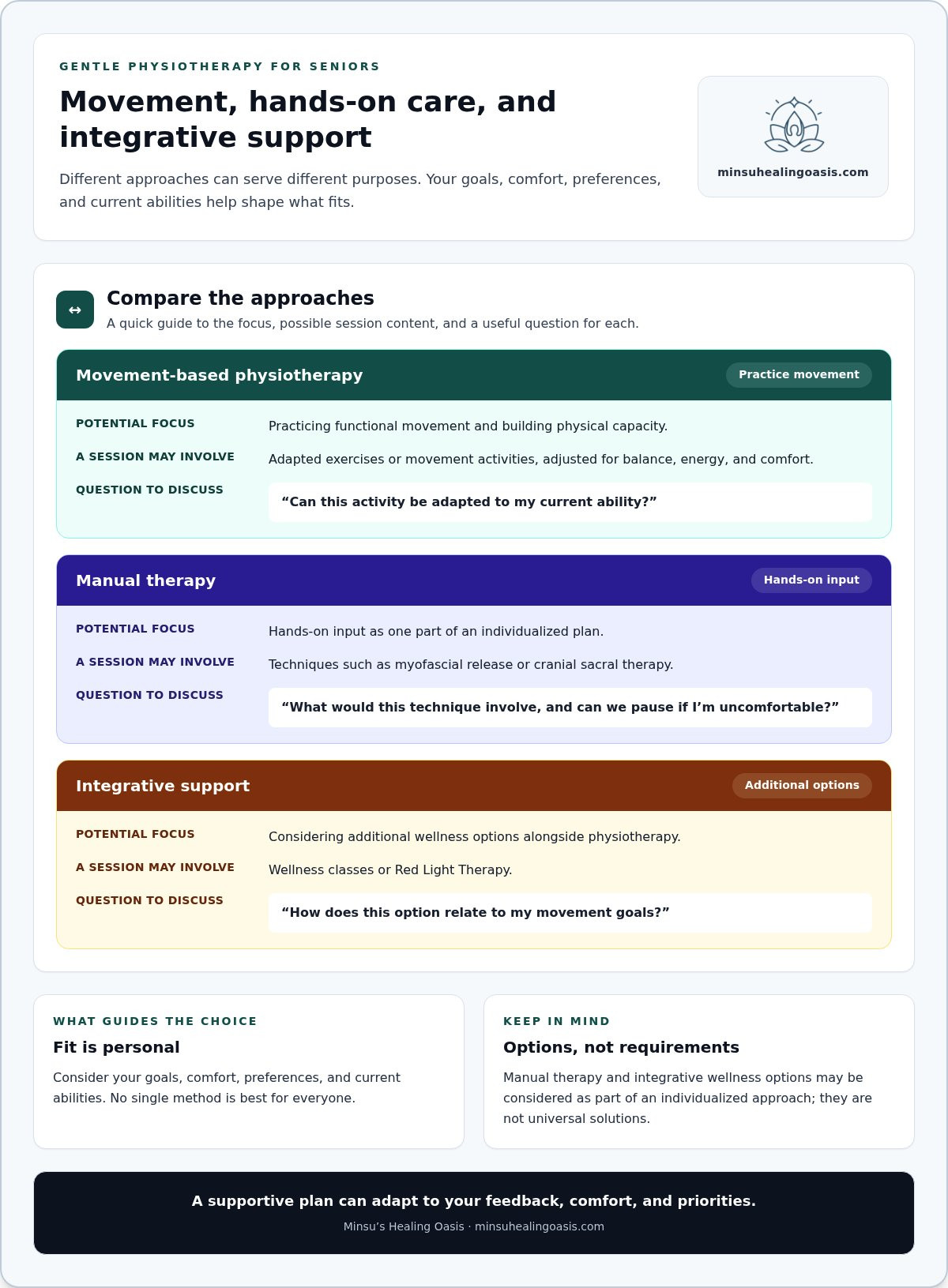
Different approaches can serve different purposes. Movement-based exercise gives you a chance to practice functional activities, while manual therapy involves hands-on techniques that can be used alongside movement. An integrative approach can also include additional wellness options. With gentle physiotherapy for seniors, the choice isn’t about finding one method that’s best for everyone. Consider your goals, comfort, preferences, and current abilities.
When might movement-based physiotherapy be a useful focus?
Tailored movement connects therapy with activities you want to practice in daily life, while giving you a way to work on physical capacity. A therapist can adjust the movement range, position, or level of challenge in response to your balance, energy, and comfort. Wellness and fitness classes offer a broader movement option. Individualized physiotherapy, by contrast, centers on personal assessment and goals.
When might manual therapy be included?
Hands-on techniques can be used alongside movement, based on your goals and preferences. At Minsu’s Healing Oasis, manual therapy includes myofascial release and cranial sacral therapy. These are options, not requirements or universal solutions. Red Light Therapy is also offered as part of a broader wellness approach, not as a replacement for physiotherapy or medical care.
Approaches can be combined, changed, or left out as the plan evolves. Compare options by asking what each involves and how it fits your needs. Don’t assume one method is safer, superior, or right for every older adult.
Preparing for Gentle Physiotherapy: Share Goals, Concerns, and Comfort Needs
A little preparation can help you feel more settled and make it easier to shape care around what matters to you. Before your visit, think of one or two movements you’d like to manage more comfortably, note your concerns, and gather relevant health information. A goal can be small and practical, such as getting up from a chair with greater ease. Your goals can also change as your needs and priorities shift.
What should seniors tell their physiotherapist?
Share context that may help guide a suitable plan. This might include relevant diagnoses, medications, recent procedures, or changes in your mobility. Mention falls, dizziness, fatigue, pain, and movements you feel uneasy about, such as reaching overhead or standing for a while. You don’t need to know which details are most important. An open conversation helps your therapist understand your situation and tailor the session thoughtfully.
How can readers make sessions feel more manageable?
Choose comfortable clothing that lets you move, and give yourself time to arrive without rushing. During the visit, ask for an explanation, a rest, or a change in position whenever you need one. If an activity feels uncomfortable or you’re more tired than expected, say so. Speaking up is part of collaborative care, not a disruption.
It may help to jot down a few notes beforehand:
Movement goals: What everyday activity would you like to work toward?
Comfort concerns: Which positions or movements feel difficult, tiring, or unsteady?
Health context: What recent changes or relevant information should your therapist know?
Gentle physiotherapy for seniors should leave room for your feedback and changing needs. If you’re experiencing sudden, severe, or unexplained symptoms, seek medical guidance before beginning routine therapy. For support with movement goals, explore physiotherapy at Minsu’s Healing Oasis.
A Supportive Next Step: Explore Integrative Physiotherapy at Minsu’s Healing Oasis
Your movement goals deserve care that responds to you, not a fixed pace you’re expected to follow. Gentle physiotherapy for seniors can begin with a conversation about what you’d like to do more comfortably, then shape movement and other appropriate care around your needs and feedback. You don’t need to start with a sweeping goal. A small, meaningful activity can be a thoughtful place to begin.
What does an integrative approach bring together?
At Minsu’s Healing Oasis, physiotherapy and manual therapy are part of a supportive, whole-person approach. Manual therapy includes myofascial release and cranial sacral therapy. These approaches aren’t right for everyone, and they don’t replace appropriate medical evaluation or care. The focus is on considering suitable ways to support movement while keeping your comfort and priorities in view.
An integrative approach doesn’t mean every available modality needs to be part of your care. It leaves room to discuss what feels appropriate for you. Share what you hope to work toward, ask what an activity or technique involves, and speak up if your needs change. Clear communication keeps the plan connected to your experience rather than making a particular method a requirement.
How can readers take the next step?
Think about a daily movement you’d like to support. Perhaps you want to feel more at ease getting up from a chair, moving around your home, or reaching for something you use often. You might also note what feels tiring, uncomfortable, or uncertain. These observations can help you describe your priorities and give a physiotherapy conversation a practical starting point.
If you’re ready to explore supportive care, Minsu’s Healing Oasis offers physiotherapy and manual therapy for movement goals. Learn about the services and consider which questions or priorities you’d like to bring to the conversation. Take the next step at a pace that feels comfortable, with space to explore, reflect, and decide what feels right for you.
Take a Comfortable Step Toward Supported Movement
Gentle physiotherapy for seniors should respond to the person, not force a fixed routine or pace. Start with an honest conversation about comfort, health, and the movements that matter in daily life. Movement-based exercise and hands-on care can each have a place, while rest, feedback, and personal preferences help shape the approach.
Services include myofascial release and cranial sacral therapy. Wellness classes and Red Light Therapy are also available as broader wellness options. Not every modality suits every person, and these offerings don’t replace appropriate medical care.
Begin by reflecting on a daily activity you’d like to support and the questions you want to ask. You don’t need to have every detail figured out before exploring your options. Explore physiotherapy and manual therapy at Minsu’s Healing Oasis and take the next step at a pace that feels right for you.
Frequently Asked Questions
Is gentle physiotherapy safe for seniors?
Gentle physiotherapy can be adapted to an older adult’s health, current function, comfort, and movement goals, but no approach is automatically suitable for everyone. A therapist can discuss relevant health history, observe comfortable movements, and adjust activities based on feedback. Share concerns such as dizziness, falls, fatigue, or pain. For sudden, severe, or unexplained symptoms, seek medical guidance before starting routine therapy.
Can physiotherapy help older adults improve balance and mobility?
Physiotherapy may address balance and mobility through activities tailored to a person’s needs and abilities. Depending on the individual, practice might involve changing position, standing, reaching, or walking in a way that feels manageable. A therapist can adjust the activity and level of challenge as needed. Goals and progress vary, so therapy shouldn’t be viewed as a promise to prevent falls or achieve a particular result.
What happens during a gentle physiotherapy session for seniors?
A session often begins with a conversation about movement concerns, daily activities, health history, and personal priorities. The therapist may observe comfortable movements, then discuss goals and appropriate activities. Rest breaks, position changes, and your feedback can shape the session. You can ask for an explanation or request a pause or adjustment. The plan depends on your circumstances and preferences.
Is hands-on therapy better than exercise for seniors?
Neither hands-on therapy nor exercise is best for every older adult. Movement-based activities may relate to functional goals, while manual therapy can be part of an individualized approach. Whether an approach fits depends on your needs, comfort, and goals. Approaches may also be adjusted or combined.
Can seniors start physiotherapy if they have arthritis or chronic pain?
Having arthritis or chronic pain doesn’t automatically rule out physiotherapy, but your health and current symptoms should guide the plan. Share where and when discomfort occurs, which movements are difficult, and what activities you hope to manage. A therapist can consider this context when discussing suitable movement or manual therapy options. For sudden, severe, or unexplained symptoms, seek medical guidance before routine therapy.
How often should seniors attend physiotherapy?
There isn’t one schedule that suits every senior. Session frequency depends on factors such as health history, current function, comfort, goals, and how the plan is progressing. Discuss what feels manageable and how therapy fits your routine. Your therapist can work with you to shape an individualized approach and revisit it as your needs change, rather than relying on a fixed schedule for everyone.
What should an older adult wear to physiotherapy?
Wear comfortable clothing that allows you to move and lets the therapist observe the movements you’re working on. Choose clothes that make it easy to sit, stand, reach, or walk without feeling restricted. Consider footwear that feels secure for standing or walking activities. If you’re unsure what will feel comfortable, choose familiar clothing that supports ease of movement and doesn’t add stress to your visit.


Comments