




Cranial Sacral Therapy for Anxiety: What to Expect and What the Evidence Says
Can a gentle, hands-on therapy support anxiety without being a proven treatment for it? If you’re curious about cranial sacral therapy for anxiety but unsure how touch relates to emotional distress, or wary of sweeping wellness claims, that uncertainty makes sense. Anxiety deserves compassionate care and honest information, not pressure to believe in a quick fix.
Cranial sacral therapy may offer a calming space for some people, but current evidence doesn’t establish it as a stand-alone treatment for anxiety. This guide explains what the therapy involves, what a session may feel like, how to communicate your comfort preferences, and what the research can and can’t tell us. It also looks at how this complementary approach may fit alongside professional mental-health support, so you can weigh your options with your well-being and sense of choice in mind.
Table of Contents
How Could Cranial Sacral Therapy Relate to Anxiety and the Stress Response?
Does Cranial Sacral Therapy Work for Anxiety? Evidence, Limits, and Common Misconceptions
What Should You Expect from a Cranial Sacral Therapy Session for Anxiety?
How to Include Cranial Sacral Therapy in a Thoughtful Anxiety Support Plan
Cranial Sacral Therapy for Anxiety: Purpose and Benefits
Anxiety can show up physically as tension, restlessness, or difficulty settling. It can also feel emotionally heavy or persistent, and each person experiences it differently. If you’re exploring cranial sacral therapy for anxiety, distinguish a potentially calming, supportive experience from treatment for an anxiety disorder.
Cranial sacral therapy is a complementary, hands-on wellness approach that may support relaxation, but it isn’t an established replacement for professional mental-health treatment. This distinction makes room for personal experience without promising a clinical result. The approach is commonly described as using gentle touch, often while the client remains clothed. Some explanations of how the technique works are not established scientific mechanisms. A general Craniosacral therapy overview describes the approach and includes critical perspectives on its conceptual basis and evidence.
How is cranial sacral therapy described?
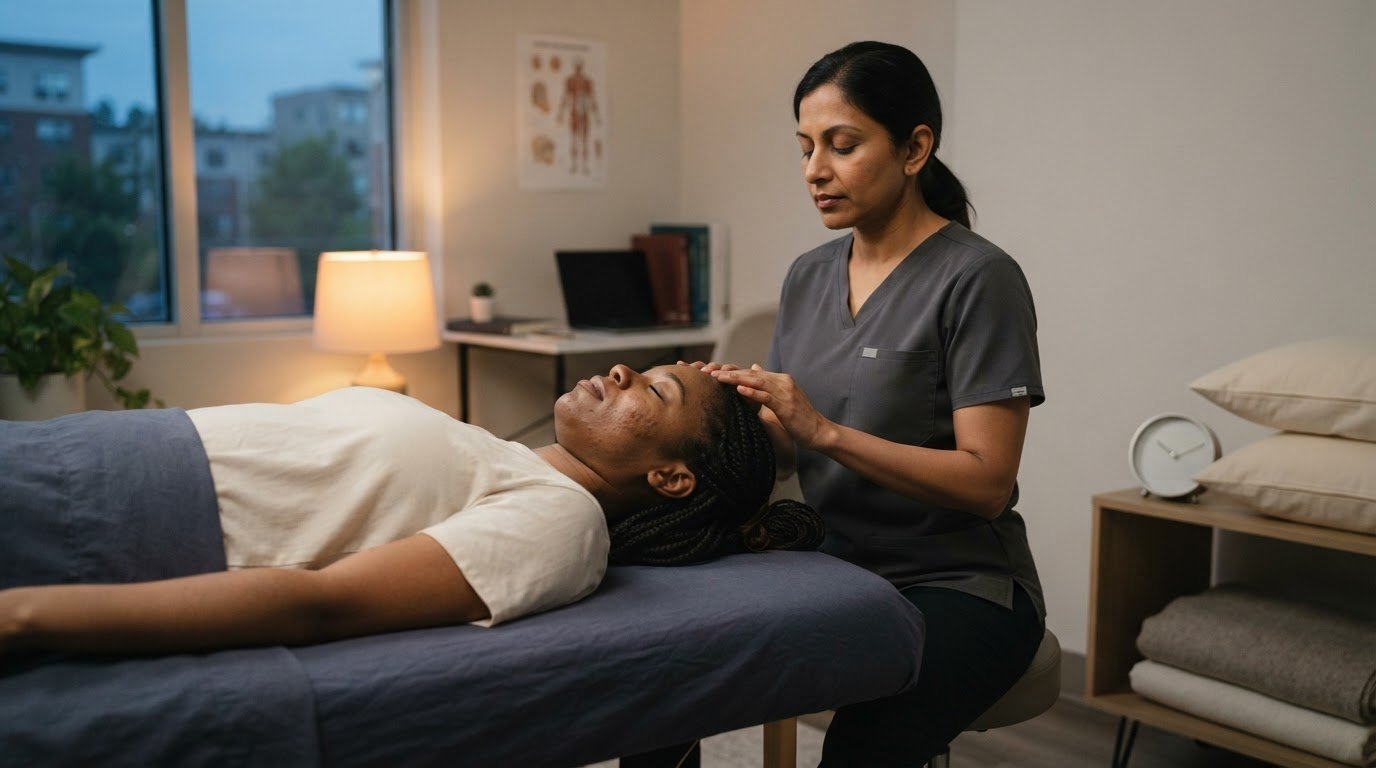
During a session, a practitioner places their hands lightly on areas such as the head or body. The approach is intended to be gentle rather than forceful, though the experience varies. Some people notice warmth, ease, or quiet; others feel little or simply rest. A sensation during a session doesn’t prove that a specific structure has changed or that anxiety has been medically treated.
It’s useful to separate what you feel from claims about why you feel it. Feeling calmer in a quiet, attentive setting can be real and valuable, but it doesn’t show what caused the feeling or how long it will last.
Why might someone with anxiety consider it?
Some people seek a calm space to pause, feel supported, and pay attention to physical tension that may accompany stress. For example, someone who notices tight shoulders or restlessness during anxious periods might value gentle, focused care as part of broader self-care. Those sensations don’t indicate a diagnosis, and the therapy may not resolve them.
Responses differ, and no particular outcome can be guaranteed. If you choose to explore cranial sacral therapy, it can sit alongside appropriate mental-health support rather than take its place. A whole-person approach can address physical comfort and emotional care while staying clear about what complementary wellness support can and cannot promise.
How Could Cranial Sacral Therapy Relate to Anxiety and the Stress Response?
A demanding day, an unexpected problem, or ongoing uncertainty can prompt the body’s stress response. You might notice a faster heartbeat, tense muscles, shallow breathing, or difficulty settling. These are common reactions to perceived pressure, but they don’t explain on their own why someone feels anxious. Anxiety can have multiple influences, so support should reflect each person’s circumstances and needs.
What role can relaxation and body awareness play?
A quiet, attentive session may give some people time to pause and notice physical sensations without needing to fix or interpret each one. The experience may feel calming, neutral, or uncomfortable. Each response is valid. The University of Minnesota’s overview of what to expect from a session describes the approach while acknowledging debate about how it works.
Feeling more at ease in the moment can matter to someone seeking supportive wellness care. Still, it doesn’t show that touch has reset or regulated the nervous system, or establish that anxiety will change over time. A calming experience may offer personal comfort, but it isn’t proof that a therapy treats an anxiety disorder.
Is the proposed connection supported by evidence?
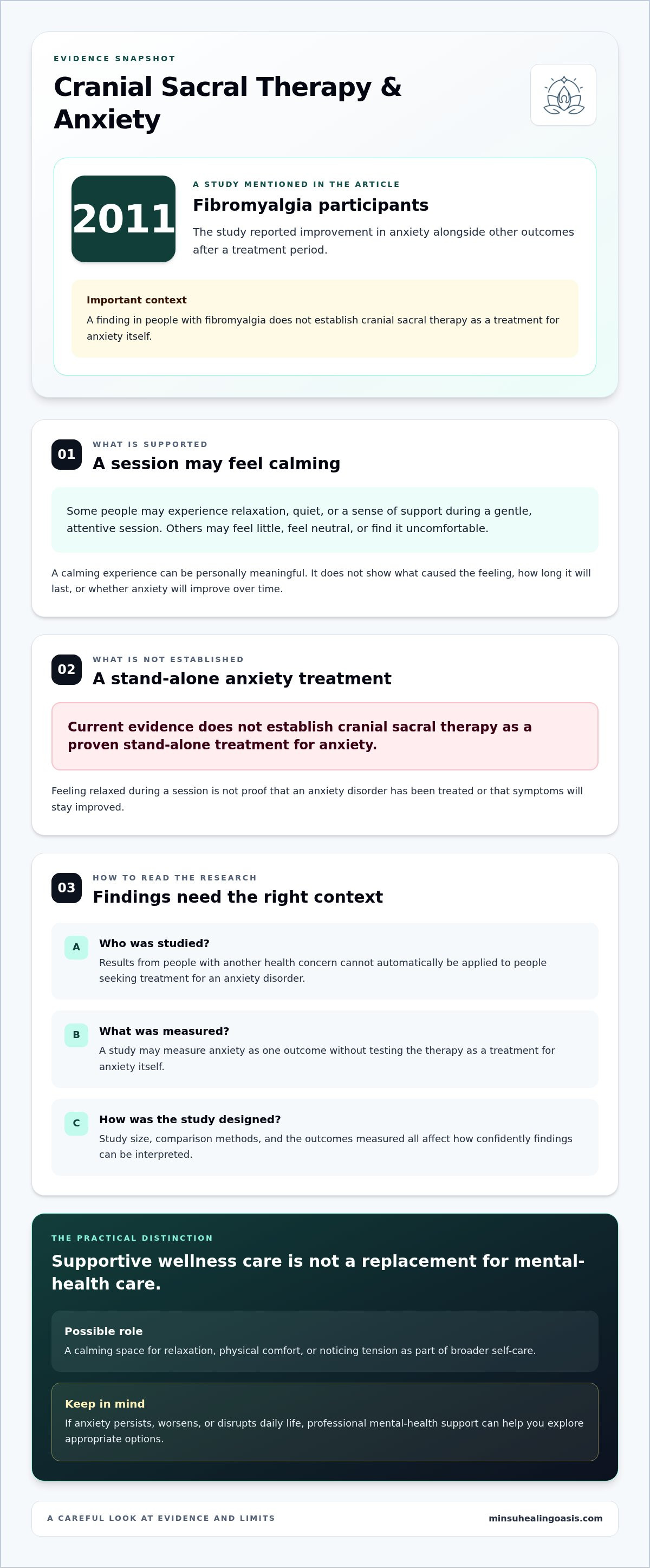
Research on cranial sacral therapy includes studies of different conditions and outcomes. Findings from one group or measure can’t automatically be applied to anxiety disorders. For example, a study involving people with another health concern may measure anxiety as one outcome without testing the therapy as a treatment for anxiety itself. Study size, comparison methods, and the outcomes measured all affect how confidently findings can be interpreted.
Current evidence doesn’t establish cranial sacral therapy as a proven stand-alone anxiety treatment. Research on other forms of manual care or relaxation also shouldn’t be treated as direct evidence for this specific therapy. Claims that a session activates a particular nervous-system pathway or reliably produces lasting anxiety relief go beyond what a calming sensation alone can demonstrate.
If you’re considering cranial sacral therapy for anxiety, think of it as a possible supportive wellness choice, not a substitute for individualized assessment or mental-health care. If anxiety is persistent, worsening, or disrupting daily life, professional support can help you explore appropriate options. For hands-on care as part of a whole-person approach, you can explore cranial sacral therapy.
Does Cranial Sacral Therapy Work for Anxiety? Evidence, Limits, and Common Misconceptions
Cranial sacral therapy hasn’t been established as a stand-alone treatment for anxiety. Some people may find a session relaxing or supportive, but personal relief and clinical evidence answer different questions. A calmer moment can be worthwhile without showing that an anxiety disorder has been treated or that symptoms will stay improved.
What can research responsibly support?
Research on cranial sacral therapy includes studies of conditions other than anxiety, so those results can’t automatically be applied to people seeking treatment for an anxiety disorder. A 2011 study involving people with fibromyalgia reported improvement in anxiety alongside other outcomes after a treatment period. That result may be of interest, but it doesn’t establish effectiveness for anxiety disorders: anxiety was considered in the context of another condition, and one study cannot settle the question.
When interpreting a study, consider how many people took part, whether there was a credible comparison group, which outcomes researchers measured, and whether results were repeated. Available research remains limited, and findings from small or condition-specific studies may not translate to broader clinical care. Evidence about other manual therapies or relaxation practices isn’t direct evidence for cranial sacral therapy.
In brief: some research and personal reports suggest possible benefits in particular settings, but whether cranial sacral therapy meaningfully treats anxiety remains uncertain and hasn’t been established. This measured conclusion doesn’t dismiss anyone’s experience.
Which misconceptions should readers avoid?
A testimonial can describe a genuine experience, such as feeling calmer after a session. It can’t show that the therapy caused lasting improvement, works for everyone, or addresses the underlying causes of anxiety. One session can’t guarantee relief either. A temporary sense of ease is different from sustained change in anxiety symptoms or daily functioning.
Another misconception is that complementary care must compete with conventional mental-health support. It doesn’t. If cranial sacral therapy feels like a supportive wellness choice, it may be considered alongside care suited to your needs. Don’t stop or change prescribed medication or other treatment without guidance from the clinician involved in your care.
If anxiety persists, worsens, or interferes with everyday life, a mental-health professional can help assess what’s going on and discuss established support options. You can value a gentle, whole-person approach while also making space for care grounded in your emotional-health needs.
What Should You Expect from a Cranial Sacral Therapy Session for Anxiety?
Trying hands-on therapy can feel vulnerable, especially if anxiety makes it harder to feel at ease. You can take the process at your own pace. A session should give you room to ask questions, describe what feels comfortable, and speak up if something doesn’t feel right. The aim is a supportive wellness experience, not a promise of anxiety relief.
How can you prepare for a first session?
Before the session, consider what you hope to gain, such as a quiet space to pause or support with general physical tension. It can also help to share relevant health concerns, sensitivities, or anything else that affects your comfort.
You don’t need to know exactly what to expect in advance. Ask the practitioner to explain the approach before hands-on work begins. Useful questions include where they plan to place their hands, what clothing or positioning is involved, and how you can request a change. Clear answers can help you decide what feels right for you.
How can you stay in control during the session?
Your comfort matters throughout. You can communicate preferences about touch, positioning, pace, and personal boundaries. You can also ask for a pause or stop the session at any time. If something feels uncomfortable, you don’t need to push through it. Speak up, ask for a different approach, or end the session.
Afterward, take a moment to notice how you feel physically and emotionally. You might feel relaxed, unchanged, or unsettled; there’s no required response. Your impressions can help you decide whether the experience suited you, but they aren’t a diagnosis or proof that anxiety has been treated. With cranial sacral therapy for anxiety, realistic expectations and clear communication can help keep the experience grounded and personal.
If you’re considering this approach as part of broader wellness support, explore cranial sacral therapy at Minsu’s Healing Oasis. You can bring your questions and comfort preferences while keeping any professional mental-health support that meets your needs in place.
How to Include Cranial Sacral Therapy in a Thoughtful Anxiety Support Plan
Support for anxiety doesn’t have to follow one path. Cranial sacral therapy may suit someone who values gentle, attentive care, but it doesn’t need to be the center of a plan and isn’t a substitute for mental-health treatment. At Minsu’s Healing Oasis, cranial sacral therapy is offered alongside physiotherapy and manual therapy. This whole-person approach supports physical and emotional well-being without promising a particular anxiety outcome.
When might additional mental-health support matter?
If anxiety persists, gets worse, or disrupts sleep, relationships, work, or everyday activities, consider speaking with a qualified mental-health professional or clinician. They can help you understand what may be contributing to your distress and discuss options suited to your needs. Reaching out is a constructive step, not a sign that you’ve failed to manage things on your own.
If you’re in immediate danger or feel unable to keep yourself safe, seek urgent local emergency support. Complementary wellness care isn’t designed for crisis situations.
How can complementary care fit without overpromising?
Think about what you want from a complementary session and whether the approach feels comfortable and meaningful to you. You might value a calm setting or hands-on care as part of self-care, while keeping expectations realistic: experiences vary, and no particular combination or order of care works for everyone. If you’re receiving mental-health treatment, complementary care may sit alongside it. Keep your clinician informed, especially before changing prescribed care.
A thoughtful plan can make room for different needs: professional mental-health support for anxiety, practical strategies for daily life, and complementary care if it aligns with your preferences. You don’t have to choose between attentive wellness support and clinical care. Each can have a distinct role, guided by what helps you feel supported and safe.
If cranial sacral therapy feels like an option you’d like to explore as part of individualized wellness care, you’re welcome to explore supportive care at Minsu’s Healing Oasis. Let your comfort, needs, and wider support plan guide your next step.
Choose Support That Respects Your Needs
Exploring cranial sacral therapy for anxiety can start with curiosity and realistic expectations. Some people may value the calm, attentive setting, but current evidence doesn’t establish this therapy as a stand-alone anxiety treatment or guarantee lasting relief. A session should also feel like a choice: you can ask questions, share your boundaries, and pause if you’re uncomfortable.
If anxiety persists, worsens, or disrupts daily life, professional mental-health support can help you consider care suited to your situation. Complementary wellness support may sit alongside that care, rather than replace it. At Minsu’s Healing Oasis, cranial sacral therapy is offered within a broader practice that includes professional physiotherapy and manual therapy.
If this approach fits your wellness goals, explore cranial sacral therapy at Minsu’s Healing Oasis. Choose a next step that respects your comfort, your choices, and the care you need.
Frequently Asked Questions
Is cranial sacral therapy effective for anxiety?
Cranial sacral therapy isn’t established as a stand-alone, evidence-based treatment for anxiety. Some people may find a session calming or supportive, but personal experiences don’t prove that it treats an anxiety disorder. Research focused specifically on anxiety should be judged by its quality and relevance. If anxiety persists, worsens, or affects daily life, consider speaking with a qualified mental-health professional about support suited to your needs.
Can cranial sacral therapy make anxiety worse?
It’s possible to feel uncomfortable or emotionally unsettled during a hands-on session, and people respond differently. Before beginning, share concerns that could affect your comfort. You can ask questions, state your boundaries, request a pause, or stop the session. If distress continues afterward or anxiety is getting worse, seek guidance from an appropriate healthcare or mental-health professional. Your comfort and sense of safety matter.
How does cranial sacral therapy work for anxiety?
Practitioners describe cranial sacral therapy as a gentle, hands-on approach, but its proposed explanations aren’t proven mechanisms for anxiety relief. A session may feel calming, neutral, or uncomfortable, and that experience alone can’t establish treatment effectiveness. Don’t rely on cranial sacral therapy for anxiety as your only form of care. Discuss ongoing anxiety with a qualified professional who can help assess your needs.
What happens during a cranial sacral therapy session for anxiety?
Session details can vary, so there isn’t one fixed sequence or expected sensation. You can explain what you hope to gain, share your comfort needs, and ask for an explanation before hands-on work begins. Speak up if you want a change, pause, or stop. Keep the purpose realistic: it may be a supportive wellness experience, but it isn’t a guaranteed anxiety treatment or a substitute for mental-health support.
Can cranial sacral therapy replace anxiety medication or therapy?
No. Cranial sacral therapy shouldn’t replace prescribed medication or professional mental-health care. Don’t stop or change medication or treatment based on a complementary therapy session. If you’re considering a change, discuss it with the clinician involved in your care. Depending on your circumstances, complementary wellness support may sit alongside professional care, but it isn’t a replacement for an individualized treatment plan.
How many cranial sacral therapy sessions are needed for anxiety?
There’s no reliable universal number of sessions for anxiety, and a particular course can’t be promised to produce a specific result. Needs, preferences, and responses differ from person to person. If you choose to try a session, consider whether it feels comfortable and supportive, and keep appropriate mental-health care in place. For persistent or disruptive anxiety, speak with a qualified professional about your support options.
Is cranial sacral therapy safe for everyone with anxiety?
No single approach is right for everyone. Your health circumstances and comfort with touch may affect whether a hands-on session feels appropriate. Share relevant concerns beforehand, ask what the approach involves, and set clear boundaries. If you’re unsure whether hands-on care is suitable for you, discuss it with a qualified healthcare professional. If you’re in immediate danger or can’t stay safe, seek urgent local emergency support.


Comments