




Comprehensive Injury Recovery Program: A Whole-Person Guide
Updated: 3 days ago
What should a comprehensive injury recovery program include, and how can you tell whether it fits your needs? After an injury, pain or limited movement can make everyday routines feel uncertain, and it’s natural to wonder what to do next. A useful plan starts with understanding how the injury affects your daily life, then sets practical movement goals and adapts as your needs change. At Minsu’s Healing Oasis, physiotherapy and manual therapy provide a clinical starting point, with complementary wellness options available as part of a broader, whole-person approach.
Recovery isn’t a race, and no single method suits everyone. This guide explains how a structured plan can move from understanding your needs to beginning care and reviewing progress. You’ll learn where manual therapy may fit, how complementary modalities differ from clinical rehabilitation, and what to track as your needs change. With clear goals and regular communication, you can make decisions based on how you’re functioning rather than guesswork or comparison with someone else.
Table of Contents
What a Comprehensive Injury Recovery Program Should Help You Rebuild
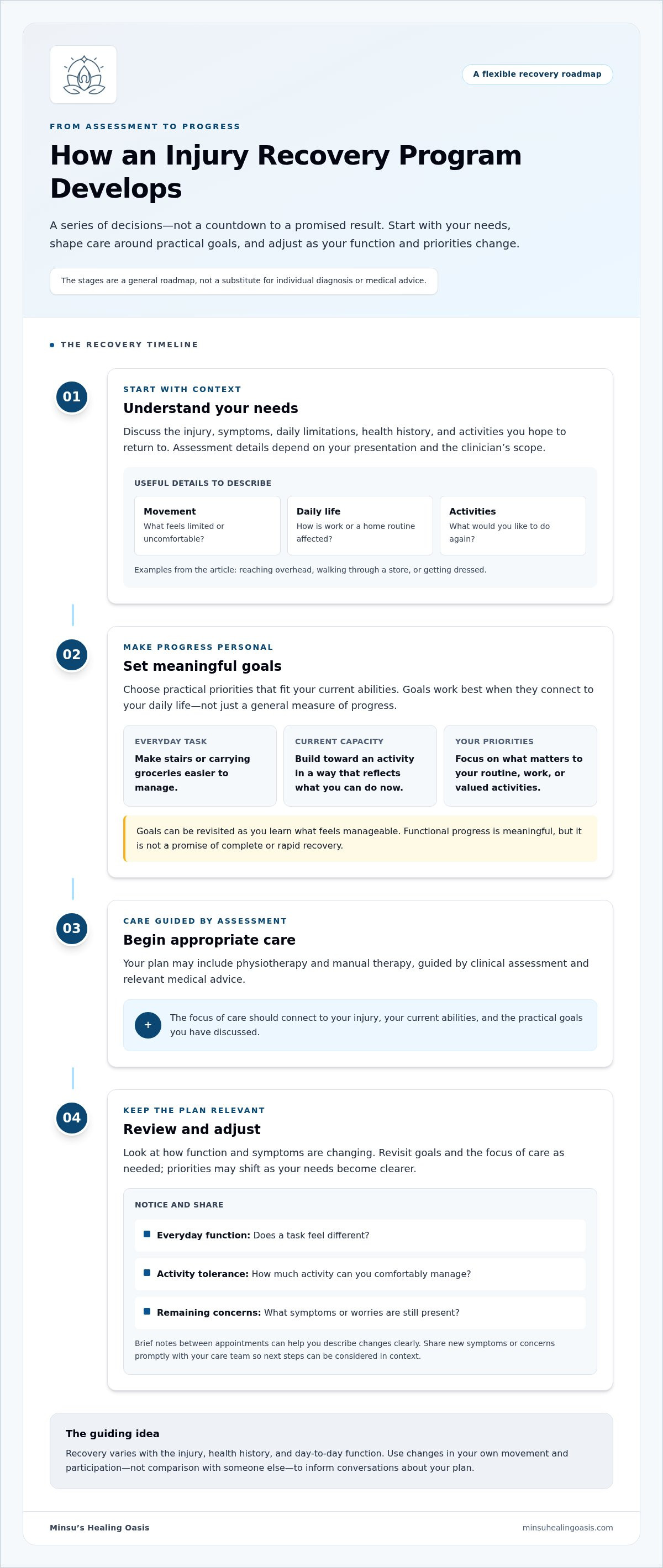
How an Injury Recovery Program Develops From Assessment to Progress
Clinical Rehabilitation and Complementary Care: What Each Can Contribute
How to Stay Engaged in Recovery and Recognize When Needs Change
A Personalized Injury Recovery Program at Minsu’s Healing Oasis
What a Comprehensive Injury Recovery Program Should Help You Rebuild
An injury can affect more than the area that hurts. It may make walking, dressing, working, or keeping up with family harder, while uncertainty about what comes next can affect confidence and emotional wellbeing. When routine daily tasks require extra physical support during rehabilitation, services like Royal Care Companion can provide temporary caregiving assistance at home. A comprehensive injury recovery program connects care to your circumstances, priorities, and changing needs, rather than treating each appointment as a stand-alone event.
A recovery program is an adaptable plan for rebuilding useful movement and participation over time. A single treatment session is only one part of that process. The plan may change as your symptoms, abilities, and goals change. Recovery varies with the injury, health history, and day-to-day function, so a fixed timetable or guaranteed outcome cannot account for each person’s situation.
Which goals can an injury recovery plan support?
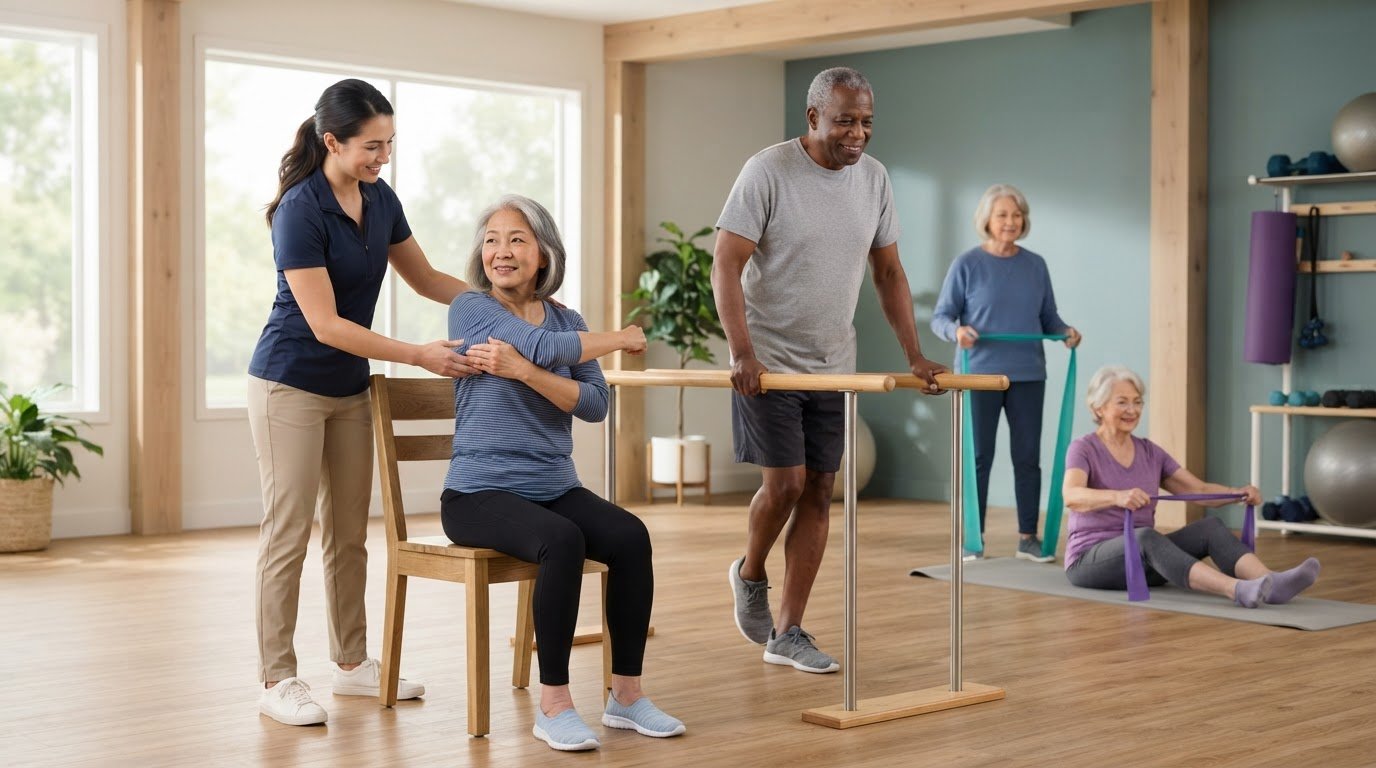
Goals are most useful when they relate to your daily life, not just a general measure of progress. Depending on your injury and current abilities, you might aim to move more comfortably through a routine, manage a particular task, or return to an activity that matters to you. Physiotherapy can help shape practical movement goals around your needs and appropriate clinical guidance.
Make a specific task, such as climbing stairs or carrying groceries, easier to manage.
Build toward an activity in a way that reflects your present capacity.
Notice functional progress without treating it as a promise of complete or rapid recovery.
Revisit goals as you learn what feels manageable. For example, you might first focus on getting through a morning routine, then discuss whether another activity should become a priority. Small changes in movement or participation can matter even when recovery is still underway.
Why recovery needs can look different from person to person
The same type of injury can affect two people differently. Symptoms, health history, baseline function, and everyday demands all shape what matters most. One person may prioritize comfortable movement at home, while another may focus on work tasks or a valued hobby. Appropriate clinical guidance helps keep goals relevant to both the injury and the person.
Physical limitations can also bring frustration, worry, or a sense of lost independence. Those feelings deserve patience, not judgment. Avoid measuring your progress against someone else’s; their starting point and circumstances may be very different from yours.
An adaptable plan can make room for physical goals and the lived experience of recovery. As your function changes, your priorities may change too. Conversations about safe participation can also cover habits that support ongoing wellbeing. General injury prevention strategies offer broader context for reducing injury risk. The aim is not perfection, but thoughtful steps that help you move forward with greater understanding and confidence.
How an Injury Recovery Program Develops From Assessment to Progress
Recovery usually involves a series of decisions, not a countdown to a promised result. A comprehensive injury recovery program starts by understanding what you’re experiencing, then uses appropriate clinical guidance to shape care around your needs. As movement, symptoms, and priorities shift, the plan can shift with them. The stages below offer a general roadmap, not a substitute for individual diagnosis or medical advice.
Understand your needs. Discuss the injury, symptoms, daily limitations, health history, and activities you hope to return to. The details of any assessment depend on your presentation and the clinician’s scope.
Set meaningful goals. Choose practical priorities, such as managing a daily task or building toward an activity, that reflect your current abilities.
Begin appropriate care. Your plan may include physiotherapy and manual therapy, guided by clinical assessment and relevant medical advice.
Review and adjust. Look at how function and symptoms are changing, then revisit goals and the focus of care as needed.
Starting with your injury, movement, and goals
A useful starting conversation makes room for both what hurts and what you want to do again. Describe which movements feel limited, how the injury affects a workday or home routine, and what activity you hope to resume. For instance, note whether reaching overhead, walking through a store, or getting dressed has become difficult. This context helps connect care to real life instead of a generic checklist.
Assessment is individual. The clinician’s role and the information gathered depend on their scope and your presentation; wider medical guidance may also inform decisions. The American Physical Therapy Association offers information about physical therapy practice, but online resources can’t determine what care is right for you personally.
Reviewing progress and adapting the plan
Progress is more than attending sessions. Notice whether a task feels different, how much activity you can comfortably manage, and what concerns remain. A brief note between appointments can help you describe changes clearly. If new symptoms arise or something worries you, share that promptly with your care team so the next steps can be considered in context.
Regular progress reviews help keep a recovery plan relevant by connecting care to changes in your body and daily life. Goals may be refined, or the emphasis of care may shift as your needs become clearer. If hands-on care is part of the discussion, learn about the path to restorative manual therapy and how it can fit within a broader approach.
Minsu’s Healing Oasis provides physiotherapy and manual therapy to support a conversation shaped around your movement goals. Explore personalized physiotherapy and manual therapy as you consider what support fits your circumstances.
Clinical Rehabilitation and Complementary Care: What Each Can Contribute
How do you know which parts of a recovery plan address the injury and which support your wider wellbeing? The distinction matters. In a comprehensive injury recovery program, physiotherapy and manual therapy provide the clinical foundation, while complementary wellness modalities may be considered alongside that care. They have different roles, and one shouldn’t be mistaken for a substitute for another.
Physiotherapy and manual therapy as the clinical foundation
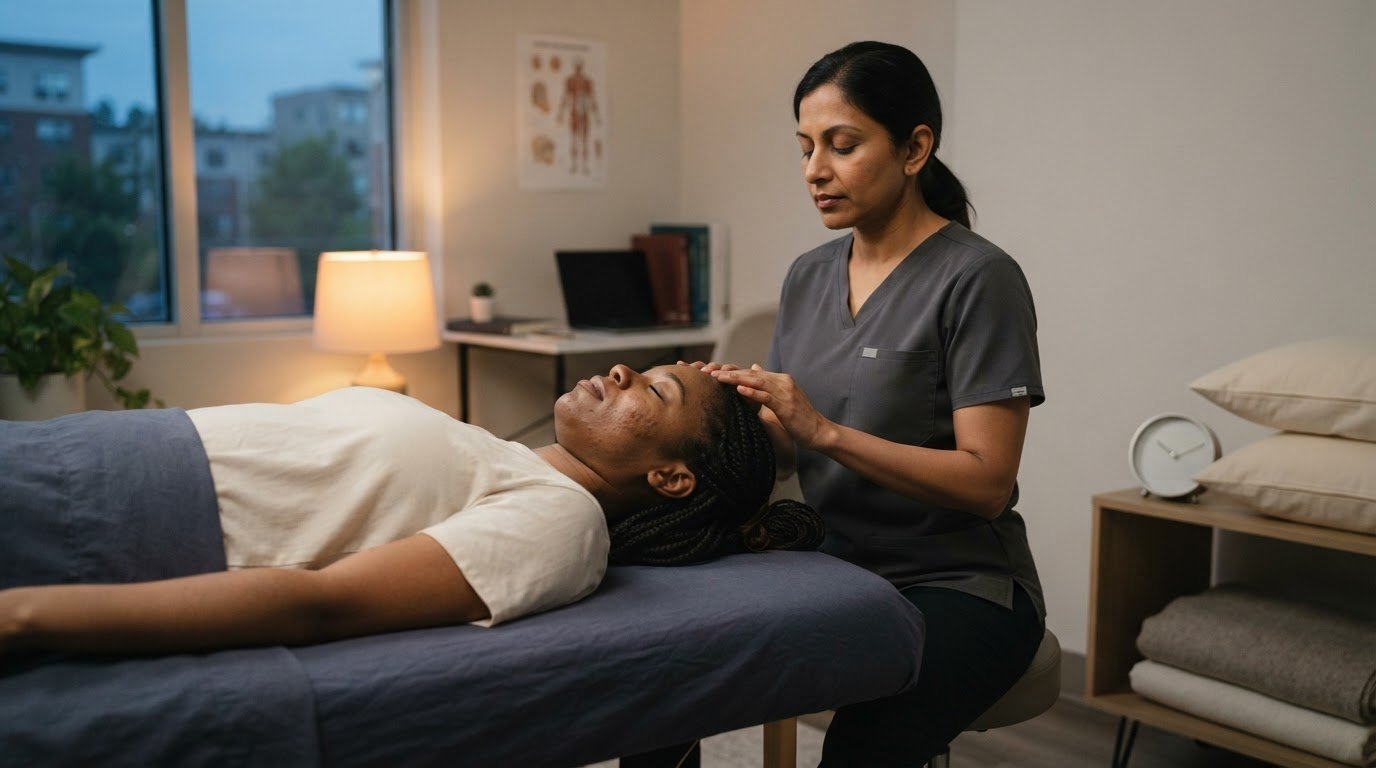
Minsu’s Healing Oasis provides physiotherapy and manual therapy to address movement needs through an individualized care plan. The focus depends on the person, the injury, and current priorities. Manual therapy approaches include myofascial release and cranial sacral therapy. These are options within the clinic’s manual therapy services, not promises of a particular result. Hands-on care may be considered alongside other rehabilitation support, with decisions guided by appropriate clinical judgment.
A useful question to bring to a care conversation is, “How does this approach fit my goals, and how will we decide whether it remains appropriate?” Clear explanations help you understand each element’s role without expecting one technique to do everything.
Where complementary wellness modalities may fit
Red Light Therapy and energy healing are available as complementary wellness modalities at Minsu’s Healing Oasis. These options don’t replace injury assessment, medical treatment, or rehabilitation decisions. Suitability and expected benefits vary from person to person, so don’t assume a modality will produce a specific recovery outcome or timeline. If you’re curious about the subject, this Red Light Therapy guide offers more modality-specific information.
The intention is thoughtful integration, not choosing between clinical care and whole-person wellbeing. Understanding each approach’s role can help you take part in decisions with greater clarity and confidence. Explore integrative care at Minsu’s Healing Oasis to learn how physiotherapy, manual therapy, and complementary options can be considered within a personalized approach.
How to Stay Engaged in Recovery and Recognize When Needs Change
Staying involved doesn’t mean pushing through every difficult day. It means noticing what’s changing, sharing what matters, and making room for guidance that fits your circumstances. In a comprehensive injury recovery program, your observations between appointments can help your care team understand how the plan connects with everyday life.
Preparing for appointments and tracking everyday function
A simple journal or phone note can help you remember details that are easy to lose in the moment. Keep it brief and practical. Bring relevant medical information and a short list of goals or questions to appointments. Tracking is a conversation aid, not a way to diagnose yourself or decide whether an injury is healing as expected.
Note changes in symptoms and movement, including what feels easier or more difficult.
Record how everyday activities go, such as getting dressed, walking, or completing a usual task.
Describe activity tolerance in your own words, including what you did and how you felt afterward.
Write down concerns or questions as they arise, so you can raise them during care.
Share new symptoms or concerns promptly with your care team. Activity and exercise guidance should reflect your individual clinical assessment; don’t add, increase, or push through exercises based only on general advice. If symptoms are severe or worsening rapidly, seek urgent medical care. If you believe you’re facing an immediate medical emergency, contact local emergency services.
Adjusting expectations without losing hope
Progress can feel uneven. One day a familiar task may feel easier, while another day feels more challenging. That variation doesn’t automatically tell you what’s happening, so discuss patterns, discomfort, and barriers with your care team rather than judging the whole process by one day.
It’s also reasonable for priorities to change. Perhaps a daily activity matters more now than returning to a particular pastime, or a practical barrier makes part of your plan difficult to follow. Tell your care team. An open conversation can help clarify whether goals or guidance need to be revisited, while keeping decisions grounded in your situation.
When injury-focused care is no longer your main priority, you may want to explore broader approaches to ongoing wellbeing. Minsu’s Healing Oasis offers wellness and fitness classes that can support a longer-term focus on wellbeing beyond injury recovery.
Make appointments more useful by bringing your notes, describing what’s changed, and asking about anything that remains unclear. For support grounded in physiotherapy and manual therapy, explore care at Minsu’s Healing Oasis.
A Personalized Injury Recovery Program at Minsu’s Healing Oasis
Where can you begin when an injury has changed the way you move through your day? At Minsu’s Healing Oasis, physiotherapy and manual therapy provide a starting point for care shaped around your circumstances and goals. A comprehensive injury recovery program should account for clinical needs, personal preferences, and the priorities that matter in daily life, without promising a particular outcome or timetable.
What an integrative approach can look like
Minsu’s Healing Oasis provides professional physiotherapy and manual therapy as part of individualized care. Manual therapy approaches include myofascial release and cranial sacral therapy, and Red Light Therapy is also available. These approaches can be discussed in context, without assuming that any one method is right for every person or will deliver a specific injury-recovery result.
Integrative care also means keeping each approach in its proper role. Clinical rehabilitation and appropriate medical guidance inform injury-related decisions. Complementary wellness modalities may be considered within a broader wellbeing conversation, but they don’t diagnose or medically treat an injury and aren’t substitutes for assessment or rehabilitation. Energy healing is distinct from clinical physiotherapy and manual therapy, and shouldn’t be presented as injury treatment.
A helpful conversation can explore what matters to you, what guidance you’re already following, and which approaches fit your goals. For example, you might discuss whether manual therapy belongs alongside other elements of a plan, or whether a complementary modality aligns with your preferences. The aim is thoughtful choice, not adding services simply for the sake of doing more.
Take a thoughtful first step toward recovery
Before beginning a conversation, consider which movements or everyday activities you most hope to regain. Perhaps you want to get through a familiar routine more comfortably, return to a meaningful activity, or feel more confident about how you move. You don’t need every answer; naming one or two priorities can make the discussion more personal and useful.
Bring your concerns, preferences, and questions into that conversation. Share what feels important, what feels uncertain, and what you’d like your care to take into account. A respectful exchange keeps the focus on your needs and creates space to discuss how physiotherapy, manual therapy, and complementary options may fit, while grounding clinical decisions in appropriate guidance.
Take a calm next step by exploring care at Minsu’s Healing Oasis.
Take Your Next Step Toward Steadier Movement
You don’t need to have every part of recovery figured out before taking a next step. Begin with what matters most: a movement you want to approach with more confidence, a daily task you hope to manage more comfortably, or a question you’d like to discuss. A comprehensive injury recovery program should make room for personal priorities and evolve through open, thoughtful conversation.
At Minsu’s Healing Oasis, professional physiotherapy and manual therapy provide a clinical starting point for discussing your recovery goals. Myofascial release and cranial sacral therapy are among the manual therapy approaches, and Red Light Therapy and wellness offerings are available as complementary options. Each approach has its own role, and none guarantees a particular injury outcome.
Clarify what you hope to regain and choose an approach that respects your needs and care goals. Explore a supportive, personalized approach to recovery at Minsu’s Healing Oasis.
Frequently Asked Questions
How long does a comprehensive injury recovery program take?
There’s no single timeline for a comprehensive injury recovery program because injuries and people’s circumstances differ. The type of injury, health history, current function, and daily demands can all affect the path. Rather than relying on a general estimate, discuss goals that matter to you and revisit them as your needs change. Notes about tasks that are becoming easier or remain difficult can make those conversations more specific.
Can I exercise while recovering from an injury?
Activity may be appropriate during recovery, but the suitable type and level depend on your injury and individual circumstances. Follow the guidance of the clinician overseeing your care rather than borrowing an exercise plan from someone else. If a familiar movement brings new discomfort or affects your function differently, pause and share that change with your care team. Don’t use general online guidance as a substitute for an individual assessment.
Is manual therapy the same as physiotherapy?
No. Physiotherapy is a broader clinical service, while manual therapy refers to hands-on approaches that may be part of care. At Minsu’s Healing Oasis, manual therapy offerings include myofascial release and cranial sacral therapy. Discuss how either approach relates to your priorities, such as moving more comfortably through a daily task. A technique’s role should be individualized, not assumed to suit every injury or person.
Can Red Light Therapy replace physiotherapy after an injury?
No. Red Light Therapy shouldn’t replace clinical assessment or physiotherapy after an injury. Minsu’s Healing Oasis offers Red Light Therapy as a complementary recovery tool alongside professional physiotherapy and manual therapy. Whether it’s appropriate depends on your individual circumstances, and a particular result or recovery timeline shouldn’t be assumed. Consider it as part of a conversation about your care, not as a substitute for clinically guided injury rehabilitation.
What should I bring to an injury recovery appointment?
Bring relevant medical information you have, a short list of concerns, and a few examples of activities you find difficult. You might note whether standing to prepare a meal, reaching overhead, or getting ready in the morning feels different than before. Include questions about your priorities and preferences, too. These details can help keep the conversation focused on your experience and the goals you want your care to address.
What happens if my injury symptoms get worse during recovery?
Tell the clinician involved in your care about new symptoms, a significant change, or anything that concerns you, so your situation can be reviewed. Don’t feel you need to wait for a routine appointment to raise a concern. Severe or rapidly worsening symptoms may require urgent medical attention; seek it promptly. If you think you’re experiencing an immediate medical emergency, contact local emergency services rather than relying on general wellness guidance.
Can a recovery program support emotional wellbeing as well as movement?
Yes, a whole-person conversation can acknowledge that injury may affect confidence, routines, and emotional wellbeing as well as movement. Sharing how the injury affects your daily life can help keep your priorities visible during care discussions. Minsu’s Healing Oasis also offers wellness and alternative modalities, which remain distinct from clinical rehabilitation. They aren’t substitutes for medical care or guaranteed treatments for physical or emotional symptoms.

Comments