




Chronic Pain Holistic Treatment: A Whole-Person Guide
Updated: 2 days ago
What if caring for chronic pain means looking beyond the painful area without turning away from medical care? When pain disrupts movement, sleep, mood, or everyday routines, it’s understandable to seek a broader path forward. A chronic pain holistic treatment plan considers how physical, emotional, and daily-life factors interact while keeping evidence-based clinical care at its center.
You deserve an approach that takes your experience seriously, not a confusing list of promises or conflicting advice. This guide explains how whole-person care may complement a clinician-guided plan, what to weigh when considering complementary therapies, and how to track changes that matter to you. We’ll cover movement-focused support, including physiotherapy and manual therapy, alongside options such as red light therapy and auriculotherapy. You’ll also find practical ways to discuss your priorities with your healthcare team and choose next steps one at a time.
Table of Contents
Chronic Pain Holistic Treatment: What Whole-Person Care Means
Persistent pain can reach into nearly every part of a day. It may make walking, working, or enjoying a familiar activity harder, disrupt rest, or affect mood and connection with others. Your experience may differ from someone else’s, and that difference doesn’t make your pain less real. Chronic pain can be complex, with biological, psychological, and social factors interacting in ways that aren’t always easy to identify.
Holistic care considers physical symptoms, emotional wellbeing, daily circumstances, and personal goals together rather than focusing on one symptom or treatment alone. It isn’t a single therapy, and it doesn’t mean pain is “all in your head.” It means making room for the whole experience when planning care. For an accessible overview, see Chronic Pain: Definition and Treatment Approaches.
How chronic pain can shape more than the body
Pain may influence sleep, activity, stress, relationships, and confidence, though not everyone experiences these effects in the same way. Someone might avoid a walk they once enjoyed because they’re worried movement will worsen symptoms. Another person may sleep poorly and find it harder to concentrate the next day. These patterns can interact, but they don’t mean a person caused their pain or can simply think it away. They help describe the context in which pain is felt and managed.
What a whole-person approach includes
A whole-person conversation may consider symptoms alongside movement, everyday function, preferences, and the activities that matter to you. This can help shape goals around comfort, coping, participation, or doing more of a valued activity, without promising a cure. A goal might be preparing a meal with fewer breaks or gradually returning to a gentle activity, with guidance suited to your circumstances.
Clinical care and complementary support can sometimes fit alongside one another, depending on the person, the therapy, and the broader care plan. Physiotherapy and manual therapy may be considered as movement-focused support, while complementary wellness approaches may be chosen with attention to their purpose and limitations. Holistic care should not replace medical evaluation or prescribed treatment, and supportive wellness services aren’t a substitute for diagnosis or emergency care.
In practice, chronic pain holistic treatment is less about collecting therapies and more about choosing support that makes sense for your needs, then noticing how it fits into daily life. Consider what you hope to do more comfortably, what care you already receive, and what questions you’d like answered. You can adjust a plan as your experience, priorities, or circumstances change. The aim is thoughtful, coordinated support that respects your physical and emotional wellbeing, without assuming one path works for everyone.
How Holistic Chronic Pain Treatment Can Fit Into a Care Plan
A thoughtful plan doesn’t have to rely on one kind of support. Depending on your needs, it may bring together clinical assessment, movement-focused care, self-management strategies, and selected complementary approaches. In functional healthcare, practices like 5280 Restorative Medicine emphasize whole-body wellness to help patients identify underlying health factors and regain vitality. Consider how each option fits your health history and goals rather than adding therapies simply because they’re described as holistic.
Coordination matters because each support should be considered in light of your personal goals, current treatment, and day-to-day needs. Share new therapies and wellness practices with the clinicians involved in your care, especially if you’re managing other health conditions or following a prescribed treatment plan. The National Center for Complementary and Integrative Health offers an evidence-aware overview of Complementary Health Approaches for Chronic Pain, including considerations around usefulness and safety.
Movement-focused care and manual therapy
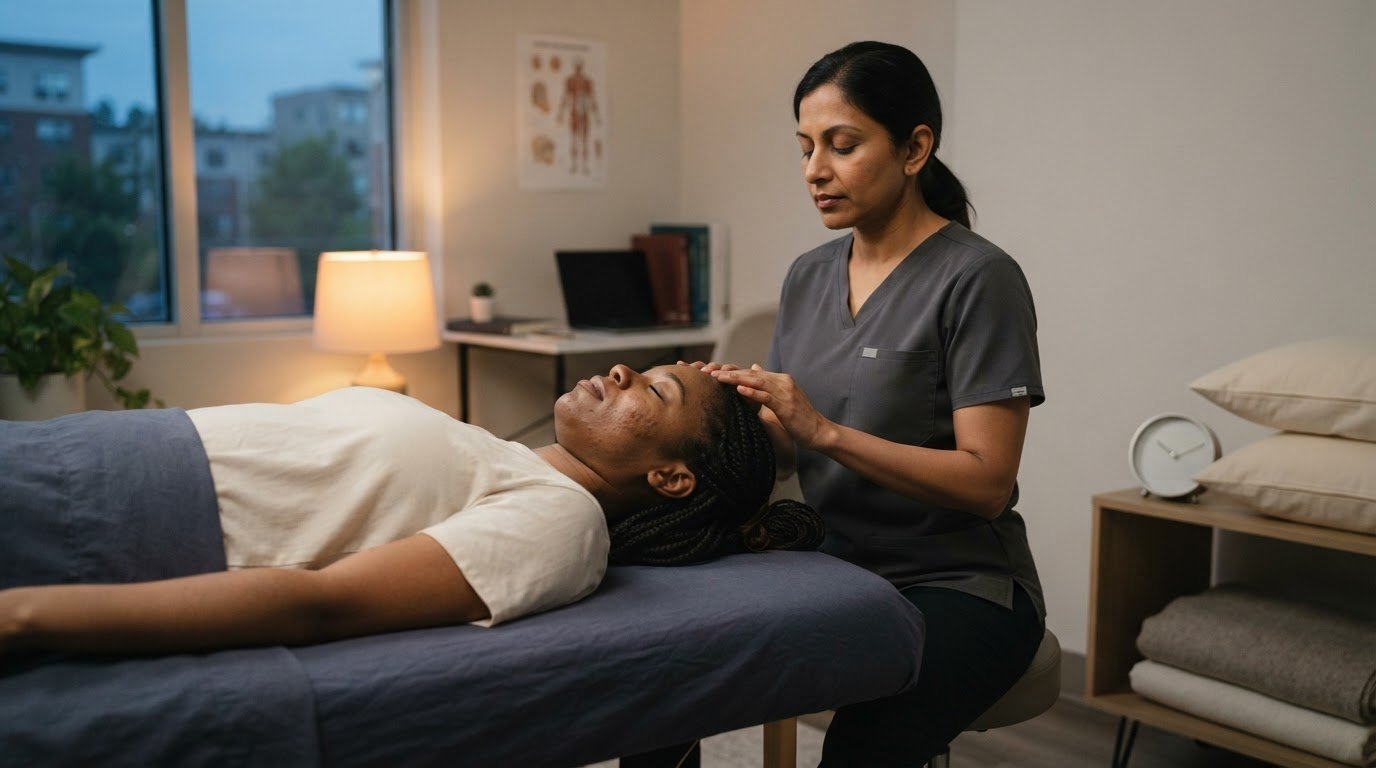
Physiotherapy can be part of a plan focused on movement and function. What it involves should reflect the individual, their symptoms, and their goals, rather than promise a particular result. Manual therapy may also be one element of support. Minsu’s Healing Oasis provides myofascial release and cranial sacral therapy as part of its manual therapy services. Their role should be considered in the context of the person’s broader care, not as a guaranteed cure.
For example, you might want support with a daily movement that has become difficult. A useful care conversation can clarify what you hope to work toward, how a proposed approach relates to that goal, and how you’ll assess whether it feels appropriate over time. A treatment’s place in a whole-person plan doesn’t mean it will work for every person or condition.
Complementary modalities and realistic expectations
Minsu’s Healing Oasis offers red light therapy and auriculotherapy as complementary modalities. Their availability doesn’t mean either treats or resolves chronic pain. Evidence can vary by approach and intended use, so distinguish what is known from what remains uncertain. The red light therapy guide provides more context about that modality.
Energy-healing practices may appeal to people seeking a supportive wellness experience, but personal meaning or a sense of calm shouldn’t be confused with proof of a clinical effect. These practices should not replace medical evaluation, prescribed care, or conversations with your healthcare team. If you’re considering a complementary option, discuss how it fits with your existing plan and what you hope it may contribute.
Chronic pain holistic treatment can mean making considered choices rather than searching for one perfect solution. Bring your priorities into a conversation about physiotherapy, manual therapy, and complementary wellness support, and keep your clinical care informed as your plan takes shape. To explore an individualized approach, start with whole-person wellness support.
Holistic Treatment vs. Standard Care: What Chronic Pain Patients Should Know
Does exploring holistic care mean turning away from medical treatment? No. A whole-person approach can sit alongside standard clinical care, which may help assess symptoms, consider possible causes, and guide treatment decisions. Complementary support may have a different role, such as supporting comfort, movement, or personal wellbeing. Neither label guarantees that an approach is suitable or effective for every person.
Complementary care may support a clinical plan, but it shouldn’t replace medical assessment or prescribed treatment. The distinction matters: a therapy can feel meaningful or supportive without being proven to treat the underlying cause of pain. Evidence also varies across approaches, so don’t assume that all complementary therapies have been studied equally.
What evidence-aware care looks like
Before adding an approach, seek a clear explanation of its purpose, what the experience may involve, its limitations, and what remains uncertain. Established clinical care and complementary modalities don’t all have the same level of research behind them. A careful discussion separates evidence for a specific use from general wellness claims, and leaves room to revisit a decision as your needs or available information change.
When to seek medical guidance before trying a therapy
Talk with an appropriate healthcare professional about symptoms that are new, worsening, unexplained, or concerning before beginning a new therapy. This is especially relevant if you have complex health needs or are combining multiple treatments. Seeking guidance from clinical services such as GP Plus can provide comprehensive medical evaluations and help coordinate your care safely. Share what you’re considering so your care team can help you understand how it fits your circumstances. Don’t stop, start, or change medication based on wellness advice alone.
For chronic pain holistic treatment to be thoughtful rather than confusing, assess each option on its own merits. Ask how it relates to your goals, whether its limits are being described plainly, and how it fits with your current care. Suitability depends on your health history, symptoms, preferences, and treatment plan. Keeping those factors in view can help you explore support while protecting continuity with clinical care.
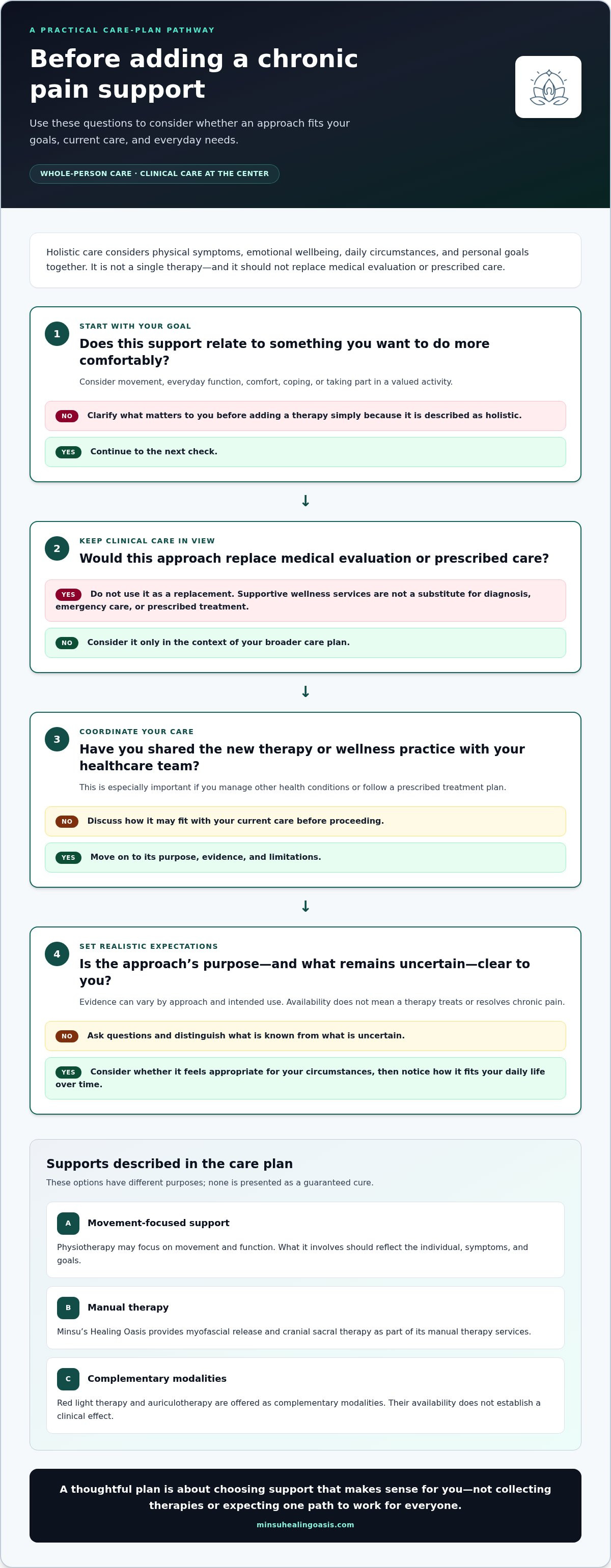
Build a Safe, Practical Holistic Plan for Chronic Pain
A useful plan should feel supportive in real life, not like another standard you have to meet. Start with manageable steps, keep your existing clinical care in view, and let your needs guide the pace. You don’t need to measure everything or make several changes at once. A simple plan can help you notice what matters without turning self-care into pressure.
Clarify your goals. Choose one or two activities you’d like to support, such as preparing a meal, taking a short walk, or spending time on a hobby.
Review your current care. Note the treatments, medications, and self-management practices already in your routine, and discuss relevant changes with the clinicians involved in your care.
Choose a suitable support. Consider one option at a time, with attention to its purpose, limitations, and fit with your health history and goals.
Track and revisit. Record what you tried and how it felt, then review whether it remains useful and manageable for you.
Set goals that reflect daily life
Rather than relying on pain scores alone, consider what you hope to do more comfortably or consistently. Before changing your routine, make a simple note of your current experience: how an activity feels, whether you need breaks, and what makes it easier or harder. Day-to-day variation is normal, so treat this as a starting point, not a test you can pass or fail.
Keep goals flexible. Gradually returning to a valued activity may matter more to you than reaching a particular number on a scale. Progress can be uneven, and a plan doesn’t need a rigid timeline or a promise of pain reduction to be worthwhile. Adjust the goal to your capacity and circumstances.
Coordinate care and notice what changes
A brief record can make patterns easier to discuss with your care team. You might note sleep, movement, mood, symptoms, and your experience of a therapy, without tracking every detail or expecting a perfect daily record. Share relevant information about new treatments with the clinicians involved in your care, particularly if you use several approaches or have complex health needs.
Try a simple format: what you tried, how it felt, and whether anything changed in an activity or part of your wellbeing that matters to you. This won’t prove that a treatment caused a change, but it can help you describe your experience and make more informed decisions. If an approach feels unhelpful, burdensome, or difficult to sustain, pause and review the plan with appropriate clinical guidance rather than pushing through.
If movement and wellbeing are part of your goals, integrative wellness programs may offer ideas to consider as you shape your routine. For a personalized conversation about physiotherapy and manual therapy, explore how these supports may fit your goals. A thoughtful chronic pain holistic treatment plan can evolve with you, one realistic step at a time.
Explore Chronic Pain Holistic Treatment at Minsu’s Healing Oasis
Choosing support for persistent pain can feel personal, especially when you’re balancing physical needs with the effect pain may have on day-to-day wellbeing. At Minsu’s Healing Oasis, physiotherapy and manual therapy are offered alongside complementary wellness services. This creates space to consider different forms of support in relation to your needs and goals. These services aren’t a promise of pain relief or a substitute for medical evaluation or prescribed care.
A conversation about chronic pain holistic treatment can begin with what you hope to make easier, what care you already receive, and what questions are on your mind. You might be looking for movement-focused support, interested in a complementary modality, or wanting to understand your options before deciding what feels appropriate. Your priorities can help shape the discussion.
A supportive, whole-person setting
Physiotherapy and manual therapy can be considered as part of a broader wellness conversation that respects physical and emotional wellbeing without assuming one causes the other. Minsu’s Healing Oasis provides myofascial release and cranial sacral therapy within its manual therapy services, along with red light therapy among its complementary modalities. Each is a distinct option to learn about, not a guaranteed solution.
Understanding what a service involves can help you decide whether it belongs in your care considerations. Ask what its intended role is, how it relates to your personal goals, and how it can sit alongside your existing clinical care. It’s also reasonable to discuss uncertainty and limitations, so your choices are informed rather than driven by pressure or promises.
Take a gentle next step
You don’t need to arrive with a complete plan. It may be enough to identify one activity you’d like support with, note what care you currently receive, and bring a few questions. For example, ask how physiotherapy or manual therapy may relate to a movement goal, or what to understand about a complementary option before considering it. If you have a healthcare team, sharing relevant information about your wellness care can help keep your overall plan coordinated.
Your goal: What would you like to feel more able to do?
Your context: What treatments or guidance are already part of your care?
Your questions: What would help you understand a service’s purpose and limits?
There’s room to move thoughtfully, at a pace that respects your circumstances. Explore the services at Minsu’s Healing Oasis and consider which questions matter most to you. When you’re ready, connect with Minsu’s Healing Oasis to begin a conversation about a personalized direction for your wellness support.
Take Your Next Step With Care and Curiosity
You don’t have to map out every part of your path today. A meaningful next step can be as simple as naming what you’d like support with and bringing that intention into a thoughtful conversation. Your chronic pain holistic treatment choices can be personal, gradual, and shaped around what matters in your life, while remaining connected to appropriate clinical care.
At Minsu’s Healing Oasis, professional physiotherapy and manual therapy are offered alongside myofascial release, cranial sacral therapy, red light therapy, and auriculotherapy. You can explore these options as part of an individualized wellness conversation, without a promise of a particular result or a replacement for medical evaluation or prescribed care. You can arrive with questions, priorities, or uncertainty. Each is a valid place to begin.
Explore supportive, whole-person care at Minsu’s Healing Oasis and take a gentle step toward a plan that honors your needs. Progress may unfold in its own way, and you deserve care that meets you with patience and respect.
Frequently Asked Questions
Can holistic treatment cure chronic pain?
No holistic approach can be promised to cure chronic pain. Chronic pain holistic treatment may support comfort, coping, or participation in meaningful activities, depending on the person and the approach. If a therapy feels helpful, that experience matters, but it doesn’t prove the treatment has addressed an underlying cause. Be cautious of claims that promise a cure or guaranteed results, and discuss treatment choices with your healthcare professional.
Is holistic treatment a replacement for medication or medical care?
No. Complementary wellness approaches shouldn’t replace medical assessment, prescribed care, or medication without guidance from the professional who manages your treatment. If you’re considering adding a therapy, share its name and purpose with your healthcare team so they can consider it alongside your health history and current plan. Don’t stop or adjust medication on your own. A coordinated discussion can help you explore supportive options while maintaining continuity of care.
How long does holistic treatment take to help chronic pain?
There’s no reliable timeline that applies to everyone, and some approaches may not help a particular person. Before starting, ask what you might experience during and after a session, what the approach is intended to support, and when it would make sense to review your decision. If you notice discomfort or the approach feels difficult to continue, share that with the relevant healthcare professional. Avoid continuing solely because someone promised results would arrive later.
Can I combine manual therapy with other chronic pain treatments?
Manual therapy may be considered alongside other treatments, but whether that combination suits you depends on your health, symptoms, and care plan. Let the clinicians involved in your care know what you’re receiving or considering, including the type of manual therapy and how often you attend. For example, if you’re also following a movement plan, your care team can discuss how to keep your activities coordinated and what changes should prompt a review.
What should I track while trying a holistic approach to chronic pain?
Keep a brief, low-pressure note of the approach you tried, how you felt afterward, and any changes in a relevant activity. You might also record sleep quality, mood, or whether you needed more or fewer breaks during a usual task. Include context, such as an unusually busy day, since one entry can’t show a pattern. Bring your notes to a care conversation if they help you describe your experience clearly.
Can stress affect the experience of chronic pain?
Stress can interact with how pain feels and how manageable daily activities seem, but that doesn’t mean pain is imaginary or your fault. You might notice that a stressful period coincides with poorer sleep or less energy for routine tasks. Observing this connection can help you describe your needs to a clinician and consider supportive coping practices. It shouldn’t be used to dismiss physical symptoms or delay an appropriate medical assessment.
When should I seek medical advice about chronic pain?
Seek advice from an appropriate healthcare professional if pain is new, worsening, unexplained, or concerning to you, or if it changes in a way that affects your usual activities. If symptoms feel sudden and severe or you believe you may need urgent help, seek urgent medical care. A clinician can assess the situation and discuss appropriate next steps. Don’t rely on a complementary therapy to evaluate a new symptom or replace medical attention.


Comments