




Red Light Therapy for Pain: Holistic Recovery Checklist
What if the key to unlocking your body's healing potential wasn't found in a medicine cabinet, but in the restorative power of light? Are you tired of waking up with that familiar, heavy stiffness in your joints? Do you worry that your reliance on temporary fixes is masking the root cause of your discomfort? You aren't alone in seeking a path that honors your body's natural rhythm. Many people are turning to red light therapy for pain relief because it offers a non-invasive way to address inflammation and cellular fatigue. It's a gentle yet profound shift from simply managing symptoms to actively cultivating vitality.
By harnessing photobiomodulation, you can soothe chronic pain, accelerate cellular repair, and finally restore the physical freedom you've been missing. This guide provides a holistic recovery checklist to help you integrate this technology into your wellness routine effectively. We'll explore how specific wavelengths stimulate ATP production, compare clinical sessions with at-home devices, and show you how to pair light therapy with manual treatments for a complete transformation. It's time to move beyond the cycle of slow recovery and embrace a life defined by ease, movement, and renewed energy.
Table of Contents
What is Red Light Therapy and How Does it Illuminate Healing?
Have you ever wondered if light could do more than just help you see? Red Light Therapy (RLT), scientifically known as photobiomodulation, is a non-invasive cellular energy boost that works in harmony with your body’s natural biology. Instead of masking discomfort with temporary fixes, red light therapy for pain relief addresses the root of the issue by bathing your cells in restorative wavelengths. It's a journey from exhaustion to vitality, providing a sanctuary for those seeking a fresh start without the need for harsh chemicals or invasive procedures. For those seeking a comprehensive overview of red light therapy, it is helpful to understand that this modality has roots in decades of clinical research and evidence-based practice.
The Science of Cellular Respiration
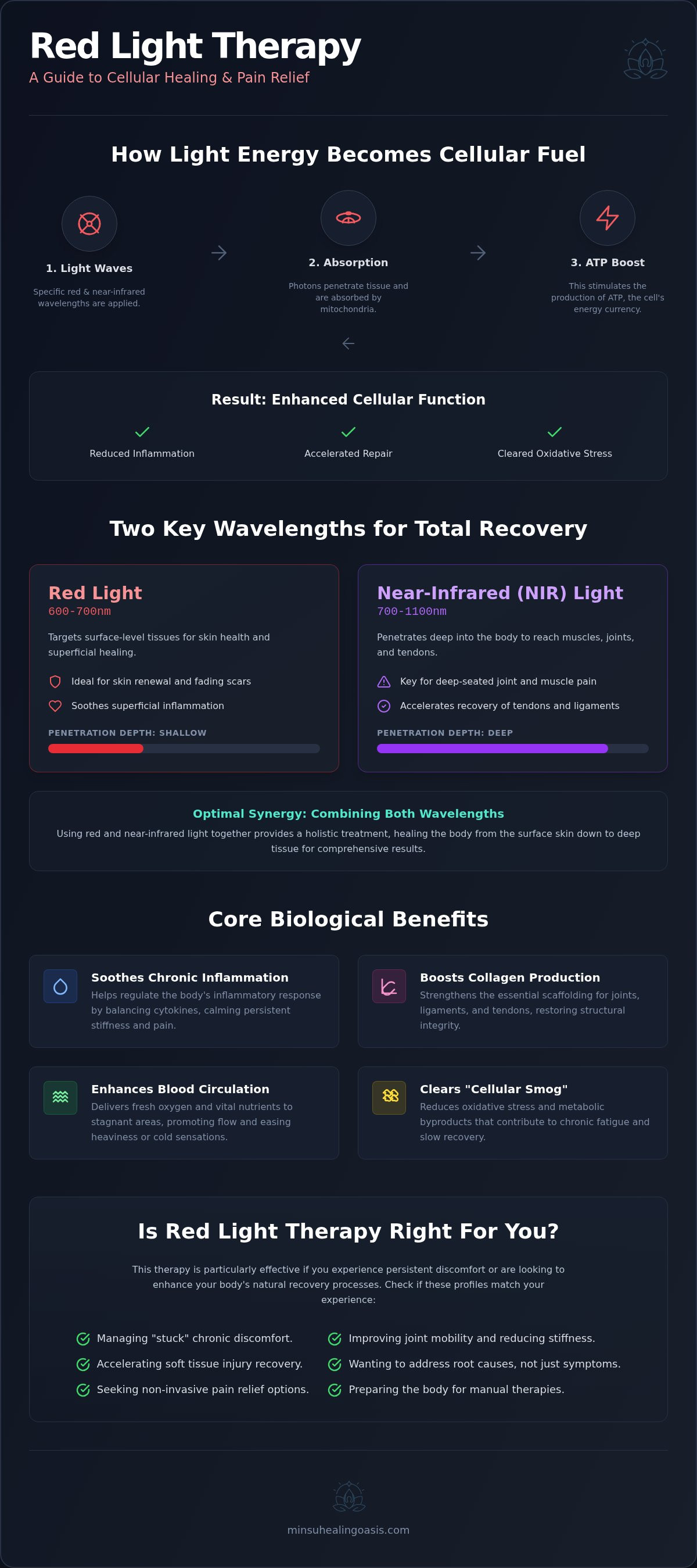
How does light actually turn into healing? When specific light wavelengths, typically ranging from 630nm to 850nm, bypass the skin’s surface, they reach deep into your muscles, nerves, and joints. Inside your cells, a specialized photoreceptor called Cytochrome C Oxidase absorbs these light photons. This interaction creates what we call the 'Mitochondrial Spark,' which converts light into ATP, the universal currency of cellular energy. When your cells have more energy, they can effectively repair damage, reduce inflammation, and clear the oxidative stress that keeps you in a state of pain. It is a simple yet profound equation: more cellular energy leads to less physical suffering and greater ease of movement.
Red Light vs. Near-Infrared: A Vital Distinction
Are all lights created equal? Not quite. The distinction lies in the wavelength and how deep that energy can travel into your tissues. To experience a complete recovery, it's essential to understand which light serves your specific needs.
Red Light (600-700nm): This range is ideal for surface-level healing. It focuses on skin health, fading scars, and soothing superficial inflammation. It's the perfect tool for skin renewal and beauty.
Near-Infrared Light (700-1100nm): These longer wavelengths are the key for deep-seated joint pain, tendons, and muscle recovery. Because they penetrate deeper into the body’s architecture, they reach the areas where chronic pain often hides.
Choosing a professional integrative approach often means utilizing both of these wavelengths simultaneously. By combining these frequencies, you ensure that your body is healing, recovering, and thriving at every level. This holistic method prepares your system for deeper manual therapies, creating a bridge between modern technology and traditional healing arts. It is about honoring your body’s potential for personal evolution and relief from long-standing burdens.
The Biological Benefits: Why Your Body Craves This Light
Why does your body respond so deeply to these specific wavelengths? It's because light penetrates the "cellular smog" of oxidative stress that often accompanies long-standing injury. By clearing these metabolic byproducts, red light therapy for pain relief allows your internal systems to breathe again. This process invites enhanced blood circulation, which delivers a fresh supply of oxygen and vital nutrients to areas that have felt stagnant, heavy, or cold for years. It is a gentle invitation for your body to return to its natural state of flow and ease.
Scientific research helps us understand these shifts through the biological mechanisms of photobiomodulation, showing how light modulates our internal chemistry. This isn't just about feeling better in the moment; it's about rebuilding your foundation. The light stimulates collagen production, which acts as the essential scaffolding for your joints, ligaments, and tendons. By strengthening these structural components, you aren't just masking a symptom. You are actually restoring the integrity of your physical frame.
Soothing the Fire of Chronic Inflammation
Inflammation is often misunderstood. Acute inflammation is a healthy, necessary signal for healing after a fresh injury. However, chronic inflammation is like a fire that refuses to go out, slowly damaging healthy tissue and causing persistent stiffness. Light therapy helps regulate the "anti-inflammatory cascade" by balancing cytokines, the signaling proteins that control swelling and immune response. As this internal fire subsides, you'll likely notice a significant increase in your range of motion and a softening of that persistent, sharp edge of pain. It feels like a weight being lifted from your joints.
Accelerating Tissue Repair and Recovery
Beyond just soothing, light therapy acts as a catalyst for actual repair. It wakes up muscle satellite cells, which are the specialized units responsible for regenerating damaged tissue. Whether you're an athlete looking to shorten your recovery window or someone living with chronic discomfort, this technology bridges the gap between simply resting and actively restoring. It turns a passive recovery into a dynamic renewal of your physical self. If you feel like your body has been stuck in a cycle of slow healing, you might find that integrative red light therapy provides the spark needed to finally move forward into a life of greater mobility and freedom.
Is Red Light Therapy Right for You? A Pain-Profile Checklist
Are you tired of feeling like your body is a puzzle with missing pieces? Do you wake up every morning with a heavy, grinding stiffness in your hips or lower back that takes hours to fade? If you've been searching for red light therapy for pain relief, it's likely because you're ready to move beyond the limitations of traditional stretching or rest. Many people find themselves trapped in a cycle of "stuck" pain that refuses to yield to standard methods. This checklist helps you identify if your specific pain profile is a match for the restorative energy of photobiomodulation.
Persistent Stiffness: Do you experience morning joint discomfort that limits your ability to perform daily tasks with ease?
Injury Recovery: Are you currently healing from a recent orthopedic surgery, ligament tear, or soft tissue injury?
Chronic Conditions: Are you seeking a drug-free, non-invasive way to manage the long-term burdens of arthritis, tendonitis, or fibromyalgia?
Stagnant Progress: Have you hit a plateau in your recovery where rest no longer seems to provide the relief it once did?
Identifying Your Primary Pain Triggers
Understanding the root of your discomfort is the first step toward evolution and recovery. Light therapy isn't a one-size-fits-all fix; it's a precise tool that interacts with different tissues in unique ways. Consider how these common triggers might align with your experience:
Nerve Pain and Neuropathy: Light wavelengths support the health of the myelin sheath, the protective coating of your nerves. This can help soothe the burning or tingling sensations often associated with nerve damage; you can discover Local Foot Doc to see how expert podiatry can further assist with complex foot-related nerve pain.
Myofascial Trigger Points: If you have "knots" that feel like hard lumps in your muscle, light therapy acts as a cellular primer. It softens these areas, making subsequent manual release or physiotherapy significantly more effective.
Post-Surgical Healing: By reducing internal bruising and the formation of dense scar tissue, red light therapy helps your body knit itself back together with greater flexibility and strength.
When to Consult a Wise Integrative Guide
While light therapy is a bold innovator in the world of wellness, it's most powerful when guided by an expert hand. Sometimes, persistent pain is a symptom of a deeper structural misalignment that requires a combination of light and manual structural work. A professional assessment ensures you're using the correct irradiance and duration for your specific needs. It's also vital to practice discernment; for instance, those with active malignancies or certain photosensitive conditions should always seek professional guidance before starting a high-intensity light regimen. This integrative approach ensures your path toward harmony is both safe and deeply restorative.
Maximizing Your Results: A Daily Ritual Checklist for Restorative Healing
How do you transform a simple treatment into a life-changing habit? Consistency is the heartbeat of your evolution. While it's tempting to try one long, marathon session, the body responds best to rhythmic, frequent invitations to heal. Using red light therapy for pain relief is most effective when practiced three to five times per week. Think of it as a cellular workout; your mitochondria need regular stimulation to maintain their newfound vitality, strength, and resilience.
You must also consider the "Distance Factor." The Inverse Square Law tells us that as you move further from the light source, the energy intensity drops significantly. To ensure your tissues absorb the restorative photons, stay within 6 to 12 inches of the panel. This proximity ensures you receive the deep-seated benefits required for tissue repair rather than just a superficial glow. It's a simple adjustment that makes a profound difference in your recovery journey.
Setting Up Your Healing Sanctuary
Creating a dedicated space for your ritual allows you to fully arrive in the moment. Follow these three steps to ensure your body is ready to receive:
Step 1: Clean, bare skin. Clothing and heavy lotions act as barriers, reflecting or absorbing the very light you need. Keep the target area clear to allow for maximum photon penetration.
Step 2: Precise positioning. Aim the light directly at the root of your discomfort. If you're addressing a stiff lower back, ensure the light is centered on the spine and surrounding musculature.
Step 3: Eye safety. High-intensity panels are powerful. Always wear protective eyewear to shield your eyes while your body drinks in the restorative energy.
The Ideal Therapy Window
How long should you stay in the light? For most pain profiles, 10 to 20 minutes is the optimal "sweet spot." It's a delicate balance of biology. The Biphasic Dose Response, a well-documented biological principle, suggests that while the right amount of light stimulates healing, too much can actually inhibit the process. It's about finding harmony, not force. Track your mobility, sleep quality, and pain levels over a 4-week period to see how your body evolves. If you're ready to start your journey under expert guidance, book a red light therapy session to find your perfect dose and accelerate your path to freedom.
Finally, remember to nourish the cellular engine you're jumpstarting. Proper hydration and antioxidant-rich nutrition provide the raw materials your cells need to rebuild. Supporting your body with water and minerals ensures that the "Mitochondrial Spark" translates into lasting physical change. When you combine light, hydration, and mindful movement—or even advanced recovery modalities like cold water immersion—you create a sanctuary of recovery that honors your whole self. To explore how specialized equipment can complement your sessions, learn more about high-performance recovery tools.
Beyond the Lamp: Integrating Red Light with Manual Healing Arts
Why settle for a single-dimensional approach to your recovery? While many see red light therapy for pain relief as a standalone tool, its true power is unlocked when woven into a tapestry of manual healing arts. A Wise Integrative Guide understands that your body is an interconnected web of energy, structure, and emotion. By combining high-tech light with ancient healing wisdom, we create a customized roadmap that honors your unique journey toward wholeness and vitality.
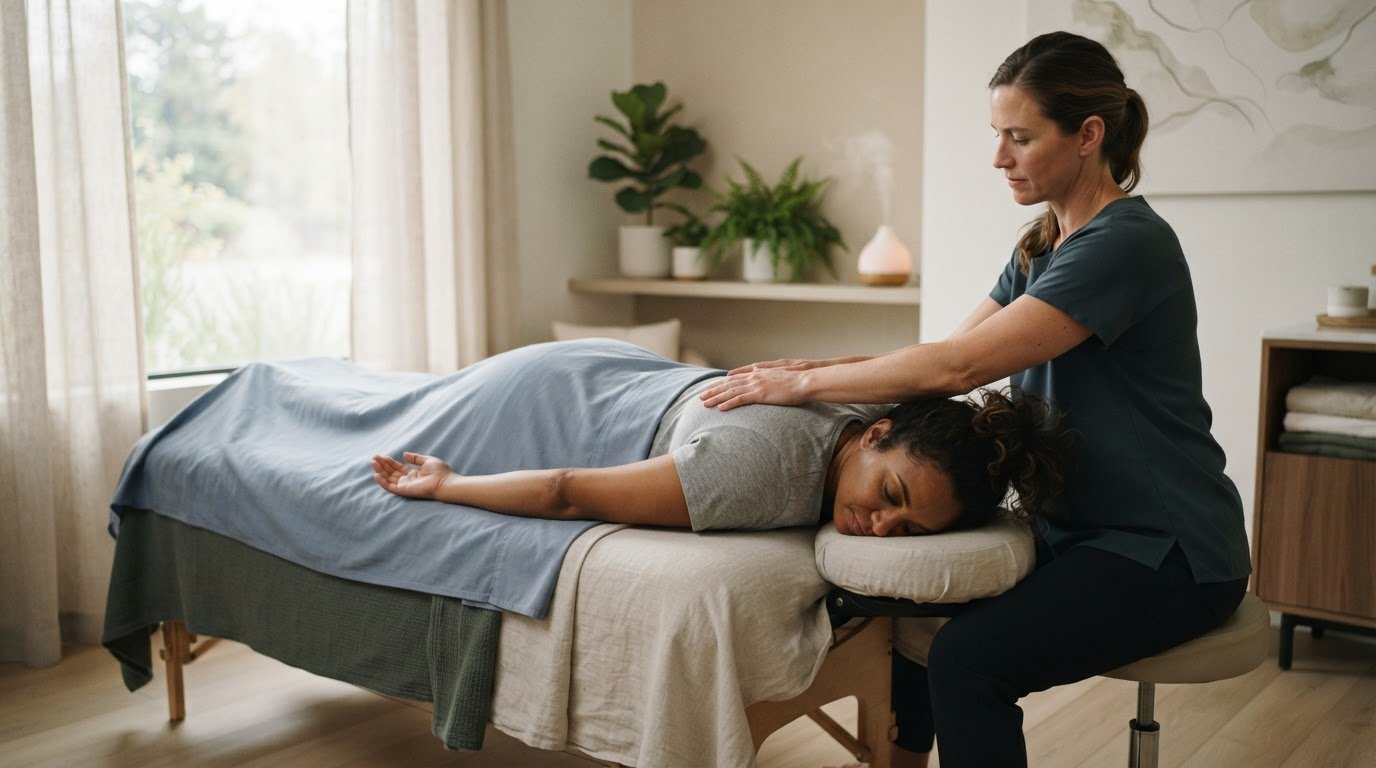
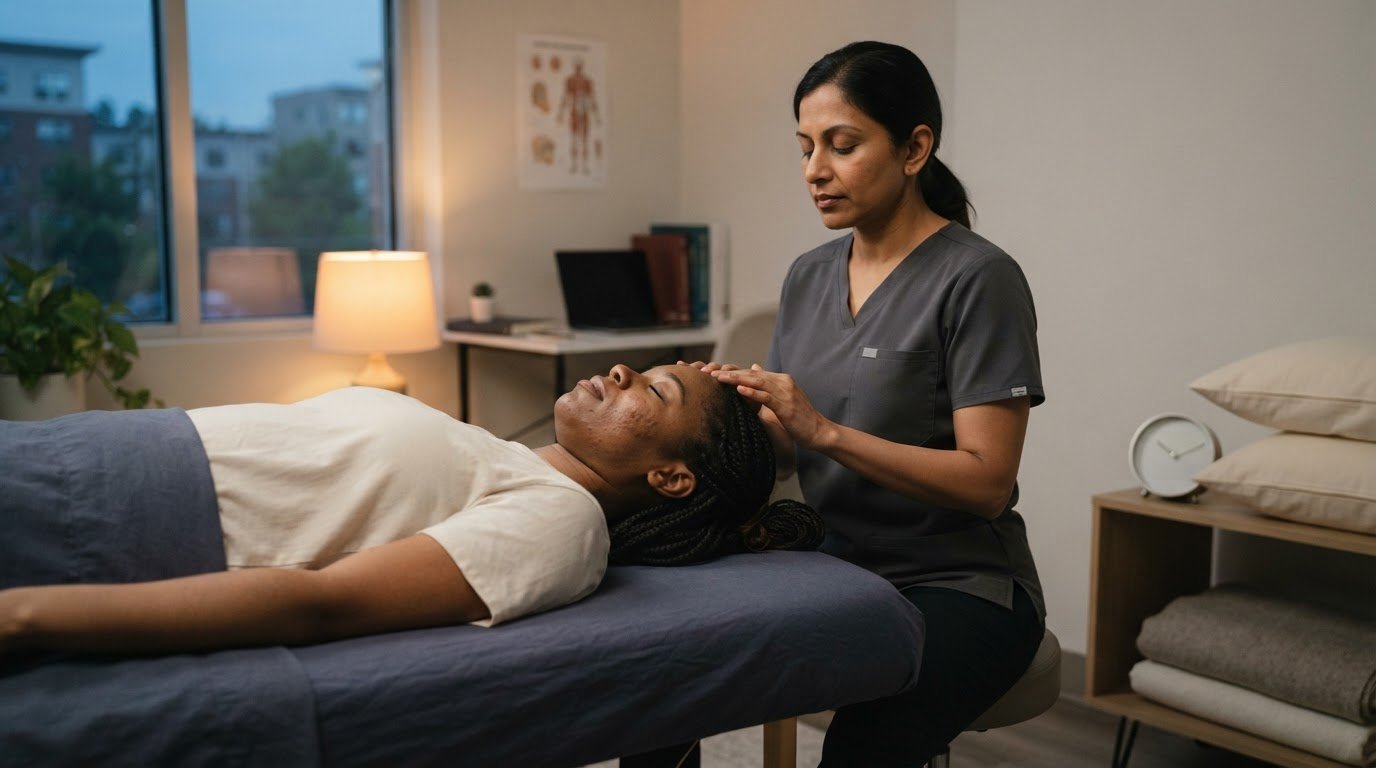
Consider the profound impact of integrating light therapy with Cranial sacral therapy. While the light works at a cellular level to reduce inflammation, the manual therapy calms your nervous system, inviting a state of deep peace, safety, and receptivity. This dual approach ensures that your recovery isn't just physical; it's an energetic shift that restores your body's natural vitality from the inside out. It is about addressing the whole person, ensuring that every layer of your being is supported in its transition from discomfort to harmony.
Red Light and Myofascial Release: The Ultimate Duo
Have you ever felt that manual manipulation was too intense for your sensitive joints? By using Near-Infrared light to warm and prime the tissue beforehand, we make Myofascial release significantly more effective and far more comfortable. The light acts as a cellular lubricant, softening the "knots" and adhesions in your fascia before a single hand is laid upon you. This synergy allows us to address the root cause of your discomfort by healing the tissue with light while simultaneously correcting structural alignment through manual therapy. It is a cumulative effect that transforms a simple appointment into a restorative ritual of renewal and recovery.
A Sanctuary for Whole-Body Health
Are you ready to step into a space where clinical expertise meets spiritual warmth? Our approach to red light therapy for pain relief is rooted in professional physiotherapy, ensuring that every session is part of a larger, holistic recovery plan. We provide a sanctuary for those seeking to shed the burdens of chronic stiffness and fatigue. We believe in your inherent potential for change and evolution. Your pain does not have to be your permanent companion; instead, it can be the catalyst that leads you to a life of physical freedom, harmony, and balance. Let us guide you back to the vibrant, pain-free life you deserve.
Step into a Life of Restored Vitality
Are you ready to stop managing your symptoms and start honoring your body's innate potential for change? We've explored how light energy transforms cellular health, why consistency in your ritual matters, and how combining technology with manual touch creates a profound path toward wholeness. By embracing red light therapy for pain relief as a cellular primer, you aren't just seeking a temporary fix; you're investing in a future defined by ease, vitality, and physical freedom.
Choosing an integrative path means you don't have to navigate this journey alone. At Minsu’s Healing Oasis, we provide a nurturing sanctuary for whole-body recovery, combining professional integrative physiotherapy expertise with expertly guided light therapy sessions. This holistic approach ensures every layer of your being is seen, heard, and supported. Whether you're recovering from injury or seeking relief from long-standing burdens, the light is waiting to guide you home.
Begin your journey to restorative healing at Minsu’s Healing Oasis and rediscover the joy of movement. Your body is capable of remarkable evolution, and today is the perfect day to start.
Frequently Asked Questions
Is red light therapy safe for everyone?
Red light therapy is non-invasive and safe for most individuals, though specific health conditions require professional discernment. If you are pregnant, have an active malignancy, or use photosensitizing medications, a consultation is essential. Our sanctuary prioritizes your safety by assessing your unique health history before beginning any regimen. This careful, nurturing approach ensures that your path toward recovery is grounded in clinical assurance and gentle, supportive care for your whole being.
How long does it take to feel pain relief from red light therapy?
You may experience a softening of acute discomfort within 24 hours, but lasting transformation for chronic conditions typically unfolds over four to eight weeks of consistent use. Healing is a rhythmic journey rather than a sudden event. While the cellular spark begins immediately, rebuilding structural integrity and reducing long-standing inflammation requires patience. Trust in the steady, methodical progress as your body transitions from a state of burden toward a vision of harmony and balance.
Can red light therapy help with deep-seated back pain or only skin issues?
Yes, it is profoundly effective for deep-seated discomfort because Near-Infrared wavelengths penetrate several centimeters into muscles, nerves, and joints. While red light focuses on surface healing and skin health, these longer wavelengths reach the root of spinal stiffness and ligament strain. Using red light therapy for pain relief in a professional setting ensures that these deep tissues receive the precise energy required to ignite repair and restore your physical freedom.
Do I need a prescription or professional supervision for red light therapy?
You don't need a prescription to access this technology, yet professional supervision provides the roadmap necessary for deep-rooted solutions. A Wise Integrative Guide ensures you are using the correct irradiance, distance, and duration for your specific pain profile. Professional oversight also bridges the gap between high-tech light and manual structural alignment. This combination ensures your recovery is safe, methodical, and tailored to your body's inherent potential for personal evolution and lasting ease.
Can I use red light therapy every day, or is there a limit?
You can safely use light therapy every day, but more is not always better for your cellular recovery. Your cells have a biological limit known as the Biphasic Dose Response, where excessive light can actually slow down the healing process. We typically recommend 10 to 20 minutes per day for most individuals. This steady, rhythmic application provides the necessary invitation for renewal without overwhelming your system’s natural capacity for balance, restoration, and whole-person harmony.
How is red light therapy different from a heating pad or infrared sauna?
Unlike heating pads or saunas that rely on thermal energy, red light therapy uses light photons to jumpstart cellular respiration. Heating pads provide superficial comfort by increasing surface blood flow through warmth. In contrast, photobiomodulation targets the mitochondria to produce ATP, the fuel your cells need for actual repair. It is a shift from merely soothing the skin to empowering your body to heal, recover, and thrive at a fundamental, energetic, and physical level.
What should I look for in a red light therapy device for pain?
Priority should be given to devices with high irradiance and a combination of red and Near-Infrared wavelengths. For effective red light therapy for pain relief, look for units that offer 660nm and 850nm frequencies to ensure both surface and deep tissue coverage. It is also wise to verify that the device is FDA cleared for medical claims. This technical precision ensures your healing sanctuary is equipped with the power needed for lasting vitality and strength.
Can red light therapy help with emotional or stress-related pain?
Light therapy can be a powerful ally for stress-related pain by calming the nervous system and reducing systemic oxidative stress. When your body is in a state of metabolic smog, it often manifests as emotional heaviness or physical tension. By stimulating a restorative response, the light helps bridge the gap between your physical health and energetic state. It invites a sense of peace, vitality, and wholeness that supports your desire for a more fulfilling and vibrant life.

Comments