




Cranial Sacral Therapy for Migraines: A Gentle Path to Lasting Relief (2026)
What if the deepest relief for debilitating head pain doesn't require aggressive force, but a touch no heavier than a nickel? If you live in an exhausting cycle of unilateral throbbing, photophobia, and pharmaceutical fog, you know how desperately your body longs for genuine rest. Exploring cranial sacral therapy for migraines offers a gentle, restorative path away from persistent pain, working in harmony with your natural craniosacral rhythm to release the deep tension holding your scalp, occiput, and jaw captive.
Living with constant sensory overwhelm leaves the central nervous system trapped in fight-or-flight, making true recovery feel just out of reach. In this guide, you'll discover how subtle cranial decompression releases restrictive dural strain, restores balanced fluid mobility along the spinal axis, and eases chronic migraine intensity. Together, we'll examine the clinical foundations of this non-invasive manual therapy, essential safety considerations, and how dedicated bodywork can help you return to a peaceful, sustained baseline.
Table of Contents
What Is Cranial Sacral Therapy for Migraines?
Cranial sacral therapy for migraines is a gentle, non-invasive manual therapy that evaluates and releases restrictive tension within the craniosacral system to calm hyper-reactive nerves, improve cerebrospinal fluid flow, and reduce headache intensity.
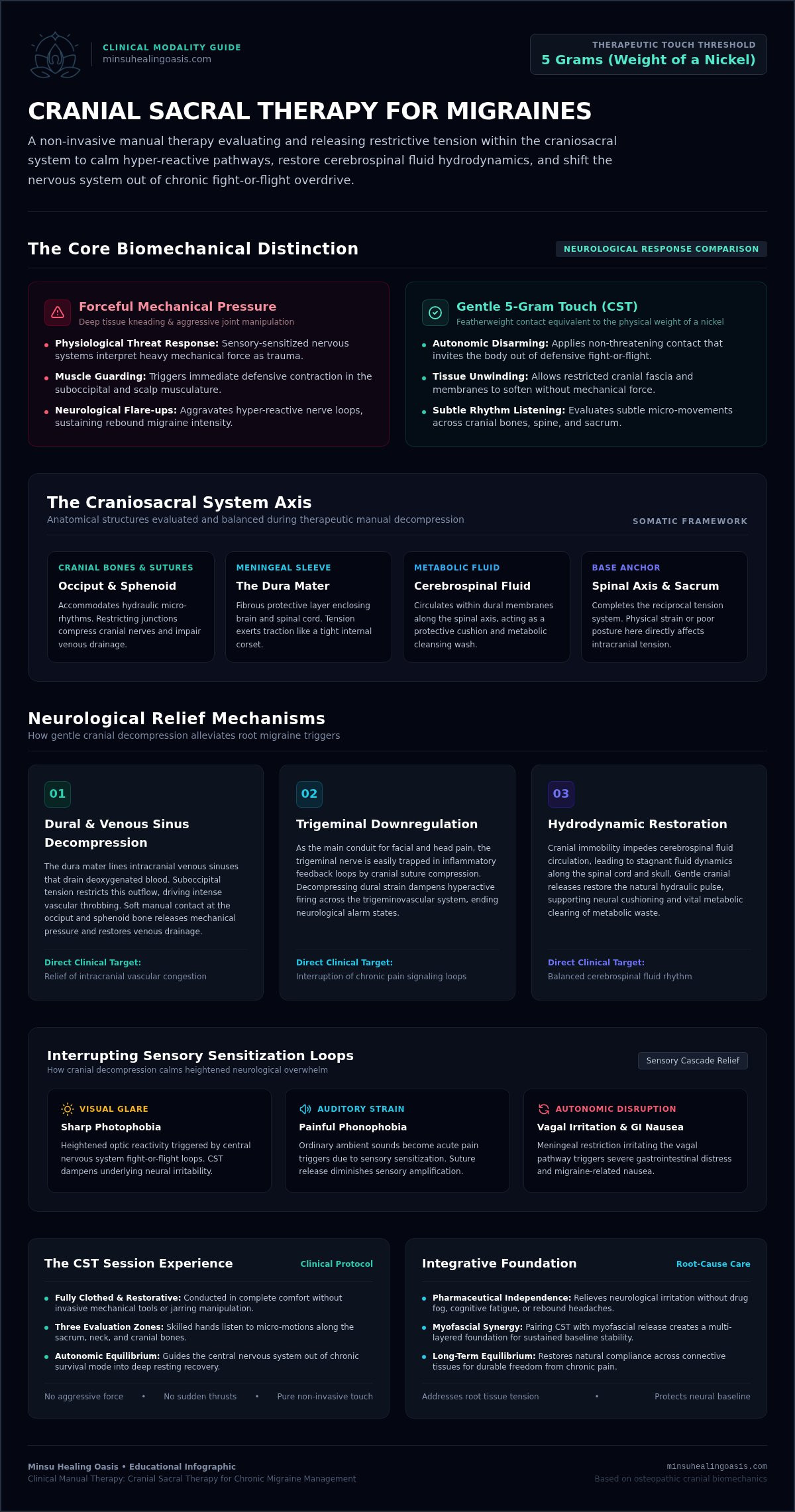
Unlike deep tissue massage that forcefully kneads contracted muscles, or chiropractic adjustments that rely on rapid joint manipulation, this modality uses an exceptionally light touch of five grams, roughly the physical weight of a nickel. A trained practitioner places hands along your skull, spine, and sacrum, listening carefully to the subtle micro-movements of your anatomy. Originally developed from osteopathic traditions, modern craniosacral therapy works to soothe, balance, and align connective tissues without using aggressive mechanical force.
The Craniosacral System and Cranial Rhythms Explained
Have you ever considered how intimately your spine, skull, and brain interact beneath conscious awareness? The craniosacral system encompasses the bones of the cranium, the spinal column, the sacrum, and the nourishing cerebrospinal fluid that circulates within the dural membranes. In a balanced state, your cranial bones accommodate a gentle hydraulic rhythm as fluid pulses along the spinal axis. However, physical trauma, chronic emotional strain, and poor posture can create structural restrictions. When these foundational membranes tighten, fluid mobility stagnates and places subtle traction on the central nervous system, setting the stage for persistent head pain.
Why Light Touch Succeeds Where Forceful Pressure Fails
Why doesn't aggressive pressure relieve deep migraine distress? For someone living with sensory sensitization, forceful bodywork often registers as a physiological threat, causing protective muscle guarding and triggering immediate neurological flare-ups. A light touch changes this dialogue entirely. By applying minimal, non-threatening contact, cranial sacral therapy for migraines invites your autonomic nervous system to disarm its defensive alarms. Sensitive tissues soften, unwind, and release far more effectively when met with patient support rather than forced correction.
The Neurological Connection: How CST Calms Chronic Migraine Pathways
Does it ever feel like your head pain is tied to a tight, unyielding corset gripping the base of your skull? That sensation often stems from genuine physical tension within the cranial fascia and the dura mater, the tough fibrous sleeve protecting your brain and spinal cord. When suboccipital tissues constrict, they exert continuous mechanical traction on the spinal meninges, compressing cranial nerves and irritating delicate neural pathways. By gently decompressing these restricted structures, cranial sacral therapy for migraines alleviates direct dural strain on the trigeminovascular system, shifting your nervous system out of exhausting fight-or-flight overdrive and into deep, restorative equilibrium.
Releasing the Dura Mater and Venous Sinuses
The dura mater does not simply encase neural tissue; it lines the intracranial venous sinuses responsible for draining deoxygenated blood from the cranium. When dural tension accumulates around the skull base, this critical venous outflow can become compromised, amplifying painful vascular throbbing. Soft manual contact at the occiput and sphenoid bone releases this internal pressure, opening vascular pathways, easing connective tension, and encouraging unobstructed venous drainage.
Downregulating the Trigeminal Nerve and Calming Central Sensitization
As the primary conduit for head and facial pain signaling, the trigeminal nerve easily becomes trapped in chronic inflammatory feedback loops. Persistent compression at cranial sutures feeds central sensitization, a heightened neurological state where ordinary sensory inputs feel intolerable:
Visual glare: Heightened sensory sensitivity translates into sharp photophobia.
Auditory strain: Everyday ambient sounds provoke painful phonophobia.
Autonomic disruption: Vagal nerve irritation produces profound gastrointestinal nausea.
By releasing somatic restrictions at suture junctions, craniosacral work quiets these hyperactive loops, dampening the neurological alarm bells that sustain chronic attacks.
Restoring Healthy Cerebrospinal Fluid Hydrodynamics
Cerebrospinal fluid acts as both a protective cushion and a vital metabolic cleansing wash for your central nervous system. When cranial immobility impedes its rhythmic circulation, cellular waste products linger, contributing to post-attack brain fog, heavy fatigue, and delayed neurological recovery. Encouraging fluid mobilization restores normal hydraulic flow, helping clear metabolic debris and bathing sensitive nerves in fresh nourishment. If you want to understand more about what to expect during a craniosacral session, clinical guides illustrate how such unhurried touch facilitates deep neurological calm. For those seeking dedicated, whole-person manual care, reserving time with experienced practitioners at Minsu's Healing Oasis offers a gentle path toward lasting craniosacral balance.
Cranial Sacral Therapy vs. Conventional Treatments: Finding Balanced Care
Are you caught between pharmaceutical dependence and recurring pain? While modern medicine provides essential diagnostic clarity and acute rescue tools, relying solely on biochemical intervention often overlooks physical dural strains. Integrating somatic bodywork alongside standard medical care bridges this gap, resolving hidden mechanical triggers without adding chemical burdens.
Understanding where each intervention fits helps you craft a well-rounded healing path:
Rigorous clinical research highlights the value of this gentle balance. A published randomized controlled trial on craniosacral therapy for migraines demonstrated meaningful reductions in pain intensity, attack frequency, and medication intake compared to control groups.
Breaking the Medication Overuse and Rebound Cycle
Frequent use of triptans and NSAIDs creates a cruel dilemma known as medication overuse headaches. When pain relievers wear off, rebound attacks frequently surge with greater vengeance, prompting higher doses that tax your stomach and liver. Gentle manual interventions offer therapeutic relief without metabolic burden, soothing raw cranial tension so you reach for rescue pills far less often.
Why Standard Neck Massage May Aggravate Acute Migraines
Have you ever scheduled an intense neck rub during a flare-up only to suffer a worse headache hours later? Deep tissue kneading treats contracted trapezius bands as isolated mechanical problems, yet forceful pressure often shocks sensitive sensory nerves into defensive spasms. In contrast, cranial sacral therapy for migraines uses stillness and subtle listening, letting tight connective tissues release on their own terms without sparking neuromuscular backlash.
What to Expect During a Cranial Sacral Session for Migraines
Stepping into a treatment room for cranial sacral therapy for migraines feels worlds apart from a sterile medical exam. You remain fully clothed, resting comfortably on a padded massage table in a quiet, softly lit sanctuary. There is no cracking, oil, or strenuous muscle rubbing. Instead, skilled hands gently cradle your skull, neck, and lower spine, creating an atmosphere where your entire being feels invited to soften, breathe, and unwind.
The Step-by-Step Flow of a Nurturing Session
Each visit unfolds through a patient, structured sequence crafted to support delicate neurological systems:
Compassionate Intake: Your practitioner reviews headache patterns, aura triggers, and structural tension points.
Grounding Contact: Gentle touch begins at your feet or sacrum to evaluate global fluid rhythm and ease baseline anxiety.
Craniocervical Unwinding: Sensitive holds at the skull base, temporal bones, and jaw release deep fascial restrictions.
Stillpoint Induction: A purposeful, momentary pause in fluid rhythm allows your autonomic system to reset deeply.
Common Physical and Emotional Sensations You May Feel
What does releasing years of cranial strain actually feel like? Many people notice spreading warmth, gentle tingling, or subtle pulsing sensations as compressed dural membranes open. As breathing deepens, you may drift into a restorative threshold between waking and sleep. Occasionally, letting go of chronic tension brings an emotional sigh, a spontaneous yawn, or transient fatigue. These responses are natural signs of somatic unburdening as your system sheds stored stress.
Frequency of Sessions and Building Cumulative Resilience
While an initial visit often provides immediate mental quietude, breaking persistent headache cycles requires cumulative care. Most individuals benefit from four to six weekly sessions to retrain guarded tissues and restore lasting dural mobility, gradually transitioning into monthly maintenance visits. Listening to subtle body signals allows you to schedule restorative support before acute pressure escalates. To experience this deep, non-invasive therapeutic sanctuary firsthand, you can schedule a personalized session with Minsu's Healing Oasis and begin restoring your inner baseline.
After each session, drink plenty of fresh water, avoid strenuous screen time, and allow your body a quiet evening to integrate these profound neurological shifts.
Integrative Manual Therapies: Creating Long-Term Freedom from Headaches
Can enduring relief occur if we only address one isolated layer of the body? Chronic head pain rarely exists in a vacuum. It represents an intricate web of nervous tension, restricted connective tissue, and cellular exhaustion. While cranial sacral therapy for migraines provides a vital anchor of neurological calm, pairing it with complementary manual modalities unlocks a deeper, more permanent freedom.
Combining Cranial Work with Gentle Myofascial Release
Have you noticed how clenching your jaw sends sharp, radiating spikes straight into your temples? Chronic strain from temporomandibular joint (TMJ) dysfunction pulls continuous mechanical tension upward into the cranial base, feeding painful migraine patterns. For individuals whose chronic jaw tension stems from severe occlusal imbalances or complex bite misalignment, choosing to visit Dr Samintharaj Kumar provides specialized expertise in oral surgery and full mouth rehabilitation. When practitioners unite subtle cranial holds with gentle myofascial release, they systematically unwind tight fascial sheets traveling from the upper back, shoulders, and throat into the cranium. This layered manual approach softens stubborn muscular resistance, opens physical breathing room, and restores balanced structural equilibrium from your collarbones to your crown.
Physical release deepens when cells receive the energetic support they need to rebuild. Integrating non-invasive modalities like red light therapy improves microcirculation, boosts cellular energy, and eases underlying tissue irritation. Complementing hands-on bodywork with energetic approaches like quantum healing therapy creates a multi-dimensional environment to release stored emotional tension, soothe chronic stress, and restore internal harmony.
Your Personalized Sanctuary for Restorative Healing
Every nervous system holds a unique story, rhythm, and threshold for touch. At Minsu's Healing Oasis, therapy plans are thoughtfully tailored to honor your personal sensitivities rather than forcing rigid clinical protocols. Skilled practitioners blend precise manual bodywork with a deeply compassionate, nurturing touch, creating a serene environment where your body feels safe to soften, recalibrate, and renew. Embracing cranial sacral therapy for migraines within an integrative care plan can help you break painful cycles and rediscover a peaceful, vibrant baseline.
Reclaim Your Peaceful Baseline Through Gentle Cranial Care
Are you ready to step away from the exhausting cycle of throbbing head pain, sensory overload, and pharmaceutical fog? Healing doesn't require forceful pressure or enduring harsh side effects. By honoring the subtle hydraulic pulses of your craniosacral rhythm and gently releasing restrictive dural strain, cranial sacral therapy for migraines offers a quiet, non-invasive path to downregulate an overactive nervous system and restore lasting physical equilibrium.
At Minsu's Healing Oasis, specialized practitioner expertise blends advanced craniosacral bodywork with therapeutic myofascial release inside a calm, sanctuary-inspired environment tailored for sensitive neurological recovery. Honoring your system's physical, fascial, and energetic needs allows deep unwinding to unfold naturally. If you feel called to quiet chronic nerve distress, soften persistent tension, and rediscover pain-free living, begin your journey to lasting migraine relief with nurturing manual care today.
Frequently Asked Questions
Can cranial sacral therapy make a migraine worse or trigger an attack?
When performed by a qualified practitioner, craniosacral therapy rarely triggers an acute attack due to its exceptionally gentle nature. However, as compressed tissues release and circulation shifts, some people experience a mild healing response, including transient fatigue, slight dizziness, or temporary tenderness. These sensations typically fade within twenty-four hours as the central nervous system integrates the structural changes and settles into lasting parasympathetic calm.
How many cranial sacral therapy sessions are needed to see migraine improvement?
Most people begin noticing meaningful shifts in tension and mental clarity within two to four visits. For lasting structural correction, a typical care plan involves four to six weekly cranial sacral therapy for migraines sessions to release chronic dural strain. After this initial series retrains defensive nerve pathways, clients usually transition to monthly maintenance appointments to sustain nervous system resilience and prevent future flare-ups.
How does cranial sacral therapy differ from chiropractic spinal adjustments?
The core difference lies in the application of mechanical force and targeted structures. Chiropractic care uses high-velocity, low-amplitude thrusts to mobilize joint segments and realign vertebrae. In contrast, craniosacral work avoids rapid manipulation entirely, utilizing a featherlight touch of five grams to release the dura mater, cranial bones, and spinal meninges, encouraging the body to unwind its own restrictions safely.
Is cranial sacral therapy safe to receive during an active migraine episode?
Yes, cranial sacral therapy can be safely received during an acute attack, provided the practitioner modifies their approach to emphasize grounding and suboccipital decompression. Instead of mobilizing deeper restrictions, sessions during an active episode focus on calming sensory overload, quieting trigeminal reactivity, and facilitating gentle fluid drainage to ease vascular pressure. Always inform your therapist about your current pain levels before getting on the table.
What scientific evidence supports craniosacral therapy for chronic headache disorders?
Clinical trials and systematic reviews demonstrate that craniosacral therapy provides statistically significant reductions in migraine pain intensity, attack frequency, and pharmaceutical dependency compared to control interventions. While researchers classify the overall certainty of evidence as low to moderate due to small trial sizes and provider-blinding limitations, studies consistently report sustained functional improvements and enhanced quality of life for chronic sufferers over six-month follow-ups.
What should I wear and how should I prepare for my first CST appointment?
You should wear loose, comfortable clothing such as yoga pants, sweatpants, or a soft cotton t-shirt, as sessions take place fully clothed. It helps to avoid tight belts, heavy jewelry, or restrictive collars that impede circulation. Before arriving, hydrate well with clean water, enjoy a light meal rather than arriving empty-handed, and set aside quiet time afterward to integrate the gentle releases without rushing.
Can cranial sacral therapy help with vestibular migraines and associated dizziness?
Yes, cranial sacral therapy for migraines offers meaningful support for vestibular symptoms by releasing physical strain around the temporal bones, where the inner ear and vestibular apparatus reside. Easing tension across cranial sutures and the skull base reduces aberrant mechanical pulling on the vestibulocochlear nerve. This gentle structural unburdening calms persistent dizziness, restores spatial equilibrium, and quiets the disorienting motion sensitivities common to vestibular episodes.


Comments