




Physiotherapy for Chronic Conditions: How It Can Help
Living with a chronic condition doesn’t mean every day has to be shaped by pain or limited movement. A chronic condition is a long-term health issue that lasts more than three months, and physiotherapy for chronic conditions can help support movement, strength, and day-to-day function. Care is shaped around the person, the condition, and what they hope to do more comfortably.
If ongoing symptoms make activity difficult or uncertain, it’s understandable to wonder what support might help. Physiotherapy for chronic conditions can take an integrative approach to movement, pain, and overall well-being, with care shaped around individual needs.
This article explains what chronic conditions are, how physiotherapy may support daily function, and what approaches can be part of care. It also explores how a personalized plan can adapt as symptoms, abilities, and goals change, helping you work toward greater ease and confidence in everyday movement.
Table of Contents
What is physical therapy (physiotherapy)?
Physiotherapy can combine movement-focused care, hands-on techniques, and education to support function and well-being. For chronic pain, care may focus on making movement more manageable and addressing the ways symptoms affect everyday life.
Physiotherapy for Chronic Pain
Physiotherapy for chronic conditions can include manual techniques and movement-based care tailored to symptoms and daily goals. A practitioner may discuss how pain affects mobility and routine activities, then shape an approach around those needs. For example, myofascial release works with soft tissues such as fascia and muscles, while mind-body therapies can form part of a broader approach to well-being.
Exercise therapy may reduce osteoarthritis pain symptoms and improve quality of life. Heat may ease muscle tension, while cold or electrical stimulation may be considered among other pain-management methods. The approach depends on the person’s symptoms and goals, rather than relying on one technique for every chronic pain condition.
Lower Back Pain and Other Chronic Conditions
For chronic lower back pain, physical therapy can focus on movement, strength, and daily function. Back pain may persist for months or years, and imaging sometimes shows no clear damage. A physical assessment can help identify muscle tension and movement issues that contribute to pain, guiding exercises and hands-on care toward specific difficulties.
Arthritis, fibromyalgia, and persistent back pain can affect mobility in different ways. Each person’s experience and goals are unique, so an integrative approach should reflect the condition and how it affects daily life. Minsu’s Healing Oasis offers physical and manual therapies alongside mind-body and energy healing approaches.
Does health insurance or Medicare cover physiotherapy for chronic conditions? Coverage depends on the insurance plan, eligibility, and the services included. Review your plan benefits and any cost-sharing terms to understand potential out-of-pocket expenses.
Do you need a doctor’s referral for outpatient physiotherapy in the United States? Referral rules vary by location and insurance plan. In some areas, people can contact a physical therapy clinic directly for an appointment without a physician referral.
How much does physiotherapy cost in the United States, with and without insurance? There is no single cost that applies nationwide. What you pay depends on your insurance coverage and care needs; without insurance, the cost depends on the clinic’s fee and treatment plan.
How can someone find a qualified physical therapist for a chronic condition? Look for an approach that fits your condition, symptoms, and goals. At an initial visit, discuss your health history, pain, and daily activities that feel difficult, then ask how your progress and care will be reviewed.
What are the types of physiotherapy?
Physiotherapy can take different forms depending on a person’s condition and goals. An integrative approach may combine physical and manual therapies with mind-body therapies and energy healing, with attention to the whole person.
For rheumatoid arthritis, a physical therapist can tailor exercise to joint mobility, pain, and preserved function. A plan may balance gentle movement with strengthening, adapting activity to the person’s needs and medical history. Arthritis is one example of a condition where exercise and education can help patients understand how to move while caring for affected joints.
Cardiovascular physical therapy can include aerobic conditioning, strength training, and flexibility exercises. For someone with heart disease, these activities are tailored to medical history and exercise capacity. Cardiopulmonary rehabilitation may also support people with chronic lung conditions, including COPD, by building exercise capacity and addressing shortness of breath.
Hands-on approaches include soft-tissue mobilization, which works with muscles, ligaments, and fascia to address tension and restricted movement. Trigger point therapy applies pressure to tight areas within a muscle. These methods may be used alongside exercise, not as a replacement for movement practice or patient education.
Physical therapy and occupational therapy have different emphases, though both may support function. Physical therapy commonly focuses on movement, strength, balance, and mobility. Occupational therapy focuses on daily tasks, such as dressing or preparing a meal. A person managing multiple sclerosis, arthritis, or heart disease may have goals involving both movement and everyday routines.
A comprehensive plan should reflect the person’s condition, abilities, symptoms, and practical goals. Minsu’s Healing Oasis takes an integrative approach, bringing together physical and manual therapies, mind-body therapies, and energy healing to support whole-person well-being.
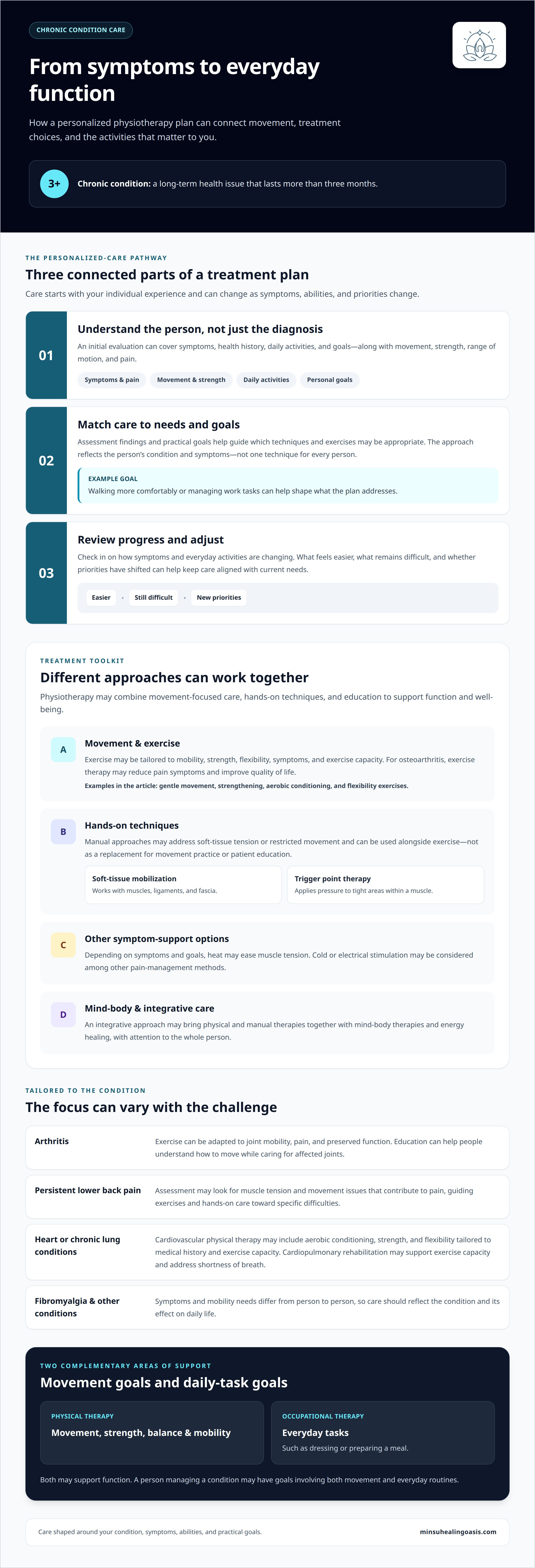
Personalized treatment plans
A personalized plan connects a person’s condition with their symptoms, daily activities, and goals. Care can adapt as needs and priorities change.
Initial Evaluation and Treatment Goals
An initial evaluation gathers the details needed to shape treatment around the person, not just the diagnosis. The physical therapist asks about symptoms, medical history, daily activities, and goals, then assesses movement, strength, range of motion, and pain.
For example, someone with chronic pain may want to walk more comfortably or manage work tasks. These goals help guide which techniques and exercises are appropriate. The assessment also gives the therapist a starting point for tracking changes in function and deciding what the plan should address first.
Monitoring Progress and Adjusting Treatment
As care continues, check in on how symptoms and daily activities are changing. Discuss what feels easier, what remains difficult, and whether your priorities have shifted. This helps keep the approach aligned with your needs.
If an exercise feels too hard or too easy, say so; that information helps the therapist adapt the plan. Soreness can occur after challenging exercises, so sharing how the body responds supports thoughtful progression. If a person’s movement improves but a daily task remains difficult, treatment can shift toward that task.
Treatment Duration and Expectations
Treatment duration depends on the condition, how long symptoms have been present, and the person’s goals. Some short-term issues may need physical therapy for a few weeks, while chronic conditions can require ongoing support for months or years.
Expect an evolving process rather than a fixed sequence of techniques. Follow-up assessments help determine whether to progress exercise, revisit an activity, or address persistent symptoms. A home exercise plan may support long-term management between sessions. Sharing changes in pain, movement, and daily function helps keep rehabilitation aligned with recovery needs.
How physiotherapy can support chronic-condition management
Physiotherapy for chronic conditions can help build physical capacity for the demands of daily life. A tailored plan may develop strength, flexibility, balance, and confidence with movement. The goal is practical: making activities such as walking, working, or joining family life more manageable while a disease continues to require care. Progress may look different for each person.
Exercise can support different needs across conditions. For someone with type 2 diabetes, prescribed activity may improve glucose control and exercise tolerance. For a person with COPD, rehabilitation can build exercise capacity and address shortness of breath. In physiotherapy for chronic conditions, the therapist adapts activity to medical needs and current ability, then progresses it as function changes.
Care can also include education and self-management support. A person with chronic pain may learn to pace activity, consider posture, and use movement strategies for everyday tasks. A tailored home exercise plan can help maintain physical activity between appointments. For osteoporosis or reduced bone density, strengthening and balance work can support function and reduce falls risk.
Managing a chronic condition often involves more than one part of health care. A physiotherapist can work with a patient’s GP, specialist, and other health professionals to develop an exercise and management plan. For patients who face mobility challenges or require coordinated clinical attention outside a traditional clinic, home healthcare providers like Hakeem at Home illustrate how in-home medical and supportive care can complement long-term recovery. This can connect rehabilitation goals with broader care. Outcomes might include improved mobility, greater independence, or more confidence participating in work and community activities.
What are the risks or side effects of physiotherapy for chronic conditions? Physical therapy carries a small risk of injury, including aggravating an existing injury. Challenging exercises can also cause soreness afterward. Share new or worsening symptoms with a healthcare provider so they can be addressed in the context of your care.
For support that brings movement and hands-on care together, explore physiotherapy and manual therapy.
Minsu’s Healing Oasis: Physiotherapy and Manual Therapy
Minsu’s Healing Oasis offers physical and manual therapies for people seeking support with movement, pain, or everyday function. Care includes myofascial release, which focuses on soft tissues such as fascia and muscles. Discuss your symptoms and goals to explore an approach that fits your needs.
For a broader wellness approach, Energy Healing and Alternative Therapies, including the Quantum Healing Technique, are also available. These offerings complement the center’s range of care; they aren’t a substitute for medical evaluation or treatment when needed. If ongoing symptoms are affecting daily life, this can be a place to discuss your goals and explore what kind of support may fit.
Contact Minsu’s Healing Oasis to talk about your physiotherapy and manual therapy needs.
Make Your Next Step Feel Manageable
Living with a long-term condition can make future plans feel uncertain. Start with a meaningful question: which part of daily life would you most like to approach with greater ease? Naming that priority gives your conversation about physiotherapy for chronic conditions a personal direction, grounded in what matters to you.
Bring that goal, along with the movements or routines that feel difficult, into a conversation about care. A supportive next step is to explore your needs at a pace that feels right for you, making room for change while keeping your well-being at the center.
If you’re ready to discuss what support could look like, connect with Minsu’s Healing Oasis. Let your next step begin with a clear goal, a compassionate conversation, and space to move forward with care.
Frequently Asked Questions
What Are Chronic Conditions?
A chronic condition is a long-term health issue that lasts more than three months. It may involve persistent symptoms, changes in physical ability, or ongoing care needs. Examples include arthritis, diabetes, and chronic back pain. The effects vary: one person may need support with movement, while another may focus on building stamina for work or daily routines.
What chronic conditions can physiotherapy help manage?
Physiotherapy can support people managing arthritis, fibromyalgia, chronic back or neck pain, COPD, diabetes, Parkinson’s disease, and multiple sclerosis. It also addresses movement and function for people with heart disease, osteoporosis, or lymphedema related to breast cancer. The relevant goals differ by condition. For example, a person with COPD may work on exercise capacity, while arthritis care may focus on joint function.
How does physiotherapy help with chronic pain and mobility?
Physiotherapy can help address chronic pain by improving movement capacity and supporting strength, flexibility, and confidence with activity. A physical therapist can assess how symptoms affect a task, such as walking or reaching, then connect treatment to that practical challenge. The goal is not simply to focus on discomfort, but to support participation in meaningful daily activities.
What types of physiotherapy treatments are used for chronic conditions?
Treatment can include therapeutic exercise, stretching, strengthening, and aerobic conditioning. Manual approaches may include massage, joint mobilization, or soft-tissue techniques. Depending on the person’s needs, care may also use heat or cold, electrical stimulation, posture education, balance work, or gait training. For example, a person with reduced balance may practice coordinated movement as part of a broader plan.
What does a physiotherapy plan for a chronic condition involve?
A plan typically begins with a conversation about symptoms, health history, and the activities a person wants to manage. The therapist assesses relevant movement and function, then chooses treatment approaches around those findings. A plan may combine supervised exercise, hands-on techniques, and education. Follow-up sessions give the therapist a chance to review progress and address difficulties that remain.
How often should someone attend physiotherapy for a chronic condition?
There isn’t one schedule that fits every person. Visit frequency depends on the condition, symptom history, goals, and how treatment is progressing. Follow-up sessions allow the therapist to reassess function and adjust care; a tailored home exercise plan can support management between visits. For example, someone working toward easier daily movement may have a different schedule from someone building exercise capacity.



Comments