




Healing Every Step: The Nurturing Path of Manual Therapy for Hip Pain
- graphicjuliana
- 1 hour ago
- 12 min read
What if your hip pain isn't just a sign of mechanical wear, but a quiet plea from your body for a deeper, more nurturing kind of listening? You likely recognize that sharp, catching sensation when you rise from a chair or that heavy, locked feeling that makes every step feel like a chore. It's natural to feel anxious about losing your mobility or facing a future of invasive surgeries. When seeking manual therapy for hip pain, you're looking for more than a quick fix; you're seeking to be supported, understood, and renewed.
This journey explores how a holistic blend of manual therapy, myofascial release, and restorative care can dissolve physical restrictions and return you to a state of effortless grace. By honoring the interconnectedness of your muscles, joints, and spirit, we can move beyond mere symptom management toward true restoration. We'll preview a path that seeks to soften, align, and revitalize your entire being, offering a non-invasive alternative that respects your body's innate wisdom. Together, we'll discover how to transform restriction into flow and anxiety into a profound sense of inner peace.
Table of Contents
Understanding the Weight of Chronic Hip Pain
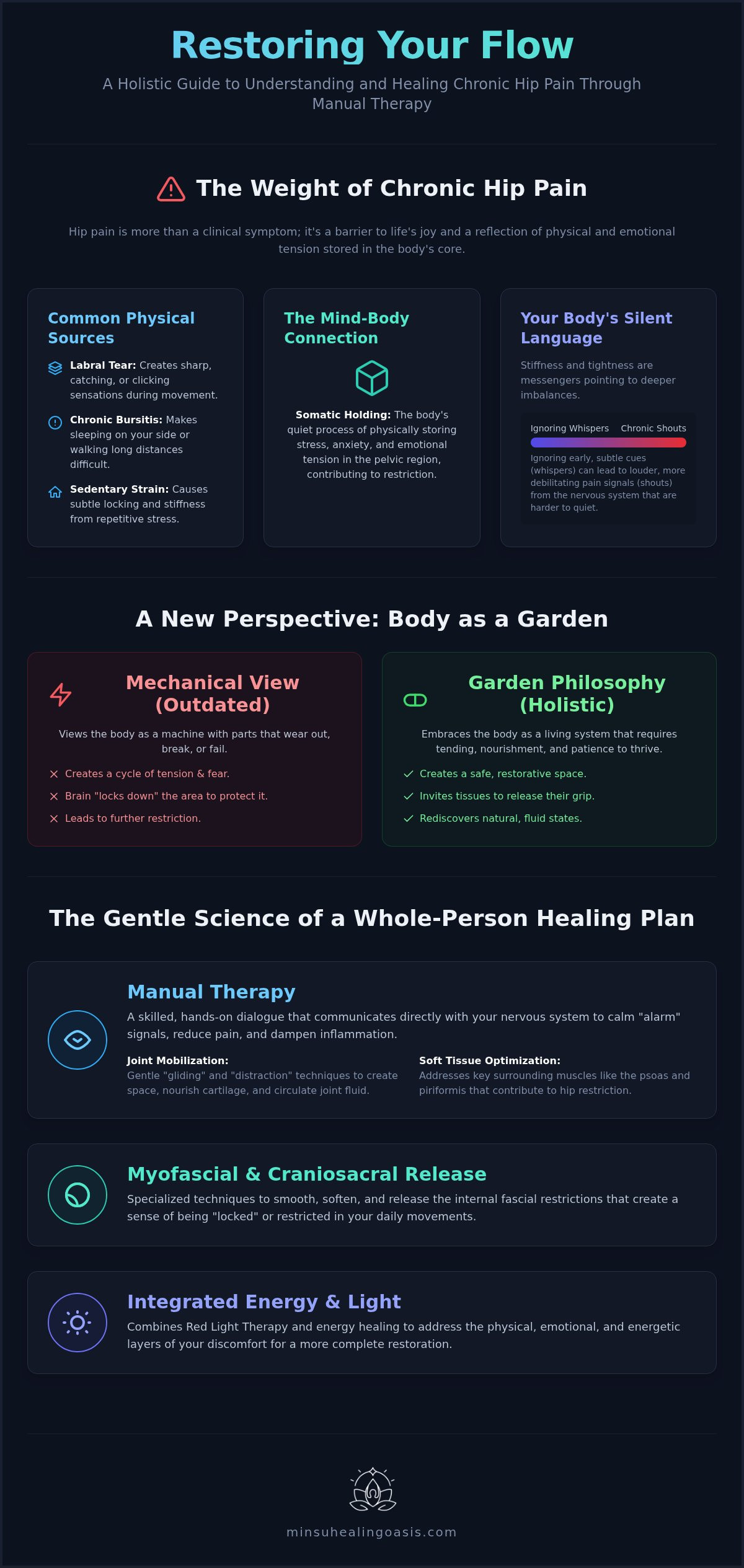
Have you ever felt that your world has become smaller because of the way your body moves? Hip pain is rarely just a localized clinical symptom; it's a profound barrier to life's joy, rhythm, and spontaneity. Your hips serve as the foundational center of your being, providing the essential balance, stability, and movement needed for a fulfilling life. When this center feels restricted, the body often engages in somatic holding, a quiet process where the pelvic region physically stores the weight of your stress, anxiety, and emotional tension.
When you explore manual therapy for hip pain, you're looking for a path that respects your complexity. This physical manifestation of discomfort often stems from several common sources:
A labral tear that creates sharp catching or clicking sensations during daily movement
Chronic bursitis that makes sleeping on your side or walking long distances difficult
The subtle locking and stiffness caused by the repetitive strain of a sedentary life
By acknowledging that your pain is a whole-person experience, we begin the process of untangling the physical and emotional knots that hold you back. This perspective allows us to treat the source rather than just the shadow of the problem.
The Silent Language of Hip Restrictions
Our bodies speak to us in a quiet, persistent language that we often overlook. Stiffness in the hip usually acts as a messenger, pointing toward imbalances, compensations, or misalignments elsewhere in the body. Many people adopt a "wait and see" approach, hoping the tightness will simply vanish with time. However, ignoring these whispers often leads to louder, more debilitating shouts from the nervous system that are much harder to quiet. By choosing The Gentle Science of Manual Therapy early, you honor those internal signals before they transform into chronic, life-altering restrictions. Listening to your body's subtle cues allows for a much more graceful and efficient path toward healing.
Moving Beyond the Mechanical View
It's common in modern medicine to view the body as a machine with parts that simply wear out, break, or fail. We prefer to embrace a "body-as-garden" philosophy, where your physical self requires tending, nourishment, and patience to truly thrive. Chronic pain creates a weary cycle of tension, fear, and further restriction, as the brain tries to protect the area by locking it down. Applying manual therapy for hip pain serves as an invitational key to break this protective cycle. It's about more than just moving a joint; it's about creating a safe, restorative space for your tissues to release their grip and rediscover their natural, fluid state.
The Gentle Science of Manual Therapy for Hip Pain
Have you ever wondered why a gentle, purposeful touch can succeed where medication often fails? Manual therapy for hip pain is far more than a simple sequence of movements; it is a skilled, hands-on dialogue between the practitioner’s hands and your body’s living tissue. While a general massage focuses primarily on surface relaxation, this clinical approach centers on the intricate mechanics of your joints. Our primary goals are to restore glide, increase circulation, and invite a sense of spaciousness back into the hip socket. This process allows your body to rediscover its natural capacity for fluid, effortless movement.
This approach triggers a profound neurophysiological response that reaches far beyond the skin. When we apply specific, intentional touch, we're communicating directly with your nervous system to calm the "alarm" signals sent by your brain. This interaction effectively reduces pain, dampens the cycle of inflammation, and encourages a state of deep physiological safety. This patient guide to manual therapy highlights how these specialized techniques help manage complex conditions by addressing the root of physical restriction. It's a process of helping the body remember how to soften, align, and release.
The Power of Joint Mobilization
How do we free a joint that feels heavy, stuck, or restricted? We utilize gentle "gliding" and "distraction" techniques to create microscopic space within the hip socket itself. These subtle movements are essential because they nourish the cartilage and circulate vital joint fluid, keeping the tissues supple, resilient, and healthy. Every adjustment is performed with immense patience, care, and precision. We move at the pace of your comfort, ensuring your body feels safe enough to let go of the long-held defenses that contribute to your daily discomfort.
Soft Tissue Optimization
The health of your hip is deeply tied to the surrounding musculature, particularly the psoas and piriformis muscles. These powerful structures often hold onto somatic tension, pulling the hip out of its natural alignment and creating deep, persistent aching. By applying rhythmic, restorative touch, we can release the trigger points that keep these muscles in a state of constant, weary contraction. This focused attention helps to nourish, balance, and revitalize the soft tissues, paving the way for lasting mobility. If you feel ready to explore this nurturing path, our practitioners at Minsu’s Healing Oasis are here to guide you toward a more comfortable and vibrant way of being.
Unlocking Depth: Myofascial Release and Craniosacral Support
Have you ever felt that, despite stretching or focused joint work, a deep sense of internal restriction remains? Sometimes the source of discomfort isn't the joint itself, but the intricate, living web of tissue that holds it in place. Myofascial release treats the body’s fascia, an internal "silk" wrap that envelopes every muscle, bone, and organ. When this tissue is healthy, it allows for an effortless, shimmering glide; when it is restricted, it becomes a source of profound limitation. By integrating these specialized techniques into manual therapy for hip pain, we address the hidden layers that mechanical adjustments alone simply cannot reach.
Myofascial Release: Dissolving the Invisible Web
How does a simple movement transform into a source of daily strain? Fascia is designed to be fluid and resilient, yet it often hardens due to physical trauma, poor posture, or chronic repetitive stress. When the fascia in your thighs, glutes, or lower back becomes "stuck," it exerts a powerful, invisible pull on the hip complex. This often manifests as a deep, nagging pain that feels impossible to pin down with traditional exercise. During our sessions, we apply sustained, gentle pressure to invite these layers to soften, lengthen, and release. This is not a forced movement, but a patient invitation for the body to let go of its defenses. You may experience a distinct "melt" sensation as the tissue finally yields, offering a moment of profound physical and emotional relief. Cultivating fascial health is essential for your hip's flexibility, longevity, and overall structural harmony.
Craniosacral Therapy for Pelvic Balance
Can a therapy focused on the body's subtle rhythms truly impact your hip mobility? The answer lies in the sacrum, the triangular bone at the base of your spine that sits directly between your hip bones. This area is central to the pelvic-cranial rhythm, a gentle pulse that reflects your internal state of balance and nervous system health. Craniosacral therapy brings a profound sense of stillness and relaxation to the pelvic floor, allowing the deep structures of the hip to realign without the need for aggressive force. This "quiet" therapy creates the necessary space for your body’s innate self-healing mechanisms to activate, restore, and thrive. By harmonizing this foundational rhythm, we help you move beyond the "locked" feeling of chronic pain toward a state of integrated, effortless grace. This whole-person perspective ensures that your recovery is deep, lasting, and truly transformative for your spirit.
Integrating Energy and Light for Lasting Hip Mobility
Could the missing piece of your recovery be something you cannot see? While we have explored the physical layers of manual therapy for hip pain, true restoration often requires looking beyond the structural alignment of muscle and bone. The body is a living, breathing energetic system, and its physical health is inextricably linked to its internal vitality. When we address the body’s energetic signature alongside precise physical touch, the results are more profound, lasting, and integrated. This multi-dimensional approach ensures that your healing isn't just a temporary reprieve, but a deep return to wholeness.
Illuminating the Recovery Process
How can light influence the deep, hidden tissues of your hip? Integrating red light therapy into your care plan offers a powerful synergy with traditional manual work. This specialized light penetrates deep into the hip bursa and tendons, effectively quieting the inflammation that often lingers after physical movement. As you rest under the soothing, warm glow, your cells begin to absorb the specific wavelengths they need to repair, renew, and revitalize. Red light therapy is a non-invasive tool that supports mitochondrial health for faster healing. By accelerating this cellular repair, we ensure that the space we create through manual therapy is supported by vibrant, healthy tissue. It’s a process of bathing your cells in restorative energy, allowing the physical work to take root more deeply in your body’s foundation.
The Energetic Foundation of Movement
Have you noticed how your hip pain often flares during times of high stress or emotional upheaval? Chronic physical pain often carries the "memory" of past injuries or even energetic blockages, such as those addressed through Ancestral Cord healing. Through Quantum Healing, we invite you to release these emotional imprints, clearing the subtle paths for your physical body to realign. A peaceful spirit provides the most fertile ground for a healing hip; it allows the nervous system to remain in a state of restorative calm rather than defensive contraction. Our approach combines science-based manual therapy for hip pain with energy wisdom to create a truly comprehensive path toward movement. This invitational process honors the sacred connection between your physical form and your inner vitality, ensuring every step you take is supported by a sense of inner harmony and peace. If you're ready to experience this integrative approach, we invite you to discover our full range of healing services at our oasis.
Beginning Your Journey to Restored Movement
Are you ready to reclaim the rhythm of your life? The path toward restoration is a deliberate, methodical, and deeply personal unfolding. Manual therapy for hip pain isn't a passive experience where something is "done" to you; it's an invitational process where we work together to remove the barriers to your vitality. By honoring your unique story and the specific ways your body has adapted to stress, we create a personalized healing plan that serves as a bridge between where you are and where you wish to be. This journey is about more than just physical adjustment; it's about rediscovering the freedom that comes when your body and spirit move in harmony.
What to Expect in Your First Session
How does the healing process actually begin? We start with a thorough, empathetic assessment of your movement, history, and aspirations. This isn't just about collecting clinical data; it's about understanding how your discomfort has shaped your daily life. You are a partner in your healing, and we encourage you to share your goals and fears openly. Our oasis provides a safe, professional, and sacred space where your physical and emotional needs are held with equal reverence. We listen to the whispers of your tissues, identifying areas of restriction and somatic holding to guide our manual techniques with precision and heart.
Maintaining the Space You’ve Created
Healing continues long after you leave our peaceful environment. To keep your hips open and fluid between sessions, we offer simple, nurturing somatic movements that reinforce the space created during manual therapy. These are not rigid, demanding exercises, but gentle explorations of movement that invite your body to stay soft and receptive. Supporting this deep work requires a commitment to a few foundational practices:
Hydrating deeply to nourish and lubricate your fascial tissues.
Practicing rhythmic movements that encourage joint glide and circulation.
Prioritizing restorative rest to allow your nervous system to integrate the changes.
We encourage a mindset of patience and celebration for every small victory. Whether it's a walk without a catch, a night of restful sleep, or a seat taken without hesitation, these are signs of your body’s incredible capacity for renewal. The transition from passive care to active, joyful movement is a beautiful transformation. You deserve a life that isn't defined by the limits of pain, but by the possibilities of your own strength, grace, and inner peace. Let's begin this nurturing journey toward the effortless movement you were always meant to enjoy.
Embracing Your Path to Lasting Restoration
Are you ready to step into a life where your movement feels like a gentle flow rather than a constant struggle? We have explored how manual therapy for hip pain serves as a compassionate bridge between traditional science and alternative wisdom. By integrating precise joint mobilization, specialized myofascial release, and the quiet power of craniosacral therapy, we address the unique story held within your tissues. This whole-person perspective ensures that your recovery is deep, lasting, and profoundly peaceful.
Healing is a journey of discovery, renewal, and transformation. Our integrative approach combines clinical physiotherapy with energy healing to create a restorative environment where you feel truly heard, understood, and supported. It's time to move beyond the limits of discomfort and embrace the vibrant mobility you deserve. Every step you take can be an act of grace when your body is aligned and your spirit is at peace.
Begin your journey to restorative hip healing at Minsu’s Healing Oasis and rediscover the effortless rhythm of your own body. Your physical self has an incredible capacity to heal; it's simply waiting for the right invitation to begin.
Frequently Asked Questions
Is manual therapy for hip pain supposed to be painful?
Manual therapy for hip pain is designed to be a nurturing, invitational experience rather than a painful one. While you may feel deep pressure or a "therapeutic" sensation as tissues release, we always work within your body’s comfort zone. The goal is to encourage your nervous system to soften and let go, which cannot happen if you are in distress. We listen to your body’s signals to ensure every movement feels safe, restorative, and productive.
How many sessions of manual therapy will I need for my hip pain?
Every healing journey is as unique as the individual’s story, so the number of sessions varies based on your specific needs. Many people notice a shift in their mobility after three to six sessions of manual therapy for hip pain. Chronic patterns or somatic holding may require more time to fully dissolve and realign. We focus on creating a sustainable, personalized plan that honors your progress and supports your body’s natural rhythm of restoration.
Can manual therapy help if I have been told I need a hip replacement?
Manual therapy can be a profound resource even if you've been told a replacement is in your future. By improving joint glide, reducing surrounding muscle tension, and increasing circulation, we can often manage discomfort and improve daily function. In some cases, creating this internal space may delay the need for surgery. If surgery remains necessary, these techniques help prepare your tissues for a more graceful and efficient recovery process afterward.
What is the difference between manual therapy and a deep tissue massage?
While deep tissue massage focuses on general muscle relaxation, manual therapy has a specific clinical focus on joint mechanics and structural alignment. It involves skilled techniques like joint mobilization and neural gliding to address the root cause of restriction. We look at the body as an integrated system, using a whole-person perspective to ensure the hips, spine, and pelvis work in harmony rather than just treating surface-level muscle tension.
Is it safe to have manual therapy if I have hip bursitis?
It's both safe and highly beneficial to receive manual therapy when dealing with hip bursitis. We use gentle, non-invasive techniques to reduce the pressure on the inflamed bursa and improve the mechanics of the surrounding tendons. By calming the nervous system and increasing local blood flow, we help the inflammation subside more naturally. This approach provides a nurturing alternative to medication, focusing on long-term relief and restored joint health.
Can manual therapy also help with the lower back pain I feel with my hip pain?
Absolutely, because the hip and lower back are deeply interconnected through the pelvic foundation. Restrictions in the hip often force the lower back to overcompensate, leading to secondary aching and stiffness. By releasing the hip and sacrum, we often find that the tension in the lumbar spine naturally begins to dissolve. Our holistic approach acknowledges these physical and emotional links, providing a comprehensive path toward fluid, pain-free movement throughout your entire core.
What should I wear to a manual therapy session for the hip?
We recommend wearing loose, comfortable clothing that allows for easy movement and flexibility, such as yoga pants or soft athletic wear. This ensures we can perform gentle stretches and joint mobilizations without any restriction from your attire. Your comfort and sense of safety are our priorities, so choosing fabrics that allow you to breathe and relax will enhance the restorative nature of the session. We want you to feel fully at ease.
How long does it take to see results from myofascial release on the hip?
You may feel an immediate "melt" or a sense of lightness directly after your first myofascial release session. However, for the fascia to truly soften and stay lengthened, it usually takes a series of sessions to break through long-held patterns of trauma or poor posture. As the invisible web of your body begins to reorganize, you'll notice a gradual return to effortless movement and a deeper understanding of your body’s internal signals.


Comments